
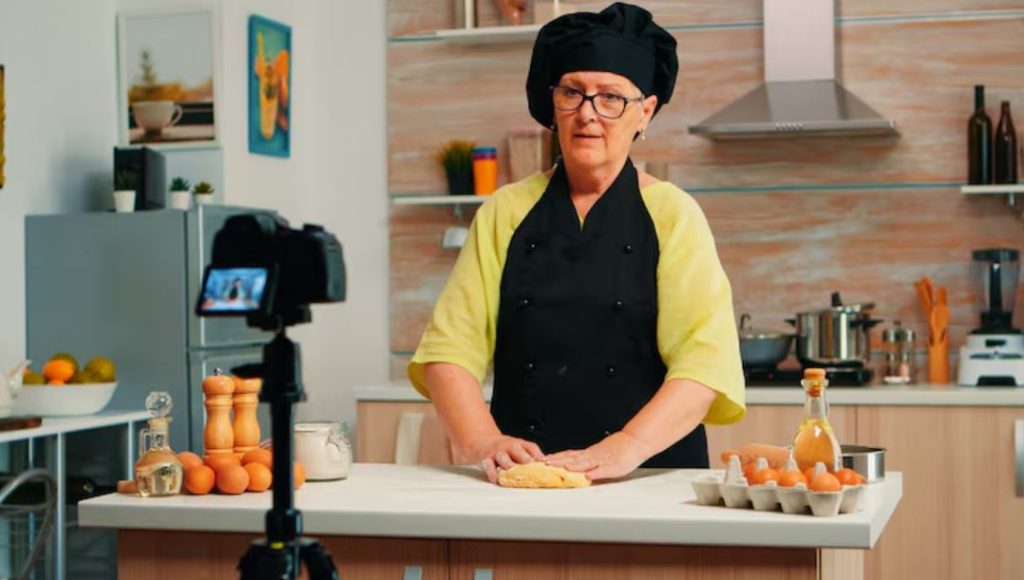
Observing a 78-year-old woman navigate a kitchen exudes a certain quiet authority. No recipe booklet. No stopping to look at a phone. She simply knows when to add the cream, turn down the heat, and when the gravy is ready based on its aroma rather than a timer. TikTok is currently going crazy over that knowledge, which has been passed down through generations through hands-on kitchen sessions and whispered instructions.
Like most real cultural shifts, it began slowly. A few grandchildren recorded their grandmother in the kitchen. In one video, a woman was seen preparing American spaghetti the way her family had done it since the 1950s. This is not the Italian-American version that most people are familiar with, but rather a heartier, simpler dish with a three-hour-long sauce that tastes somewhat nostalgic. It received several hundred thousand views. A few million after that. And there was a click.
The dishes themselves are intriguing due to their uniqueness. White bread, buttered carrots, and sour cream gravy are served with Swiss steak. Vegetables suspended in gelatin molds sound really scary until someone’s grandmother explains why it made sense before refrigeration was dependable. poached egg in a cup of coffee. On a Thursday night, casseroles were made using whatever was left in the icebox. These were systems, not merely recipes. Systems that were quiet, effective, and incredibly useful were created by women who had very little and did not waste it at all.
It’s difficult not to interpret the timing of all of this. During and after the pandemic, when people were lonely, nervous, and unexpectedly spending more time in their own kitchens than they had in years, the number of videos increased. Although comfort food has always had a place in uncertain times, this felt different—more about reconciliation than indulgence. Younger generations seem to be more interested in the steadiness of the food than just the food itself. The notion that there was a time when someone stood in a kitchen and knew exactly what to do.
The cultural education ingrained in the trend is what makes it truly fascinating rather than merely sentimental. Many of the most popular videos are short documentaries rather than just recipes. A grandmother explains that during rationing, her mother taught her how to prepare a dish. A grandfather shows off a method he inherited from a nation he left many years ago. Something more difficult to describe—identity, belonging, and the unique comfort of knowing one’s origins—is expressed through the food. Gen Z, who are frequently described as digitally adrift and rootless, appear to be actively looking for that.
It would be naive to pretend that the kitchen of the 1950s was perfect. Nearly all of the labor was unseen, almost entirely performed by women, and nearly entirely unacknowledged. However, there is something in that era’s cooking philosophy that should be preserved: the instinct to make use of everything, to properly feed people with simple ingredients, and to impart knowledge through doing rather than writing. For seventy years, family customs and muscle memory preserved recipes that were never recorded.
It remains to be seen if TikTok turns out to be the platform that truly saves them. The algorithm may advance, giving gelatin molds a brief moment before fading back into obscurity. However, the videos themselves—which have been saved, shared, and viewed by individuals who have never met their great-grandmothers—indicate something more enduring than a fad. Something genuine is being transferred somewhere between a grandmother explaining why she never measures flour and a grandchild silently observing from the other side of a phone screen.
FAQs
1. Why are 1950s grandparent recipes suddenly trending on TikTok?
Post-pandemic comfort-seeking drove younger generations toward nostalgic, heritage-rooted cooking content.
2. What kinds of dishes are featured in these viral videos?
Swiss steak, gelatin moulds, homemade casseroles, and simple egg-in-a-cup recipes.
3. Who is watching these old recipe videos and why?
Gen Z and Millennials are craving cultural roots and a sense of belonging.
4. Were 1950s recipes actually written down anywhere?
Most were passed verbally through generations, never recorded in any cookbook.
5. Could this food nostalgia trend fade quickly like others?
It’s possible, though archived videos suggest something more lasting than a trend.
