

The pan didn’t look right the first morning. The familiar morning sounds I’d grown up with in a kitchen where eggs hit a hot skillet and the day officially began were absent, along with the sizzle and foam from melting butter. It was just a cold pan with two eggs cracked right into it and a slab of cold butter that appeared to have accidentally wandered in. I nearly reached for the heat dial twice while watching it, but I restrained myself.
Gordon Ramsay’s approach requires an unusual level of self-control. Every twenty seconds or so, you switch the burner to medium, turn it off, and then turn it back on while gently stirring with a silicone spatula. It has a fussy feeling. To be honest, it seems like something that would only be done at six in the morning by a man with a television crew. However, the rhythm began to make sense by day three. Pull, push, pull. Unlike the rubbery yellow planks I’d been making for years, the eggs began forming tiny, almost custardy curds.
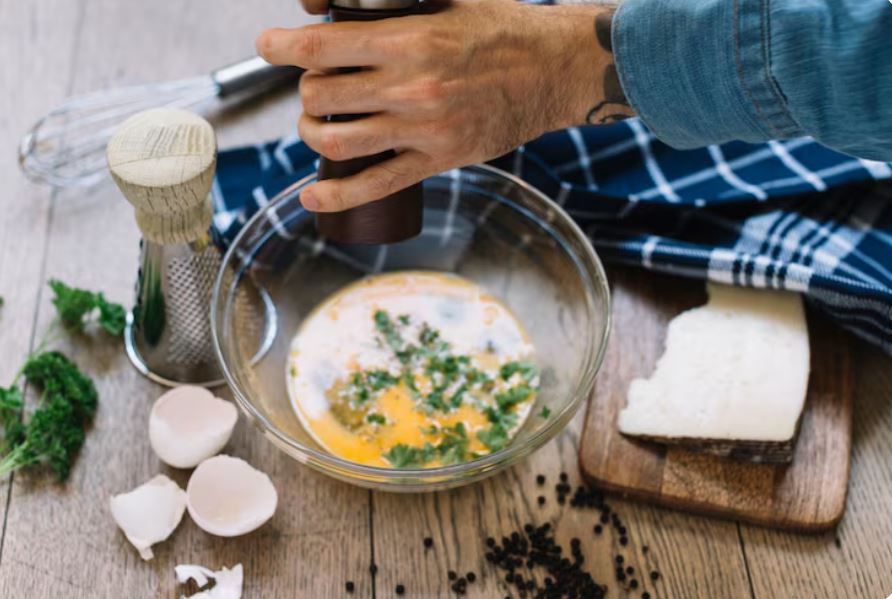
Chefs in London kitchens swear by it for a reason. Most of us cook eggs like we’re trying to win a war, even though heat is the enemy of eggs. Ramsay’s method treats them more like something that needs to be coaxed than commanded, as if they were delicate, almost nervous. I had completely stopped using milk by the end of the first week. A last-minute pinch of salt, a spoonful of crème fraîche, and chives, if I had any.
Not every morning was a success. On day eleven, I was preoccupied with a phone call and left the pan on for too long, resulting in something more akin to scrambled rubber than anything Ramsay would recognize. On some mornings, the outcome felt almost too moist and rich for a simple piece of toast. One Sunday, while observing them from the doorway, my partner referred to them as “fancy porridge eggs” without fully intending to be complimentary. The approach might not be to everyone’s taste.
However, something changed. The eggs stopped being a quick vehicle for hot sauce and started to taste like food once more. After a few weeks of doing this, you feel as though you’ve deliberately slowed down a tiny portion of your morning. Instead of burning protein, the kitchen smells like butter. The plate resembles something you might photograph if you were the type of person who took breakfast photos rather than a cafeteria tray.
By day thirty, I was more certain that I had found a minor ritual than a recipe that would change my life. It almost doesn’t matter if the eggs are objectively superior. You have to pay attention to the method. Shortcuts are penalized. Before the rest of the day starts to drag you down, it rewards a few extra minutes of concentration. You begin to see why Ramsay yells so much throughout the remainder of his life as you watch a silent pan slowly come to life and stir without hurry. His patience with the eggs has already run out.
FAQs
Q1: What makes Gordon Ramsay’s scrambled eggs method different from the usual approach?
You start with a cold pan and cold butter, then move it on and off the heat every 20 seconds instead of cooking continuously over high heat.
Q2: Do you really need crème fraîche, or can you substitute it?
Sour cream works well as a substitute, and some people simply use a small spoonful of milk or skip the dairy finish altogether.
Q3: How long does it actually take to cook eggs this way?
About three to four minutes per serving, slightly longer than standard scrambled eggs but still quick enough for a weekday breakfast.
Q4: When should you add salt and pepper to the eggs?
Season at the very end, just before serving, because adding salt early can break down the eggs and make them watery.
Q5: Is this method worth doing every morning, or just for special occasions?
It works for both, but the slow technique feels most rewarding on unhurried mornings when you have a few extra minutes to stir patiently.
