

Nearly $24 million in debt is a pretty sad ending for a company that was built on guilt-free indulgence. Rebel Creamery, a brand from Utah that gave health-conscious shoppers hope that they could eat ice cream without all the sugar, filed for Chapter 11 bankruptcy on August 14 in the U.S. Bankruptcy Court for the District of Utah. The filing came just one month after a federal judge said Rebel had copied the packaging of rival Van Leeuwen Ice Cream on purpose. The numbers are very bad: Rebel has only $13.78 million in assets and $23.85 million in debts.
The case goes back to 2021, when Van Leeuwen sued Rebel for what it called “deliberate theft of its visual identity.” Van Leeuwen started as a single ice cream truck in New York City in 2008 and now has about 100 locations. Van Leeuwen’s brand identity was based on certain elements, including soft pastel pints with lids that matched, black script lettering, and a clean, simple look that the company had carefully developed over many years. As soon as Rebel’s pints showed up at Walmart, Kroger, Safeway, and Target, it was clear what they were.
In Brooklyn, U.S. District Judge Eric Komitee oversaw a bench trial and made it very clear in his ruling on July 16 what he thought happened. Not only did he find infringement, but he also found planned infringement. The founders of Rebel said in court that they designed their packaging without ever seeing Van Leeuwen’s pints. That story was flatly denied by Judge Komitee, who said it was “clearly fabricated.” This word, “fabricated,” is often used in court cases. It’s not an easy decision for courts to make.
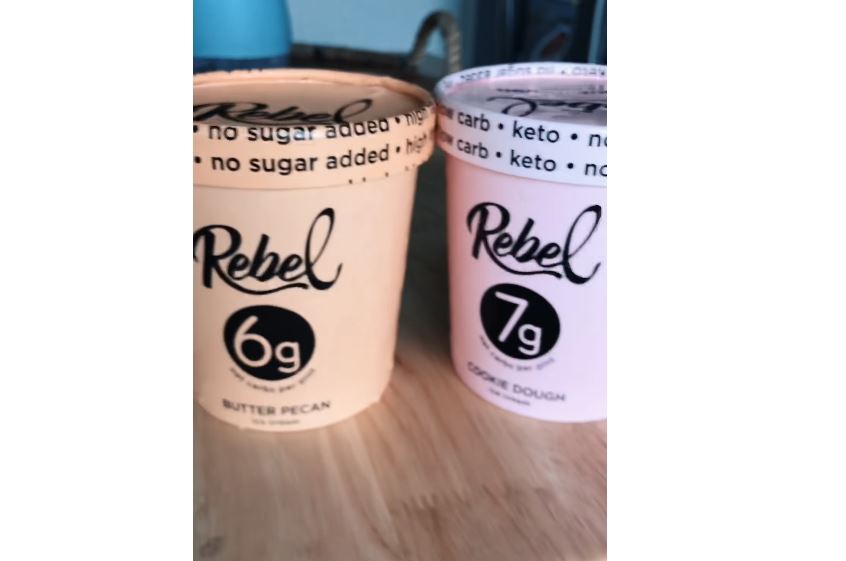
It is important to understand the damages calculation because it affected everything that happened after it. Van Leeuwen had asked for $36.4 million, which was the money Rebel made from selling pints in packaging that was illegal. Judge Komitee cut that number by 33 percent because he thought that some of Rebel’s sales were due to real people wanting keto and low-carb products, not because the packaging was confusing. The new, lower number was $23.785 million. Still more than Rebel’s total assets were said to be.
Rebel was started in 2017 and quickly made a name for itself in the market at a time when low-carb eating was popular. The brand’s pints being sold in major national stores wasn’t a small deal; it meant real business success. The court’s decision didn’t just give the company a dollar amount, though. It also said Rebel had to stop selling products in the infringing packaging and change the look of its pints so they looked very different from Van Leeuwen’s. The company’s website says that those sales have pretty much stopped.
Rebel put in an appeal notice on August 12, which was two days before the bankruptcy petition. The timing tells us a lot. The appeal is going to the Second Circuit. Rebel is being defended by lawyers from Latham & Watkins and Paul Hastings. The Chapter 11 case, which is currently being heard by U.S. Bankruptcy Judge Peggy Hunt in Utah, will go forward on its own. The vast majority of Rebel’s listed unsecured debt is held by Van Leeuwen; its $23.785 million claim is marked as disputed because the appeal is still open. At this point, it’s not clear if that appeal will change anything.
When you look at the timeline, it seems like Rebel was in a tough spot from the moment the judgment was handed down. There isn’t much room for error when you owe $23.8 million and have assets worth $13.8 million. Chapter 11 at least keeps the business going while it checks to see if an appeals court will disagree with the judge. It also stops Van Leeuwen from collecting on the judgment, which gives them time, but time does not mean a solution.
What’s still not clear is whether Rebel can actually make it through this. Any company would find it hard to redesign packaging while also appealing a landmark trade dress ruling. It would be even harder for a company that was already having to deal with the realities of the competitive frozen food aisle. There are also more people following the keto trend that helped Rebel grow than there were in 2017. The brand has a real following, a real place on store shelves, and a real income stream, or it did. We don’t know if any of that will be around after the bankruptcy reorganization.
