

Finding out that there isn’t any mackerel in your tin of mackerel is almost comically British. Not even a hint. Not even a distant relative from the same family of fish. When you open it, you find what is known as Chilean jack mackerel, a species from a completely different taxonomic order that was taken from the waters off South America. And yet there it is, on the grocery store shelf, simply marked “mackerel,” with a price that is essentially unchanged.
Though not particularly enigmatic, the account of how this occurred is instructive. Last year, Princes, a major partner of Tesco and Sainsbury’s and one of Britain’s biggest suppliers of canned fish, replaced its branded mackerel line with Chilean jack mackerel. According to Princes, the decision came after years of worry about the Northeast Atlantic’s unsustainable catch levels.
That much is valid. According to the International Council for the Exploration of the Sea, the mackerel stocks in those waters have been declining by about three-quarters over the last ten years. The Marine Stewardship Council certification, a sustainability badge that the majority of large retailers now demand as a minimum, was lost by the fishery. There had to be a compromise.
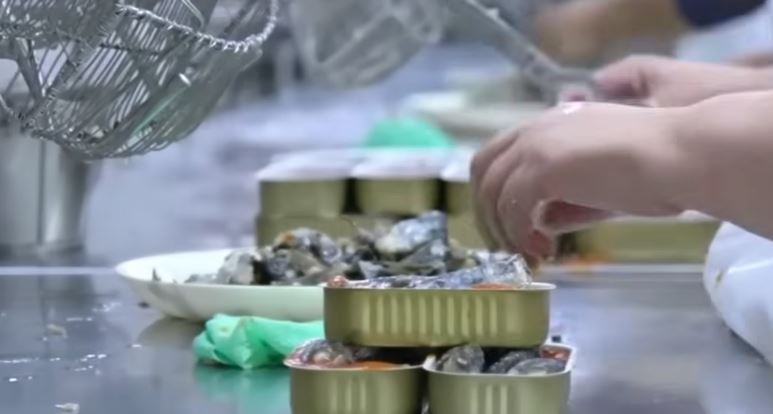
The fact that everything happened so quietly makes it more difficult to defend. At the wholesale level, the Chilean alternative is about one-third the cost of real Atlantic mackerel. It has about half as many omega-3 fatty acids and about 100 fewer calories per 100 grams. The bones are larger. There is less oil in the flesh. The Lidl version smelled metallic, similar to cheap tuna, according to a seafood reviewer with over 650,000 Instagram followers.
However, in certain stores, these tins are placed next to signs advertising “mackerel” without making any special effort to clarify that the contents are not what the majority of British consumers grew up purchasing. The industry seems to have hoped that no one would notice, or at the very least, not ask too many questions too soon.
It would be unjust to act otherwise given the truly dire ecological context of all of this. The UK, Norway, Iceland, Greenland, the Faroe Islands, the EU, and Russia have been embroiled in a protracted fishing quota dispute known as the “mackerel war” for years, with no real end in sight. Since 2010, the region’s catch limits have been set, on average, 39 percent higher than what the scientists suggested.
Russia’s own officials set an internal limit of 67,000 tons; the country was advised to catch up to 1,500 tons this year. In the meantime, Iceland and the Faroe Islands are demanding ever-larger shares because warmer seas have driven plankton stocks northward, attracting fish with them. According to one academic studying fisheries management, it is simply “a mess.”
Among the major retailers, Waitrose has probably taken the most direct stance. Earlier this year, they stopped sourcing any fresh, chilled, or frozen Atlantic mackerel, and they are quietly phasing out their canned stock as their current supply runs out. Mackerel has long been one of the more reasonably priced oily fish in British diets, and health guidelines consistently advise consuming at least one portion of oily fish each week, so it is a commercially awkward move.
Families who relied on canned mackerel as an easily accessible source of omega-3 are now paying roughly the same price for a product that provides much less of what they were purchasing, which is a legitimate concern.
According to Sue Davies of the consumer advocacy group Which?, skimpflation is the term used to describe the practice of subtly lowering the quality of commonplace items while maintaining a similar level of pricing. The reformulation or substitution of ingredients in ways that are technically legal but feel, as she put it, “particularly sneaky” when consumers only learn about it at home and taste something that doesn’t quite match their memory of the product is a phenomenon that has become more prevalent throughout the food industry.
Transparency has not been a priority here, as evidenced by the fact that, until recently, jack mackerel was not even allowed to be called “jack mackerel” in some contexts; instead, it was referred to as scad, horse mackerel, or trevally.
All of this might settle into something feasible. At the very least, Chilean jack mackerel is harvested sustainably; the alternative, which is to keep depleting the Northeast Atlantic of a fish that is already in grave danger, is obviously worse.
However, a somewhat awkward question remains unanswered after the episode. At what point does maintaining the previous name on the label cease to be a useful shorthand and turn into something less truthful if the fish in the tin is actually different, nutritionally inferior, imported from another part of the world, and costs a fraction of what it replaces? It appears that the industry would prefer not to have to provide a direct response to that question.
