

No one made the decision to adopt a flexitarian lifestyle. That’s arguably the most revealing aspect of the current state of British kitchens. There wasn’t a single moment of conversion, no documentary that instantly changed everything, and no resolution. Just a gradual, nearly imperceptible shift away from meat-heavy dishes and toward something more varied, cost-effective, and, increasingly, intentional.
In the UK, 23.4% of people identified as flexitarian in 2026, which means they actively cut back on their meat intake without giving it up completely. The 1.1% of people who identify as vegan stand in stark contrast to that number, which was derived from Worldpanel by Numerator data. For more than ten years, veganism dominated food news, but it appears to have reached its natural limit. The true change is found in the more subdued, less ideological shift.
The data presents a more nuanced picture than “Britain is going plant-based,” so it’s important to understand what’s truly going on here. It turns out that flexitarians are not consuming more meatless meals. In fact, the number of vegetarian and vegan meals consumed at home is declining annually. Less than 3% of main meals now include meat substitutes, those highly processed soy-and-pea-protein products that once seemed destined to fill every supermarket shelf. Rather than a complete shift away from meat, there has been a rebalancing within it, with less beef and lamb and more chicken, pork, and pulses spread throughout the week.
Almost exactly along economic lines, the reasons were divided. A little more than 9% of people are what researchers refer to as “cost-driven flexitarians,” which are households—often with children—managing tight budgets in the wake of persistent food inflation. In just one year, the price of beef increased by 16%. Lamb trailed behind. Without engaging in any philosophical debate, the practical solution was to cook more mince and fewer chops, bulk out a bolognese with lentils, and approach a pork sausage dinner as a low-cost fix rather than a compromise. That kind of adaptation has a subtle dignity to it. It’s not an ideology. Households are doing what they have always done.
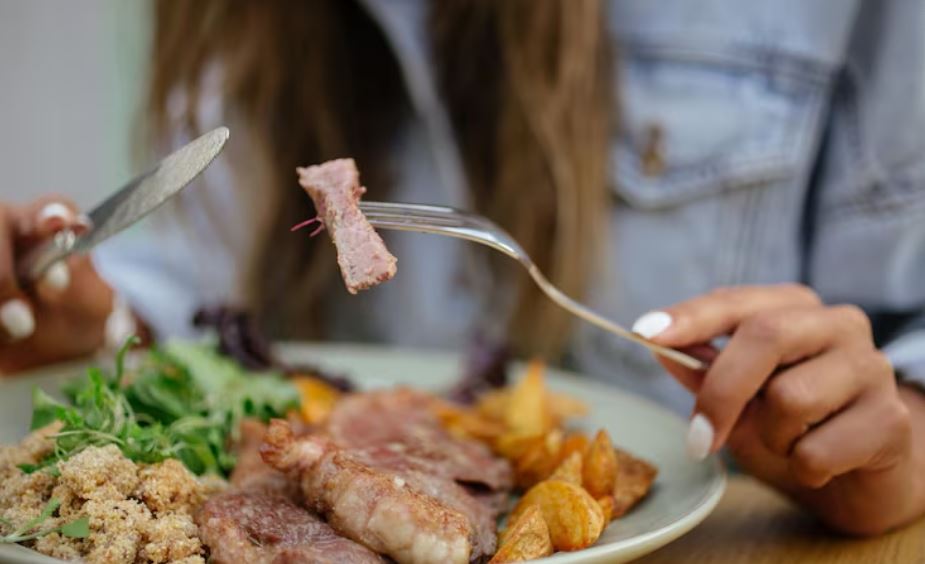
The other group, which makes up about 14% of the population, is making cuts for completely different reasons. These customers are typically wealthier, frequently post-family, health-conscious, and wary of highly processed foods. They’re not grabbing a plant-based burger. They are increasing their intake of fish, chicken, and vegetables while reducing their consumption of red meat due to a growing perception that it shouldn’t be served every night, rather than its cost. This group may have absorbed years of nutritional messaging without ever fully expressing it in those terms.
Interestingly, when red meat does appear, it still holds a special place in both groups. A slow-cooked lamb shoulder or chilli con carne has emotional significance for flexitarians in general—comfort, celebration, occasion. The data appear to support the idea that a chickpea cannot easily replicate that emotional function. Red meat tends to anchor the meal in a way that other proteins don’t, even when consumers choose it infrequently.
It’s also important to note the move away from highly processed plant substitutes. A number of years ago, the food industry made a huge wager on meat-mimicking products, such as pulled jackfruit, bleeding burgers, and sausage replacements that were designed to be as familiar as possible. A few of those goods are subtly going off the shelves. They have been tried by the customers who were always going to be interested. The ingredient lists were unsettling to many. It appears that the majority of flexitarians would prefer to cook with beans rather than consume food that contains seventeen additives.
All of this suggests a useful, unbranded evolution in diet. Veganism is not being adopted in Britain. Shifting the balance, cutting back on the highest-impact proteins, and discovering that a plate of pasta with pork mince or a dinner centered around pulses and seasonal vegetables can be gratifying, reasonably priced, and honest are all actions that could be considered more sustainable. That didn’t require a label. Nevertheless, it took place.
