

Nestled beneath a residential block close to Euston station, there isn’t a sign worth taking pictures of, no Instagram-worthy mood lighting, and no PR firm sending press releases to food editors. Served with a bowl of rich, intensely spiced dhal, the flaky, slightly blistered roti canai costs less than a pint at most central London pubs. For many years, Roti King has been there. It has long been known to the locals. And that was sufficient for a very long time.
The thing about London’s actual dining culture is that it relies almost entirely on trust, unlike the version that can be found in viral TikTok videos or hotel concierge recommendations. Someone informs another person. A table is shared. You are given enough information about a dish to know that you must go. In this city, it is still possible to eat exceptionally well without ever having to go through a line, and those who are aware of this take it very seriously, almost to the point of being territorial.
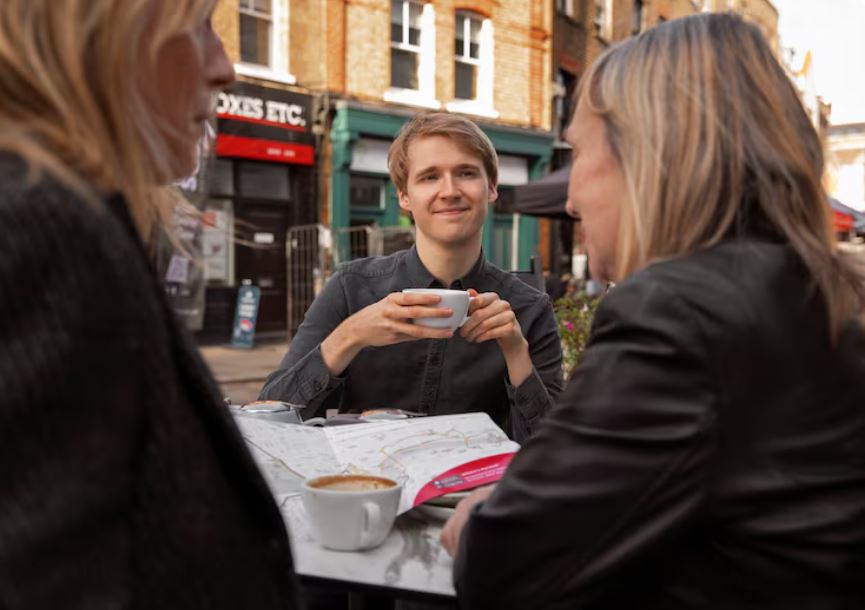
In recent years, this territorial instinct has taken an unusual turn. In an organized attempt to divert tourist foot traffic, locals in London have started flooding Google reviews with wildly inflated five-star descriptions of completely mediocre chain restaurants, with Angus Steakhouse being a favorite target. One review created a unique steak sandwich with a Taylor Swift theme. Some talk about “hidden specials” that never happened. The fact that Google’s review moderation is, by most accounts, incredibly simple to manipulate contributes to the scheme’s success. The platform’s systems register everything as authentic, the search behavior appears natural, and the reviews originate from London-based accounts. It’s both ridiculous and, depending on your point of view, subtly brilliant.
Mangal 2 in Dalston, meanwhile, keeps doing, for the most part, what it has always done. Without drawing attention to it, Chef Ali Dirik has transformed the traditional Turkish ocakbaşı into something more thoughtful, with charcoal-grilled flatbreads and seasonal small plates next to exquisitely sourced ingredients. It’s the kind of place where evolution takes place in silence, and locals are the first to notice it.
Trullo, up in Highbury, has been keeping its identity a secret for years. The dining room, which is candlelit, cozy, and slightly cramped in a way that feels warm rather than uncomfortable, has a devoted following that treats it like a small secret worth protecting, and the pappardelle with beef shin ragu has become the kind of dish that people describe to each other in almost reverent terms. It can make North Londoners strangely possessive.
Even though the food is typically excellent, there’s a feeling that these restaurants are worth protecting for reasons other than just the food. It’s the emotion within them. That quality can be found at Hackney’s Café Cecilia, which is located next to the canal and features a constantly changing menu and a space that never seems to be performing. This also applies to Honey & Co. in Bloomsbury, where the handmade pastries, slow-cooked lamb, and overall coziness make the establishment feel more like a home than a business. It’s not necessary to find these eateries. People who adore these restaurants are sometimes hesitant to say anything at all because they must remain exactly as they are.
Even though the fake-review scheme seems like it will eventually crumble under its own weight, it is difficult to ignore the impulse. This city’s true hidden eateries thrive on patronage rather than foot traffic. To be honest, I’m not sure if that’s still feasible in the era of geotags and food content. However, for the time being, there is a place close to Euston where the roti is still excellent, the line is still manageable, and the majority of those in line would prefer you didn’t know.
FAQs
Q1: What makes a restaurant a “hidden gem” in London?
A hidden gem typically operates without PR backing, flashy signage, or social media campaigns — it survives entirely on word-of-mouth loyalty from locals who keep coming back.
Q2: Why are London locals writing fake reviews to mislead tourists?
To protect their favourite neighbourhood restaurants from being overwhelmed by tourist foot traffic, locals have been flooding mediocre chain restaurants with exaggerated five-star reviews to redirect visitors away from the real spots.
Q3: Which areas of London have the best under-the-radar dining scenes?
Dalston, Hackney, Highbury, Bloomsbury, and parts of Soho consistently produce the kind of independent, neighbourhood-driven restaurants that locals fiercely protect from the tourist circuit.
Q4: Can tourists actually find these hidden restaurants on Google or TripAdvisor?
Increasingly difficult — not just because these places avoid publicity, but because locals are actively manipulating review platforms to steer visitors elsewhere.
Q5: Is the fake-review strategy by London locals actually legal?
It sits in a murky grey area; while deceptive, it targets no specific business maliciously and exploits well-documented weaknesses in Google’s moderation system that the platform has so far failed to meaningfully address.
