

Aldi’s brioche buns have an almost unfair quality. They are genuinely buttery and yielding, the kind of bread that elevates an ordinary egg sandwich to a special occasion, rather than the hollow, sugary softness of gas station bread. Then, almost cruelly, you are given a pack of six of them and about three days to savor them before the window closes. That timeline is a problem for anyone who doesn’t have a big household that consumes bread quickly.
The good news is that Aldi’s brioche buns freeze incredibly well. At first, this is not immediately apparent. Some versions have historically had the label “not suitable for freezing” on the packaging, which has confused consumers for years and, according to numerous online threads, sent perfectly good brioche to the trash needlessly.
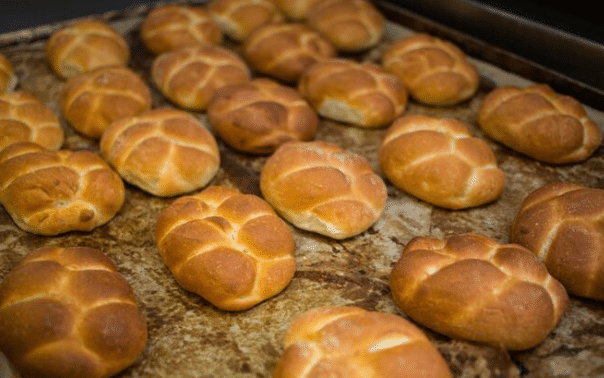
The commercial packaging itself, not the buns, is probably what that label refers to. The buns hold up in the freezer with virtually no quality loss once you remove them and properly wrap them. This has long been known to home bakers who sell at farmers’ markets; brioche passes through the process especially well due to its fat content, and baking in bulk and freezing batches is standard procedure.
Most people are unaware of how important the method is. Butter and eggs are the main ingredients that give brioche its soft crumb and subtle sweetness. Additionally, that fat prevents the interior of the freezer from drying out by acting as a sort of natural preservative.
However, the outside still requires assistance. It makes a noticeable difference to wrap each bun separately in plastic wrap or aluminum foil before putting them in a zip-lock or airtight container. This keeps the crust from becoming papery when it thaws, in addition to preventing freezer burn. Technically, throwing the entire unwrapped pack straight into the freezer works, but the results are inconsistent, and something is depressing about taking out a bun that tastes like it’s been through a hard winter.
Patience pays off when it comes to defrosting. After two to four hours at room temperature, the buns return to a remarkably near-fresh state. Nothing frozen ever has the same texture, but it’s close enough that you’d have to be looking closely to notice.
A quick 10 seconds in the microwave works well for people who are pressed for time, but the crust softens more than it should. If you have five minutes to spare, a quick blast in a warm oven with a light mist of water is the best method. Something in the crust is reactivated by the moisture, and the warmth restores the feeling of freshly baked goods. It’s a tiny trick that has a significant impact.
The buns function just as they would when they are fresh after they have been defrosted. Aldi’s brioche has always been adaptable; it can be used as a burger bun for a weekend grill, under a bacon and egg sandwich, or sliced and used for French toast.
One could argue that their slight dryness after freezing actually improves their toasting quality by providing the surface with something to crisp against. Stale brioche buns are actually one of the better bases for a bread stuffing around the holidays, and they also make amazing croutons when cut into cubes and baked with butter.
It’s important to remember that the one-month freezer window is a recommendation rather than a strict regulation. After six weeks, some customers claim to have removed the brioche buns with satisfactory outcomes. They do lose some of their quality the longer they are left out, mostly in the crust rather than the inside, but they are still edible well after the suggested time.
When you freeze, it helps to label the bag with a date because it eliminates the uncertainty of standing in front of an open freezer and trying to recall whether those buns have been in there for three weeks or seven. This isn’t because you’re likely to forget.
This completely alters the equation for frequent Aldi customers, particularly those who don’t live close to a store and only occasionally make the trip. Purchasing two or three packs when the brioche is available (which isn’t always because of Aldi’s rotating inventory model) and freezing the excess ensures you never run out.
It’s one of those little household routines that seems almost too sensible to bother with, but after doing it once, you start to question why you ever threw away a half-eaten pack. The buns are really delicious. It just seems sensible to keep them around longer.
FAQs
1. Can you actually freeze Aldi brioche buns?
Yes, they freeze exceptionally well despite some packaging suggesting otherwise.
2. How long do Aldi brioche buns last in the freezer?
Up to one month, though they remain acceptable beyond that window.
3. What’s the best way to defrost frozen brioche buns?
Leave them at room temperature for two to four hours.
4. Does freezing change the texture of Aldi brioche buns?
Slightly, but a warm oven blast restores them close to fresh.
5. Should you wrap the buns before freezing them?
Yes — wrap each bun individually to prevent freezer burn and dryness.
