

Taking a warm, golden croissant out of the oven on a typical Tuesday morning is almost absurdly satisfying. No line at the bakery, no dejected compromise wrapped in cellophane from a gas station shelf. A perfectly flaky pastry, complete with layers of butter, just waiting for your coffee. And if you shop at Lidl, as an increasing number of people covertly do, your freezer is, perhaps surprisingly, the direct route to that morning moment.
In a nutshell, you can freeze Lidl croissants. The more intriguing aspect, however, is how well it actually functions and the minor choices you make along the way that decide whether you get something truly delicious or something subtly disappointing.
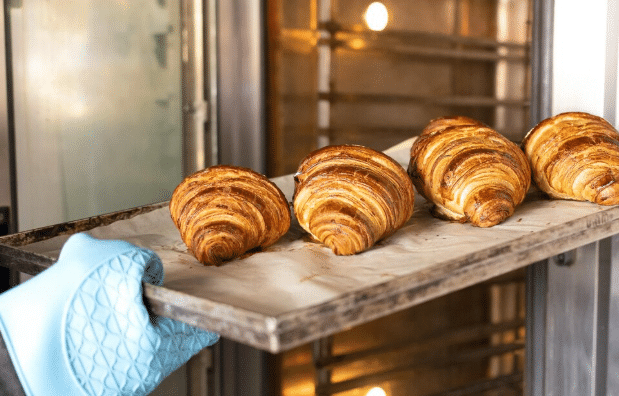
Depending on your market and the day you visit, Lidl offers a variety of croissants. The frozen all-butter croissants, which come in packs of eight and cost about £2.55 in the UK, gained some attention on social media recently when the supermarket’s Instagram page shared a tip that had been subtly circulating: bake them in an air fryer at 180°C for about ten minutes to get results that are difficult to dispute. “Never has a finer sentence been said” was Lidl’s response to a cheerful comment under that post, which felt honest in a way that corporate social media rarely manages to be.
However, there’s another question here that’s worth considering. What happens if you purchase the fresh bakery croissants from Lidl’s in-store bakery section and decide to freeze them for later? These croissants are located under the heat lamp. This is where things become a little more complicated, and to be honest, most people make mistakes here without fully understanding why.
Most people are surprised by how well baked croissants, whether from a store or your own oven, freeze. The secret is to do it as soon as possible, preferably the same day you purchase them, to prevent moisture loss and stale pastry. All you have to do is wrap each one separately in cling film or plastic wrap, put them in a freezer-safe bag, and squeeze out as much air as you can. When properly stored, they can last up to two months without significantly losing quality. Beyond that, it’s not harmful, but once you notice it, the texture starts to veer toward mediocrity in ways that are difficult to ignore.
People can either make the experience better or worse by reheating it. The oven method, which calls for 175°C to 180°C for 15 to 20 minutes, is still dependable and results in a crisp exterior. Several Lidl customers who have recorded the process seem to prefer the outcome, which is slightly more even heat distribution, crispier edges, and less waiting around while your coffee gets cold.
The air fryer at the same temperature cuts that time roughly in half. Almost no matter how time-constrained you are, you want to stay away from the microwave. It results in something that is both structurally sound and texturally subpar, chewy and softened in all the wrong ways.
One piece of advice that seems counterintuitive but seems to work consistently is to defrost the croissants before reheating them. The dough puffs up more thoroughly before it reaches the dry heat when you let them come to room temperature first because the steam released during that gradual process helps. People who have carefully tested this report a noticeably larger and airier pastry as a result. The particular croissant and how long it had been in the freezer initially will likely determine whether the difference is noticeable or not.
Lidl’s croissant selection, especially the frozen bake-at-home option, appeals to a wider range of consumers because it naturally suits a particular type of household. A bakery run doesn’t need to be planned. It’s not necessary to consume eight croissants this weekend in order to prevent waste.
When the mood strikes, you take one out of the freezer, and twenty minutes later, you have something truly respectable on the table. It’s difficult to ignore the fact that this reflects a broader trend in the grocery freezer aisle: the stigma associated with frozen baked goods has significantly decreased, and for good reason.
This is partly due to an improvement in quality. Part of the reason for this is that people are now more open about their true lifestyles, which include hurried mornings, erratic schedules, and the silent yearning for something that feels a little decadent but doesn’t require much preparation. It’s reasonable to be excited about a croissant that costs less than 32p, bakes in ten minutes, and keeps well in your freezer for two months. Just don’t expect miracles when you eventually realize it’s there after six months of forgetting about it.
FAQs
1. Can you freeze Lidl croissants after buying them fresh?
Yes — wrap them individually in cling film and freeze the same day.
2. How long do frozen Lidl croissants last in the freezer?
Properly stored, they stay good for up to two months.
3. What’s the best way to reheat frozen Lidl croissants?
An air fryer at 180°C for ten minutes gives the crispiest results.
4. Should you defrost Lidl croissants before reheating them?
Yes — defrosting first makes them puff up larger and airier.
5. Can you reheat frozen croissants in the microwave?
Avoid it — microwaving leaves them chewy and texturally ruined.
