

Around week three, there comes a time when you no longer feel like you’re conducting an experiment and instead feel like you’re just… training. That change occurred more quickly than anticipated. Honestly, it was faster than it ever was when a human coach was watching your squat depth from across the room and checking their phone in between sets.
It wasn’t an easy choice to replace a personal trainer who charged £80 an hour with an AI. Two years of Tuesday and Thursday workouts at a Clapham gym with a trainer who was familiar with both cats’ names—a routine that felt right. Perhaps too cozy. In all honesty, nobody really noticed that progress had plateaued around month eight. It wasn’t until a friend mentioned that she had pasted her complete bloodwork into Claude and gotten a twelve-week protocol that was more thorough than anything a clinician had given her. The nudge was that.
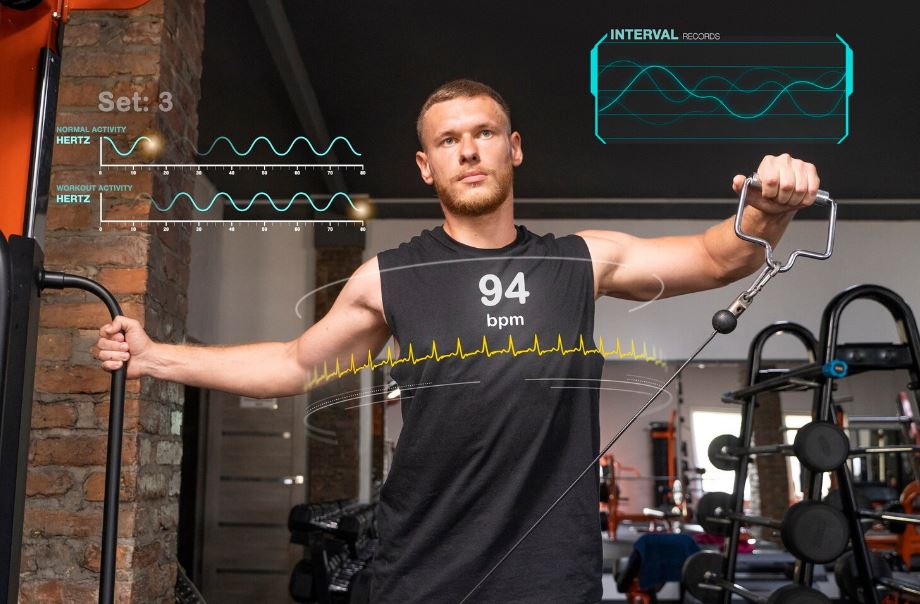
Within minutes, the first session plan created by AI was delivered. The logic behind each exercise was more impressive than the exercises themselves. The AI described how recovery was incorporated into the structure, why specific exercises were performed in a particular order, and which energy systems were being targeted on which days. The former coach had never once explained. The sessions simply took place, and you had faith that they contributed to something.
The first true benefit was discovered in week two: flexibility. The entire Thursday session was rearranged in a matter of seconds after a tight hip flexor was noted on a Wednesday. No awkward rescheduling text, no missed appointment, and no £80 fee for a session that was only partially finished out of courtesy. Just the plan was altered. For someone who is already self-motivated, it eliminated every significant barrier between intention and execution, though it’s still unclear if that kind of seamless adjustment would work for every personality type—some people require accountability from a human face.
The numbers were starting to move in ways they hadn’t in months by day forty. A parkrun time that had been stubbornly static had improved by more than a minute and a half, weight had decreased by 2.6 kilograms, and resting heart rate had decreased by four beats per minute. The AI’s insistence on progressive overload—documented, calculated, and non-negotiable—seemed to be doing what the prior coaching relationship had subtly stopped doing: making demands.
It is worthwhile to identify what the AI is incapable of. It can’t tell when someone is tired. It doesn’t see that the athlete who says “I’m fine” is obviously not, or that the warm-up appears labored today. When writing about this gap, coach Tom Clifford, who has thirty-two years of experience, put it simply: an algorithm can create a plan, but it cannot read the room. That is true. There was no one to call on the three or four days when motivation completely failed. In those moments, the 7 a.m. push notification seemed like an especially joyful irrelevance.
Even so. After sixty days, the body had undergone more change than it had during the preceding eight months of paid professional coaching. It’s really difficult to say whether that’s a judgment on AI or on that specific coach. Both statements may be true: for some goal-oriented, data-literate people, AI planning is significantly superior, while for others, human coaching provides something invaluable. The fitness industry is probably not happy about being compared negatively to a language model, given that it has spent decades selling personalization that it rarely delivered. However, here we are.
This concludes the experiment. It’s not the AI coaching.
