

The majority of people associate sleep with rest. About getting an extra hour on a Sunday, or about waking up less sleepy. In the early 2020s, no one who lay down for a routine overnight sleep study at a clinic thought they were creating the foundation for a medical revolution. However, that is essentially what took place.
SleepFM, an AI model developed by Stanford Medicine researchers, can predict a person’s risk for more than 130 diseases, including dementia and heart attacks, years before any symptoms manifest based on a single night of sleep recordings. It sounds like science fiction. Three years ago, it most likely would have seemed like science fiction. The model, which was trained on nearly 600,000 hours of polysomnography data from 65,000 patients, learned to read the body by picking up on subtle cues, much like a seasoned cardiologist might read a room.
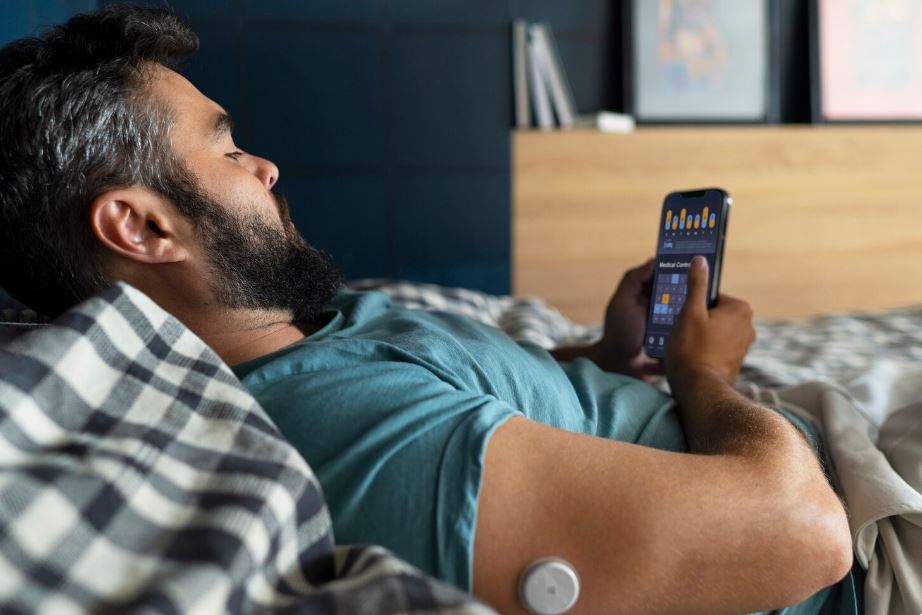
The methodology behind SleepFM is what makes it truly fascinating, if a little unsettling. During training, the researchers purposefully withheld some physiological signals, such as heart activity, and then asked the model to reconstruct them from everything else. Brain waves, muscle movement, and breathing patterns. They unintentionally taught the system something more valuable than recognition by making it fill in the gaps: the hidden grammar of how the body’s systems communicate with one another throughout the night. That isn’t a specific diagnostic technique. That is more in line with comprehension.
The study’s co-leader, Emmanuel Mignot, who holds Stanford’s Craig Reynolds Professorship in Sleep Medicine, put it simply. He pointed out that when researchers study sleep, they record an astounding amount of signals from a subject who is held captive for eight hours. The richness of the data is nearly overwhelming. For decades, medicine has only skimmed the surface of this issue.
A different kind of quiet revolution has been taking place in British general practitioners’ offices across the Atlantic. Using AI-enhanced stethoscopes made by a US company called Eko Health, a team from Imperial College London conducted a study involving over 12,000 patients spread across 96 practices in west and northwest London. The gadget uses something about the size of a playing card in place of the conventional chest piece. In a matter of seconds, it listens, records an ECG, and transmits the information to the cloud, where AI trained on tens of thousands of patient records performs the analysis.
It is difficult to discount the results of that study. When using the AI stethoscope, patients with heart failure had a 2.33 times higher chance of having it identified within a year. The prevalence of abnormal heart rhythms, which frequently have no symptoms at all but significantly raise the risk of stroke, was 3.5 times higher. 1.9 times for heart valve disease. These are not insignificant advancements. They stand for the distinction between discovering something in an emergency room and catching it early.
Observing all of this, there’s a sense that medicine is reaching one of those turning points it sometimes reaches—gradually and then all at once, without much fanfare. Since 1816, the stethoscope hasn’t really changed. For more than 200 years, clinical practice has been defined by the notion that a physician applies a tiny disc to your chest, listens, and draws conclusions. Imperial College and Eko Health proved that the issue isn’t the tool. It is the human ear. It’s not because medical professionals lack expertise, but rather because some signals are just too faint or muffled for biology to pick them up on its own.
How soon any of this will be implemented at scale in routine clinical practice is still unknown. The NHS’s plans to roll out the AI stethoscope to Wales, Sussex, and south London indicate cautious optimism rather than a rush. Furthermore, despite its accuracy, SleepFM has not yet undergone the kind of extensive prospective trials that would transform it from an outstanding research finding into a common clinical tool. These things require time. It can be annoying at times.
However, the direction is fairly clear. We have spent our entire lives sleeping next to the data that our bodies produce, and we are only now developing the tools necessary to truly read it.
