

In what seemed like fifteen minutes, birria tacos went from being a local Mexican custom to becoming a major social media phenomenon. The image is captivating because of the red-stained tortillas, the molten cheese pull, and the small bowl of consomé that is placed next to them for dipping. When prepared properly, the flavor is truly exceptional.
The issue for many home cooks is that the majority of birria recipes begin with a list of dried chiles, such as guajillo, ancho, and chile de arbol, which are just difficult to locate outside of cities with a significant Latin market presence. People from the UK, Australia, and small American towns have been asking how to replace them in Reddit threads dating back years. It turns out that the solution is more useful than most people anticipate.
Braised beef, usually chuck roast, short ribs, or shank, is the foundation of birria. It is cooked slowly and low in a highly spiced broth until it falls apart. The dried chiles add complexity, earthiness, and a hint of fruitiness, but they are not indispensable. In reality, the dish requires time, fat, and depth. The majority of grocery stores carry cans of Chipotle peppers in adobo sauce, which have a strong smoky and spicy flavor.
They come surprisingly close to the flavor profile that the dried chiles are supposed to create when combined with cumin, smoked paprika, and chili powder. It differs from a traditional birria made in the Jalisco style. However, it is really good and, more importantly, doable on a weeknight.
The most useful tool for this version is most likely the slow cooker. After adding salt and black pepper to a two-pound boneless chuck roast, add chopped white onion, minced garlic, beef broth, tomato paste, diced chipotle pepper in adobo, chili powder, smoked paprika, cumin, and dried oregano to the slow cooker.
The ideal duration is eight hours on low. The result is fork-tender beef sitting in a rich, fragrant broth that is ideal as your consomé as the fat renders out and the collagen breaks down. A version along these lines was tested by Budget Bytes, and it is difficult to dispute that the total cost for sixteen to eighteen tacos was less than twenty-two dollars.
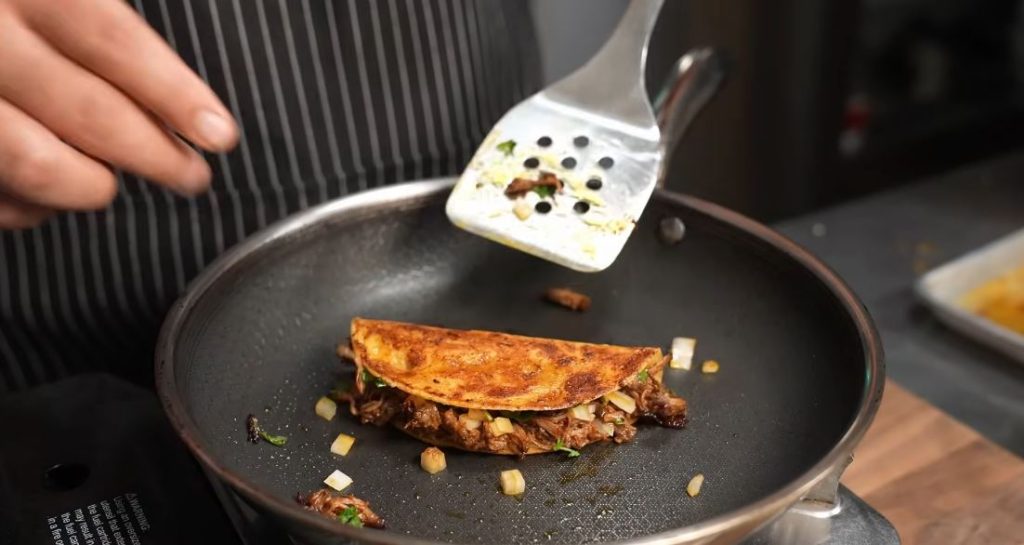
When the beef is prepared, the satisfying part comes during assembly. Using two forks, separate the meat and allow it to absorb the braising liquid. To fry the tortillas, skim off some of the fat from the top of the broth. Press a corn tortilla onto a hot skillet after briefly dipping it in the fat-skimmed consomé to absorb color and flavor. Add a generous amount of mozzarella or Oaxaca cheese, if available, and a tiny handful of shredded beef.
The tortilla should be folded over, gently pressed, and left until the outside crisps up and the cheese melts. Observing the tortilla transform from soft and red-stained to gently crisped at the edges is a final step that has an almost meditative quality.
Serve the tacos with a lime wedge, fresh cilantro, and finely chopped white onion. On the side, the consomé is placed in a small bowl. It’s not optional to dip. That’s the idea. Dunking a crispy taco in the broth, which becomes richer and more concentrated as the beef sits in it, is one of those little culinary experiences that is difficult to explain without coming across as overly dramatic.
Here, it’s important to be truthful about the trade-off. A traditional birria taco recipe using the right dried chiles was published by RecipeTin Eats, which made it clear that omitting them alters the dish. That is accurate. Replicating the complexity of the real thing with pantry substitutes is challenging.
However, most people aren’t really asking how to prepare restaurant-quality birria, but how to use what they have to put something incredibly satisfying on the table. This version answers that question well. The tacos are crispy and cheesy, the broth is rich, the beef is tender, and it all comes together without a specialty shopping trip. That seems like a reasonable trade.
