

Rajat Bhageria frequently reminds people that his business is primarily a cemetery. There’s only one way to say it, and he says it almost cheerfully. DoorDash swallowed Chowbotics, the salad robot, and silently killed it. Before going out of business in 2023, Zume, the pizza truck dream, spent almost $400 million. The list is endless, and anyone who has followed the food-tech beat for a few years will recognize the pattern: a glossy magazine spread, a Series B, a slick demo, and then silence.
Bhageria’s company, Chef Robotics, has chosen to forego the glamorous aspect. Celebrity chef collaborations and neon-lit downtown venues with a robot arm spinning pasta in front of glass are nonexistent. Rather, his machines operate in the back rooms of food manufacturers, scooping portions of rice, curry, and roasted vegetables into meal trays while virtually no one can see them. The company surpassed 100 million of those servings in April. A spokesperson clarified that a serving is not a meal but rather a single item, such as a ladle of food placed in a single tray compartment. Nevertheless, the figure is startling, primarily because no one appeared to be aware of it.
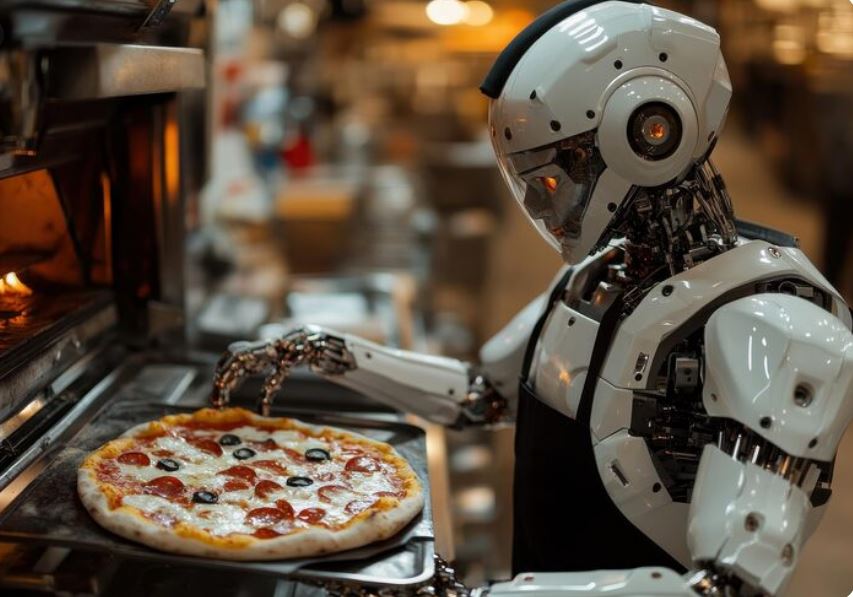
The interesting part is the pivot. The fast-casual restaurant with the shiny countertop and the amiable robot arm was the dream that Chef Robotics started pursuing along with everyone else. They left it behind. According to most accounts, the unit economics never quite worked, and the kitchens themselves were too disorganized, with people bumping into objects, opening doors, and changing orders. In contrast, food manufacturers are dependable. Lines of trays roll by. The lighting never changes. It turns out that a robot likes a factory.
It’s more difficult to imagine what will happen next. When pressed about growing into “smaller kitchens,” Bhageria refers to a massive airline catering company, ghost kitchens that supply the DoorDash machine, and eventually stadiums and prisons. Although it is an odd list, it is internally coherent. All of these locations have a lot of food that is mostly undetectable to diners and has little variation. The artistry of an airline meal is never criticized. The robot doesn’t need to be endearing.
As this develops, there’s a feeling that what the robots reveal about the food we already eat is more important than the robots themselves. More than most of us would like to acknowledge, a large portion of it is already put together in a line by gloved hands working under fluorescent light with metronome accuracy. It is more of a substitution than a revolution to replace those hands with an arm. For the time being, only a small percentage of meals are actually cooked rather than assembled; this includes the chef’s apron, the open flame, and human judgment regarding whether something is seasoned correctly.
The attorneys are still circling. What happens when an AI chef unintentionally leaves a sharp object in a dish, overlooks an allergen, or causes the kind of food poisoning that becomes a class action was the subject of a recent legal analysis by Reuters. The authors recommended that insurance be taken into consideration frequently. It’s the kind of cautious statement that usually comes just before an industry learns the hard way that it should have paid attention. It’s genuinely unclear if Chef Robotics will be the next polished headstone in the cemetery or the company that finally makes the math work. For now, the servings continue to arrive.
FAQs
Q1: What does Chef Robotics actually do?
It uses AI-powered robotic arms to portion food into meal trays at large-scale food manufacturing facilities.
Q2: How many meals have Chef Robotics’ machines served so far?
The company crossed 100 million servings in April 2026, with each serving representing one component of a meal.
Q3: Who are Chef Robotics’ main customers?
Major clients include Amy’s Kitchen, Chef Bombay, and one of the largest school lunch providers in the United States.
Q4: Will AI chefs replace human cooks in restaurants?
Not entirely; robots are mostly replacing repetitive assembly-line work in factories rather than creative cooking in restaurants.
Q5: What are the biggest risks of using AI chefs?
The main concerns include bodily injury, food poisoning, allergen contamination, and potential business interruption liabilities.
