

In a recent interview, Yotam Ottolenghi discusses soaking beans, or more accurately, why he no longer does it. He says, “I’m not going to soak the beans the nite before,” but then he realizes that his admission almost makes him laugh. After all, this is the same man who used to have home cooks searching for barberries and dried limes on a Tuesday night. For many years, a particular kind of food enthusiast wore Ottolenghi recipes as a badge of honor, demonstrating their patience, pantry discipline, and willingness to prepare dinner 48 hours ahead of time.
It feels like more than just a shift in editorial direction when his new cookbook, Simple Too, arrives with 135 recipes centered around the notion that cooking shouldn’t require that kind of effort. It seems as though someone is actually reevaluating the purpose of the kitchen.
Developed and written over four years with test kitchen colleague Verena Lochmuller, Simple Too is the eagerly anticipated sequel to his 2018 book Simple. The idea is simple: each recipe can be prepared well in advance, takes less than thirty minutes to prepare, or only requires one pot.
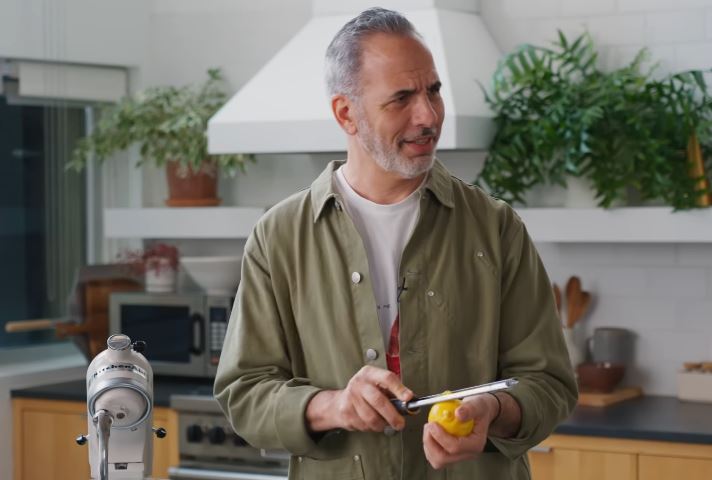
Ottolenghi presents it almost as a post-pandemic recalibration, acknowledging that, sometime around 2020, many people’s home cooking habits underwent a subtle but irreversible shift. “I just felt like, oh my God, I’m not going to start from scratch every time,” he said. Hearing a chef of his caliber say that aloud is refreshingly candid.
Additionally, it appears that the recipes work. For Ottolenghi, a traybake chicken Caesar with roasted thighs and lettuce wedges softening in the pan juices sounds almost too carefree. A tomato sauce made with whole garlic heads, olive oil, thyme, and finely chopped tomatoes.
Breakfast potatoes baked on a single tray, combining the Spanish customs of huevos rotos and patatas a lo pobre into something you could actually prepare on a Saturday morning without having to clear your schedule. Cooking is still very flavorful. Simply put, cooking does not respect complexity.
This change is made possible in part by what is currently on store shelves. Sumac, za’atar, and tahini, which used to require a specialized trip, are now easily found in major grocery chains throughout Britain. It is difficult to overestimate Ottolenghi’s impact on that change.
Not only did he write recipes, but he also changed markets, influenced consumer behavior, and sparked a genuine interest in Middle Eastern pantry staples among a generation of British and European home cooks. This is one of the reasons Simple Too ends differently than it might have if it had been written by a different author. It doesn’t feel like a compromise when he says, “You can open a tin of chickpeas and throw them straight into a salad.” It feels like approval from someone who contributed to the development of contemporary British cuisine.
There’s a lot going on at once outside of the cookbook. This autumn, Ottolenghi will perform on a Simple Too Live UK tour, which promises to be an intimate evening of cooking and conversation. In addition, he is starting a travel and culinary program called Mediterranean Feast, which will take him to Sardinia, Corsica, Mallorca, Crete, Morocco, Turkey, and Israel to meet and cook with regional food producers. It seems like just the right kind of project for him. A format that allows him to wander and ask questions seems like a perfect fit for Ottolenghi, who has always been more interested in the backstory of a dish than the dish itself.
It would be simple for him to coast at 57, with ten cookbooks, several restaurants in London, and millions of followers who treat his recipes as a real part of domestic life. Rather, he appears to be actively challenging his own presumptions about what constitutes “impressive” cooking, which customs should be preserved, and when a recipe goes too far.
Perhaps Simple Too is the most truthful book he has ever written. It’s not the most aesthetically pleasing or technically ambitious, but it’s the one that most accurately captures how he truly wants people to feel in a kitchen.
And that seems like a nice place to be if the response is: calm, a little less anxious, and genuinely thrilled about breakfast potatoes.
