

Portions make sense. Compared to six months ago, you’re moving more. Nevertheless, the scale either remains motionless or silently moves in the incorrect direction. Almost everyone has the instinct to eat even less. Frequently, that instinct is incorrect.
The fact that food is only one corner of a much larger triangle is something that the majority of weight management advice subtly ignores. The other two corners are occupied by stress and sleep, and when those are disrupted, the biology of appetite and fat storage shifts in ways that a better recipe just cannot correct.
Stress and sleep are not insignificant or hypothetical factors in weight gain. It is measurable, documented, and virtually uncontrollable. The body keeps cortisol levels high for weeks at a time when it is under chronic stress—not the acute, transient kind, but the slow-burn type brought on by deadlines, taking care of others, and a phone that never really stops talking. Cortisol modifies the brain’s reaction to food at that level. It becomes genuinely more satisfying to reach for high-fat, high-sugar options. The biscuit tin moment at 9 p.m. isn’t a sign of weakness. It’s the expression of physiology.
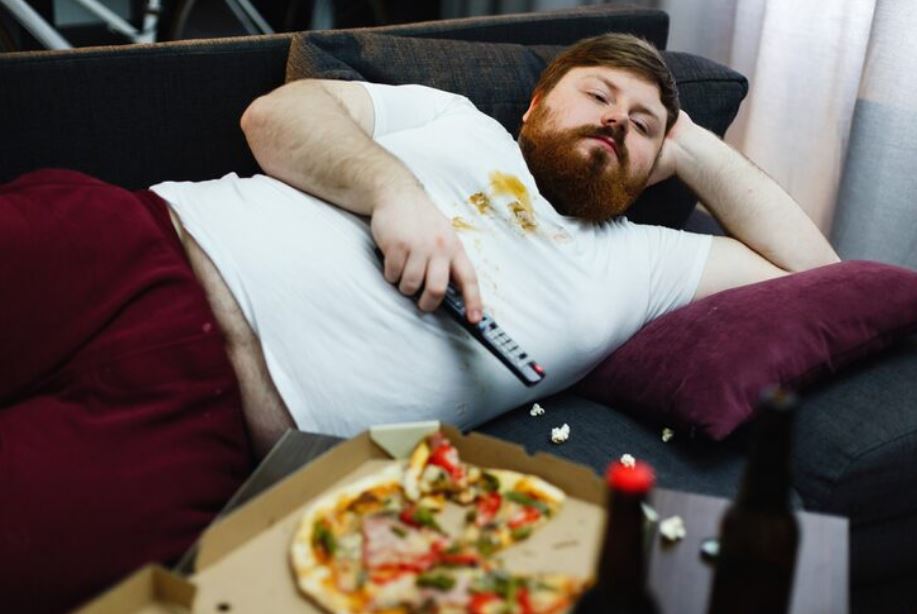
Additionally, the metabolism aspect is often disregarded. According to a 2015 Ohio State University study, women who had experienced at least one major stressor in the preceding 24 hours burned about 104 fewer calories after a meal than those who had not. That difference alone could account for about eleven pounds over the course of a year. The body becomes more adept at storing food rather than burning it when insulin levels are elevated, a tendency cortisol also promotes.
Things get complicated while you’re sleeping. The hunger hormone ghrelin increases and the hormone that indicates fullness, leptin, decreases even after two nights of sleep deprivation. Throughout the day, the brain begins to push more for calorie-dense foods and larger portions. Disturbed sleep patterns consistently result in higher energy intake, especially through increased snacking on foods high in fat and carbohydrates, according to research published in the journal Nutrients. It’s not that exhausted people make poor choices. The reason for this is that individuals who are fatigued are functioning in a hormonally distinct environment compared to those who are rested.
The fact that stress and sleep are interdependent makes this more difficult to unravel. They create a self-feeding loop. Chronic stress shortens the evening, delays dinner, and maintains high cortisol levels when the body needs them to fall in order to go to sleep. The cortisol baseline for the following day is then elevated by poor sleep, which increases stress sensitivity and worsens sleep once more. Food choices deteriorate at some point during that cycle, not due to habit but rather because the body is actively seeking quick energy to make up for it.
It’s important to clarify what this does not imply. Consumption of energy is still important. The need to eat sensibly is not eliminated by sleep optimization. However, stress and insufficient sleep subtly alter the inputs to that equation, such as a person’s hunger, cravings, and rate of recovery, making the effort considerably more difficult. Simply cutting calories and ignoring those factors frequently adds another stressor to an already unbalanced system.
Perhaps because the fix isn’t glamorous, it doesn’t often become popular. Over time, it seems that protecting sleep—not enhancing it with supplements, but actually safeguarding the window—helps balance hormones related to appetite and lower cortisol. Movement, even a quick stroll, and exposure to morning light are more important than most people realize. The way the body gets ready for sleep can be significantly impacted by an earlier dinner as opposed to a cleaner one. Good food choices are not replaced by any of this. It simply makes maintaining those decisions much simpler.
The wellness industry seems to have both undersold and overcomplicated this. “Cortisol belly” turned into a social media category with detoxes and supplements that don’t deal with the underlying mechanism. The more subdued version is that no recipe can completely reverse the biological changes brought about by long-term stress and sleep deprivation. The kitchen is important. Everything that takes place outside of it does the same.
