

There is a type of hunger that isn’t primarily related to food. Volume, or the actual feeling that your stomach has something to work with, is what matters. Anyone who has attempted crash dieting understands the distinction between feeling full and being technically full. Most weight loss attempts quietly fail during that gap, one frustrated evening at a time, rather than suddenly and dramatically.
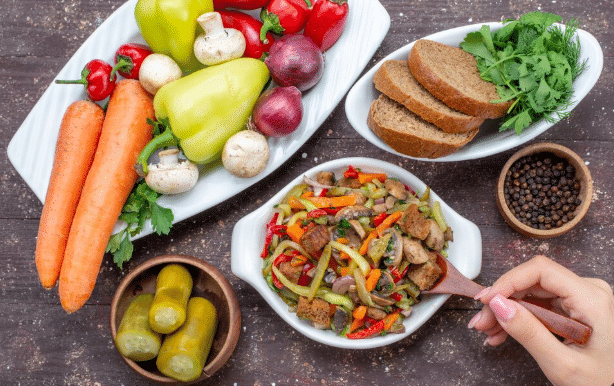
The simplest way to deal with this is through volume eating. Lean proteins, legumes, vegetables with a high water content, and broth-based dishes are examples of ingredients that take up a lot of physical space without packing a lot of calories. As a result, the plate appears substantial because it actually is, and the body feels satisfied rather than deprived. It’s not a ruse. It’s simple food science, and it works.
The first recipe is a dhal made with spinach, sweet potatoes, and lentils. It may seem modest, but a single bowl has about 350 calories and enough fiber and protein to sustain you without snacking for the entire afternoon. Additionally, the warmth of the turmeric and cumin has a psychological effect. Sitting with a substantial bowl of dhal gives you the impression that you’ve eaten well. Not in a good way. Just fine.
One type of dish that doesn’t seem to fit within a calorie limit is creamy tomato risotto, but it does. A large amount of blended tomatoes gives the dish enough body to feel truly decadent, and the starch in the rice provides the creaminess instead of heavy cream or butter. Risotto expands significantly from the raw measurement as a result of absorbing liquid during cooking, which accounts for the volume. It’s difficult to ignore how frequently such chemistry—something expanding or concentrating in the pot—occurs in the most satisfying low-calorie meals.
Another instance where the math seems almost incorrect is with egg-stuffed portobello mushrooms. Despite having fewer than 300 calories, the combination of two large mushrooms, one or two eggs, a few herbs, and garlic makes for a satisfying breakfast. Since the mushrooms are almost entirely made of water, the meal takes up space without increasing the number of calories. When combined with a handful of spinach or rocket, this type of breakfast makes the midmorning coffee run seem completely optional.
People are often surprised by Thai salmon fish cakes. They are usually connected to dining at restaurants, where cooking oils and portion sizes significantly inflate the figures. Made at home using fresh salmon, lime zest, coriander, and a light pan-sear instead of deep-frying, they are well under 400 calories and provide enough protein and omega-3 to make the meal truly nutritious.
Making fish cakes by hand while working quickly before the mixture warms up has a subtle meditative quality. This is the kind of tactile cooking moment that enhances the flavor of the finished product because you paid attention.
Similar territory is occupied by a lighter version of egg fried rice made with cauliflower rice or just a smaller amount of white rice bulked out with shredded spring onion and bean sprouts. The secret lies in the wok technique, which uses a small amount of sesame oil to produce a lot of aromatic work while maintaining a high temperature and constant movement. If the seasoning is done correctly, the version that stays under 400 calories doesn’t feel like a compromise.
The heavier end of this list is completed with prawn spaghetti, which tastes like a complete meal because it is. The tomato sauce adds volume and lycopene, the prawns are incredibly lean, and a reasonable amount of al dente pasta produces enough chew and texture for the brain to perceive the meal as substantial. Although the precise reason why al dente pasta has a lower glycemic response than overcooked pasta is still unknown, the benefits of slower digestion and longer satiety seem significant.
Looking at all eight of these recipes, the main idea is that the 400-calorie cap doesn’t have to apply to tiny plates or precisely measured spoonfuls. When people learn about volume eating for the first time, there’s frequently a noticeable change in how they view dieting—from something that can be controlled by willpower to something that just needs different decisions. For decades, the food industry has promoted the notion that low calories equate to low satisfaction. These recipes imply that this is primarily a marketing stance rather than a fact of cooking.
Finally, the best of these dishes have one thing in common. They eat for at least a short while. The eating process is slowed down by texture, warmth, and flavor variety. The brain has time to receive a signal from the stomach. The meal doesn’t end when the portion is gone; it ends when you’re truly done. That may seem insignificant. It isn’t.
FAQs
1. What is volume eating and how does it help with weight loss?
It maximizes food quantity per calorie, keeping you physically full without overeating.
2. Can meals under 400 calories actually feel satisfying?
Yes — high-fiber, high-water ingredients create genuine fullness despite low calorie counts.
3. What types of ingredients work best for high-volume, low-calorie meals?
Water-rich vegetables, lean proteins, legumes, and broth-based dishes work best.
4. Do these recipes require advanced cooking skills?
No — most range from beginner to intermediate and take under an hour.
5. Why does eating slowly matter with volume meals?
It gives the stomach time to signal the brain before you overeat.
