

One day, while you’re standing in a British butcher shop, you’ll notice a white, waxy block sitting quietly in the chilled cabinet. It’s usually inexpensive and goes unnoticed. The label just says “beef dripping.” If you ask the same question in a grocery store in Ohio or Texas, no one will understand. Suddenly, you are speaking the correct language when you ask for beef tallow instead. Same material. A completely different word. Beneath that discrepancy lies an unexpectedly fascinating tale about geography, cuisine, and how two nations divided by a sea were able to give the same golden fat entirely different names.
The rendered fat from beef, especially the fat that gathers in the roasting pan or is clarified straight from raw suet, is referred to by the British as “beef dripping.” The same product is known as tallow in America, where it has recently gained popularity as a cult ingredient. It can be found in skincare products, artisan cooking stores, and health food websites at prices that would make any traditional British butcher cringe. It’s important to note that the word “tallow” does sound more authoritative. older. American brands tend to favor it for a reason.
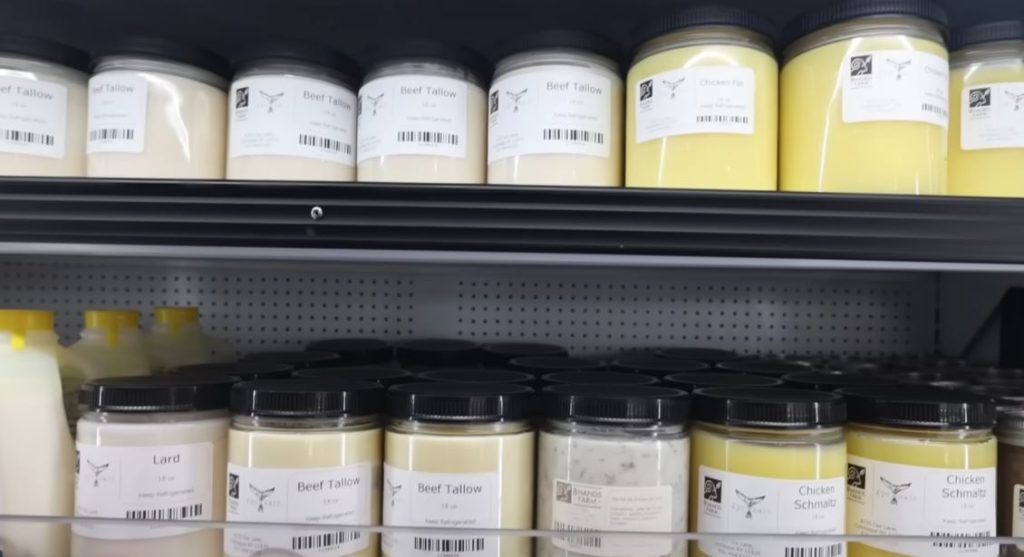
In terms of technology, the two products are similar but not exactly the same. Because traditional British dripping is collected from roasting pans, it may contain traces of gelatin, meat juices, and the faint memory of whatever was roasting above it. It tastes deeper and a little more earthy as a result. In contrast, American tallow is typically rendered and filtered to a higher level of purity; it is white, flavorless, and devoid of all but fat. Suet, the dense fat that surrounds the kidneys, is the main source of both and yields the most stable and neutral outcome. The type of passport you are carrying largely determines whether you call it dripping or tallow.
It is more difficult to explain how this ingredient went completely out of style in both nations and is now making a comeback. Up until 1990, McDonald’s used a blend of 93% beef tallow to cook its French fries. When vegetable oil took its place, a generation of fast food patrons silently lost something they couldn’t quite put their finger on. Anyone who can recall the taste of dripping chips from an old-fashioned British chip shop can relate to the sadness. Food can now be produced more cheaply and stored for longer thanks to the switch to seed oils. It didn’t improve the flavor.
An unusual coalition has been the driving force behind the recent revival. Nutritional research that suggests saturated fats are not the cardiovascular villains they were portrayed as for decades has led keto and paleo dieters to rediscover animal fats. Ultra-processed seed oils were opposed by food scientists. And somewhere in the middle, tallow—or dripping, depending on your postcode—suddenly became popular once more. The trend may have been overstated in some online forums, where assertions regarding tallow sporadically deviate from the facts. However, the core revival is genuine.
The appeal is simple when it comes to cooking. Tallow and beef dripping both have smoke points of about 400°F, which makes them truly suitable for high-heat frying in a way that many plant oils find difficult to match without degrading. When roast potatoes are cooked in dripping oil, they develop a crust that is hard to duplicate with anything else. It is crisp on the outside, yielding inside, and has a subtle savory depth that vegetable oil just cannot match. This is instinctively understood by British home cooks who grew up watching their grandmothers keep a jar of dripping by the stove. When American cooks learn about tallow for the first time, they come to the same conclusion from a different angle.
The difference in names between the two nations seems to indicate something a little more profound than geography. Dripping is a working-class dish in Britain; it is economical, practical, and associated with nose-to-tail butchery and the belief that no animal should be wasted. Tallow has been rebranded in America as something more upscale, ancestral, and deliberate. Both of these framings are valid. The same fat is being described by both.
It’s still unclear if this comeback will last in the long run or if it’s just a fleeting phase in the ongoing food culture war. On both sides of the Atlantic, people are pulling a well-known ingredient from forgotten shelves and wondering why they stopped using it in the first place. That much is certain. Sometimes the most fascinating culinary tale is simply an old tale recounted in a new accent.
