

In the summer of 2019, a picture went subtly viral. Somewhere in Europe, Jason Momoa is standing on a boat’s deck with his shirt off, appearing content and at ease. Totally typical. A little softer than his Aquaman promotional images. And, of course, the internet went crazy. “Dad bod.” “Let himself go.” “Unfit.” Twitter, or whatever we’re calling it these days, had determined that the man, who is 6’4″ and weighs more than 214 pounds, had somehow let them down.
When you sit with that moment, it’s difficult to ignore how strange it was. Because it wasn’t an unhealthy body that was being criticized. They were criticizing the lack of a body that is practically impossible to maintain outside of a film production, as expert trainers have since clarified. In a widely circulated quote, bodybuilder Mike Lipowski put it succinctly: achieving that level of body fat requires four to six months of intense nutritional diligence, and it’s just not something a person can maintain year-round without becoming their entire life and potentially endangering their health.
Regarding all of this, Momoa has been refreshingly open. He has acknowledged in interviews with magazines such as GQ that his training methodology varies significantly based on the role he is training for. He claims that because his character is currently “not in shape,” not much lifting is taking place. He swings an 88-pound and a 106-pound kettlebell through squats and deadlifts in the early morning, typically between 5 and 6 am, to maintain his legs. He told GQ, “I wake up every morning, and it’s Christmas,” which is actually one of the cutest things a 44-year-old action star has ever said about their workout regimen.
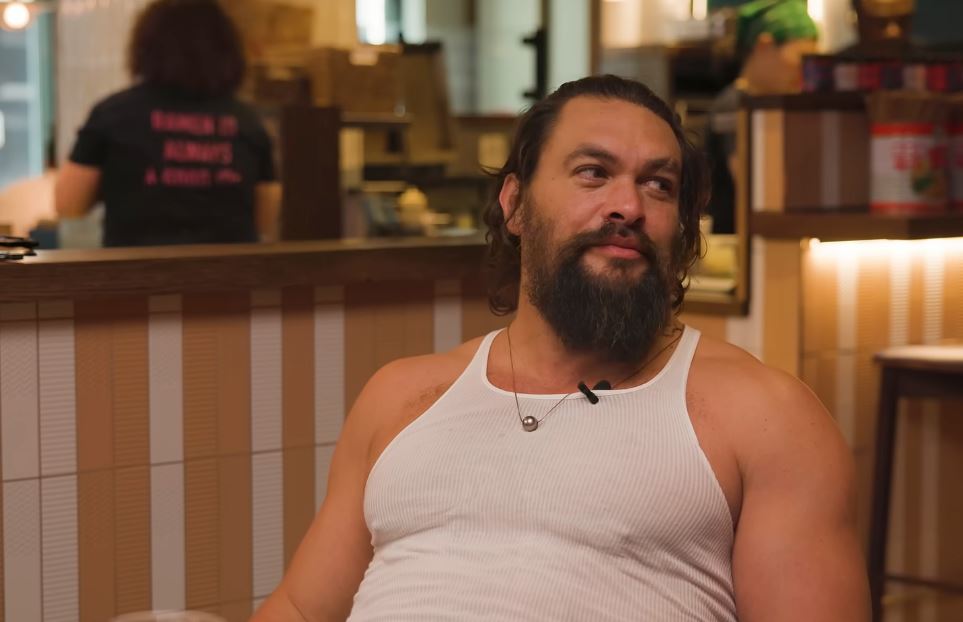
Beneath that warmth, however, lies a more nuanced tale of what Hollywood really requires. Momoa claims that training for Batman v. Superman and the early Aquaman filming was at its harshest and that survival was more important than sculpting. Aquaman required two stuntmen because the physical strain was too great for one person to handle both rehearsals and filming at the same time. The abs that viewers saw on screen weren’t solely the result of discipline and a healthy diet. They involved severe dehydration, a method Hugh Jackman famously described using for Logan, in which he abstained from all water for 36 hours before shirtless scenes. Contouring, tanning, and makeup. The entire production.
Knowing that reframes it, but it doesn’t make it any less impressive. People weren’t comparing Momoa’s carefree vacation body to a real, sustainable body. It was a movie set. It was always going to be problematic to treat it as a baseline standard, both for Momoa’s perception and, more generally, for men’s perceptions of their own bodies.
Interestingly, every time Momoa seemed to put on weight for work-related reasons, the criticism would resurface. He has talked about purposefully gaining weight for the character in Minecraft. The physical alterations seem to be specific preparation for the Chief of War position. This is an actor doing what actors do, adapting his body to the narrative, not someone spiraling. Every change is publicly portrayed as either a failure or a spectacular return, which says more about the expectations of the audience than it does about Momoa.
When he discusses his diet in public, it is simple in a way that seems almost purposefully unremarkable. He has specially shipped breakfast burritos with Cholula hot sauce. He grew up eating poi, or taro root, a staple of Hawaiian cuisine. A basic lunch sandwich. Mac salad, rice, chicken, and a simple salad with olive oil. He claims that after consuming a lot of red meat for years, it eventually caused him pain, which is why he has stopped. Now for more seafood. He admits that he most likely doesn’t eat enough vegetables with sincere self-awareness. “Baby steps,” he remarked.
Beyond just one actor’s body and one online backlash, there’s something important to think about in all of this. Chris Hemsworth, Daniel Craig, and Chris Evans are now held to the same standards that Momoa was in 2019: a very particular type of lean muscularity that necessitates extraordinary, unsustainable effort and significant production assistance. Google searches for “six pack abs” increased by 300% after 300 was released in 2006. That figure seems like a worthwhile cultural data point.
To his credit, Momoa has never truly accepted the humiliation. He has accepted the body shaming, responded to it with humor instead of defensiveness, and continued to move. It appears that his weight in any given year is solely determined by what he is working on, which is, when you think about it, exactly how it should work.
FAQs
1. Why did Jason Momoa gain weight after Aquaman?
He was no longer training for a role requiring extreme physical conditioning.
2. How did Hollywood create Momoa’s famous Aquaman body?
Through months of strict dieting, extreme dehydration, makeup contouring, and professional lighting.
3. Did Momoa intentionally gain weight for any movie role?
Yes, he deliberately gained weight to better embody his Minecraft character.
4. What does Jason Momoa actually eat in his daily diet?
Mostly chicken, Hawaiian staples, seafood, sandwiches, and breakfast burritos with Cholula sauce.
5. How does Momoa currently maintain his fitness without heavy training?
He swings heavy kettlebells and does squats and deadlifts most mornings.
