

You believe you are familiar with food. You’ve prepared it your entire life, consumed it daily, and watched enough culinary programs to understand the distinction between a sauté and a braise. In actuality, though, there are a lot of facts about the food industry that are so odd, counterintuitive, and truly bizarre that most people won’t believe them, even after being informed.
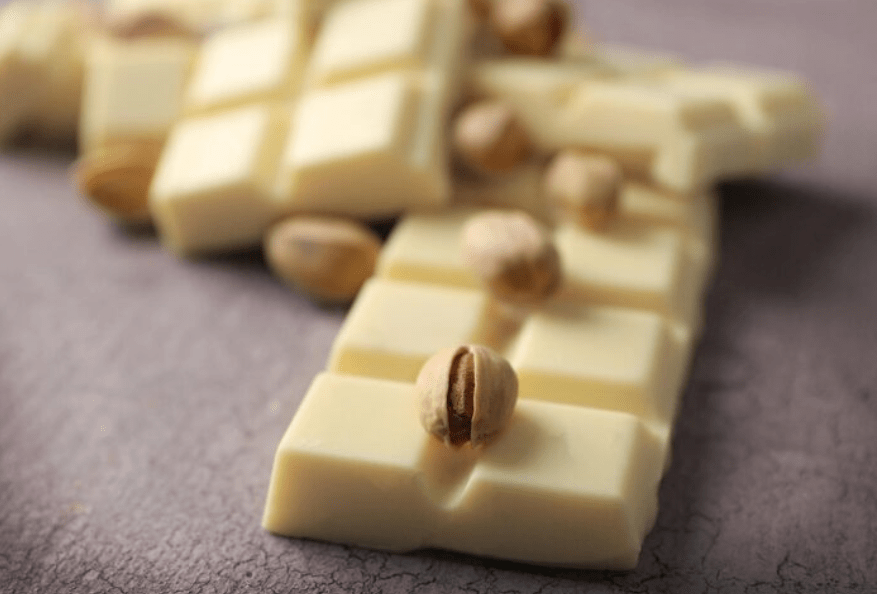
“White chocolate contains zero actual chocolate” is one of these facts that we recently shared with our followers in a reel, and the comments went crazy. True was said by half of you. FAKE, half of them said. The other half infuriated almost everyone.
We are therefore making a final decision today. While we’re at it, we’ll go over nine more food-related facts that, despite their seeming absurdity, are supported by actual food science, culinary history, and a good deal of weirdness.
As you proceed, keep score. After reading this article, you will have a slightly different understanding of what you eat on a daily basis.
Let’s start by discussing why food facts deceive us.
Prior to delving into the list, it is important to comprehend the reasons behind our frequent errors in food facts. The explanation is surprisingly straightforward: we consume food on a daily basis without giving it much thought. We are familiar with the flavors, appearances, and cooking methods of various foods. But the real science, background, and source of our food? Very few people are aware of that.
Additionally, food companies have spent decades influencing our perceptions of their goods. In our minds, labels, marketing, and branding have produced a version of food knowledge that is partially true and partially fabricated. This is precisely why so many people are surprised by facts like the first one on this list.
At that moment. Now let’s get started.
Fact 1: There Is No Real Chocolate in White Chocolate
Is it real or fake?
This is the one who initiated the dispute. Let’s resolve this appropriately.
You must first comprehend what constitutes “chocolate” in order to comprehend the solution. Cacao beans that have been fermented, dried, roasted, and processed are used to make real chocolate, which is the dark, rich, and appropriately bitter stuff. Cocoa butter and cocoa solids are the two products of that process.
Chocolate’s strong flavor, dark color, and unique bitterness are all attributed to cocoa solids. Pale, creamy, and nearly flavorless on its own, cocoa butter is the natural fat that is extracted from the cacao bean.
Both are present in dark chocolate. Both are present in milk chocolate, along with sugar and milk.
Cocoa butter is present in white chocolate, but there are no cocoa solids at all.
The conclusion: TRUE. There are absolutely no cocoa solids in white chocolate. A product must contain at least 20% cocoa butter in order to be legally referred to as “white chocolate” in the UK, according to the Food Standards Agency. However, a product may contain no cocoa solids at all and still be referred to as chocolate.
When you consume white chocolate, you are essentially consuming cocoa fat that has been sweetened with milk and vanilla. Delicious, without a doubt. Chocolate in the conventional sense? Not at all.
This is more important than you might imagine because a number of significant food producers have engaged in legal disputes over whether white chocolate should be permitted to use the term “chocolate” at all. White chocolate existed in a legal limbo for the majority of the 20th century in the United States because the FDA did not formally define it as a standardized food product until 2002.
Fact 2: While strawberries are not considered berries, bananas are
Is it real or fake?
People usually get really upset about this one.
According to botanical definitions, a berry is a fruit that grows from a single flower with a single ovary and usually contains several seeds embedded in the flesh. Bananas are a perfect fit by that definition. Grapes, kiwis, avocados, and—possibly most surprisingly—watermelons also do.
In botanical classification, strawberries are classified as “accessory fruit” or “false berry” because they develop from a flower with multiple ovaries. Blackberries and raspberries are classified as “aggregate fruits,” not berries.
The conclusion: TRUE. For centuries, botanists have been aware of this. The word “berry” has simply strayed so far from its scientific meaning in everyday usage that there is hardly any overlap between the two definitions.
Fact 3: Honey Never Goes Bad
Is it real or fake?
Over 3,000-year-old honey that was still perfectly edible has been discovered by archaeologists excavating ancient Egyptian tombs.
The chemistry of honey accounts for its exceptional shelf life. It has a very low moisture content, is extremely acidic, and contains hydrogen peroxide, which is naturally produced by an enzyme that bees add during production. Simply put, bacteria and other microorganisms cannot live in it long enough to cause spoiling.
The conclusion: TRUE. Honey that is properly sealed and kept in a stable environment will last forever. Instead of being a true sign of spoiling, the “best before” date you see on supermarket honey jars is primarily a legal requirement. Many people confuse crystallization for honey going bad, but it’s just a normal physical process that has no bearing on quality. Crystallized honey can be made liquid again by gently warming it.
Fact 4: In the 1800s, ketchup was marketed as medicine.
Is it real or fake?
In North America, tomatoes had a mixed reputation at the beginning of the 19th century. Because tomatoes are members of the nightshade family and because the acidic juice was dissolving the lead in pewter plates and actually making people sick, many people thought they were poisonous.
Then, in the 1830s, a doctor from Ohio by the name of John Cook Bennett started making claims that tomatoes could treat ailments like indigestion, liver issues, and diarrhea. Pharmacies started selling tomato-based preparations in pill and extract form.
Among the preparations offered was concentrated tomato sauce, which is essentially an early version of ketchup. During that time, one of the most popular products of its kind was Dr. Miles’ Compound Extract of Tomato.
The conclusion: TRUE. Though it was a real commercial and cultural moment, the medicinal tomato trend faded as medical science progressed. Today’s ketchup, which you squeeze over your chips, has advanced significantly.
Fact 5: Because apples contain 25% air, they float in water.
Is it real or fake?
This is not only true, but it also explains why bobbing for apples is a game at all.
Air, contained within the fruit’s cellular structure, makes up about 25% of an apple’s volume. Because of the low density of this air content, the entire apple—skin, flesh, core, seeds, and all—is less dense than water, allowing it to float.
The conclusion: TRUE. The same idea explains why some fruits float while others sink. Citrus and other denser fruits with thick, heavy pith have a tendency to sink. Fruits that contain a lot of fat or air float. Because coconuts float, coconut palms are actually transported across islands by ocean currents. Despite feeling dense, avocados float because of their high fat content.
The sixth fact is that cashews are never sold in their shells.
Is it real or fake?
You can find peanuts, walnuts, pistachios, and hazelnuts in shells at any supermarket. However, cashews are never found in their shells. Never. Why?
Because cashew shells are actually poisonous.
Cashews are members of the same plant family as poison sumac and poison ivy. Urushiol, a caustic resin found in their shell, is the same substance that causes the blistering skin reaction that occurs when you come into contact with poison ivy. Chemical burns result from handling raw cashew shells unprotected.
Cashews must undergo a meticulous multi-stage roasting and processing process that totally eliminates the urushiol before they can be sold or consumed. You will never find a raw, unprocessed cashew in its shell on any store shelf anywhere in the world because the process necessitates industrial equipment and skilled labor.
The conclusion: TRUE. Even cashews that are sold as “raw” in health food stores have undergone steam processing to eliminate the harmful substances; they are just not roasted at a high temperature afterward.
Fact 7: Cheese is the most stolen food in the world.
Is it real or fake?
Cheese is the most stolen food item in the world, according to Interpol, with an estimated 4% of all cheese produced worldwide being pilfered annually.
The reasons are simple: cheese is costly, easily hidden, very portable, in high demand worldwide, and reasonably simple to sell quickly. Cheese warehouses have been known to be targeted by organized crime groups throughout Europe, especially for aged varieties like Parmigiano-Reggiano, which can take up to 36 months to mature and sell for exorbitant prices.
Some Parmigiano-Reggiano manufacturers in Italy have even started microchipping their wheels to track theft and verify authentic product. This seems like a ridiculous cheese security measure until you consider that a single mature wheel can be worth more than £500.
The conclusion: TRUE. This is the reason supermarkets security-tag blocks of quality cheddar, if you’ve ever wondered.
Fact 8: Broccoli Is Higher in Vitamin C Than Oranges
Is it real or fake?
Thanks to decades of marketing by the citrus industry, oranges have dominated the discussion about vitamin C. However, broccoli has more vitamin C than an orange, gram for gram.
There are about 89 mg of vitamin C in 100g of raw broccoli. There are about 53 mg in a 100g serving of orange. At about 190 mg per 100g, raw red peppers blow both out of the water—a fact that almost no one is aware of.
The conclusion: TRUE. The orange’s claim to be the best source of vitamin C is more of a commercial triumph than a nutritional one. When it comes to vitamin C content, broccoli, red peppers, kiwi fruit, and strawberries outperform oranges.
Fact No. 9: Peanuts Are Not Nuts
Is it real or fake?
A nut is not a peanut. It belongs to the same botanical family as beans, lentils, and chickpeas, making it a legume. Unlike true nuts (walnuts, almonds, hazelnuts, and chestnuts), peanuts grow underground like lentils.
This is more accurately reflected in the term “groundnut,” which is still widely used in some parts of Asia and Africa. Although no one is going to change the name at this time, peanut butter is actually a legume paste rather than a nut butter.
The conclusion: TRUE. For what it’s worth, almonds are also not true nuts. They are the seeds of a drupe, a stone fruit that belongs to the same family as cherries and peaches. According to botanical definitions, true nuts are hard-shelled fruits like acorns, chestnuts, and hazelnuts that do not naturally split open to release their seed.
Fact 10: In the past, chocolate was used as money.
Is it real or fake?
Long before chocolate was consumed as food in the modern sense, the ancient Aztec and Maya civilizations of Mesoamerica used cacao beans as money.
Because they were so valuable, cacao beans were used to pay taxes, buy goods, and even pay laborers’ wages. According to historical accounts, a turkey cost about 200 cacao beans, while a small rabbit could be bought for about 30. Cacao was used to measure entire fortunes.
The Aztecs used cacao to make xocolatl, a bitter, chilli-spiced beverage that was drunk cold. It was very different from today’s sweetened chocolate bars. It wasn’t until chocolate reached Europe in the sixteenth century, when Spanish colonists started experimenting with the flavor, that sugar was added to chocolate.
The conclusion: TRUE. It is thought that the word “chocolate” itself comes from the Nahuatl word xocolatl, which means “bitter water.” The next time someone tells you that money doesn’t grow on trees, you can remind them that it actually did for several centuries in Mesoamerica.
Final Score: How Did You Do?
Every single one of the ten facts on this list is true. Each and every one.
Your culinary expertise is truly remarkable if you answered all ten correctly. Tell your friends about this article and watch how they respond. Don’t feel bad if some of them caught you off guard. That’s precisely the point. Most of us don’t realize how strange, intricate, and fascinating food is.
We explore the science, history, and true oddity of the food we all eat on a daily basis at Friar Street Kitchen. We post new recipes, deep dives, and food facts every week, so bookmark this page and return often.
