

A woman named Jeannine Katusabe became ill in a city called Bunia in the eastern fringes of the Democratic Republic of the Congo. She attempted to treat her illness at home, as many people do, with traditional remedies, family support, and hope. Her age was 38. It was too late when she arrived at the Ebola treatment facility. In a region of the world where grief like this has been arriving far too frequently and far too quickly, her family gathered for her funeral last week, sobbing.
On the ground, the 2026 Congo Ebola outbreak looks like that story—small and quiet in comparison to the magnitude of the numbers. The numbers are startling—more than 2,000 fatalities and more than 4,400 confirmed cases—but the essence of this crisis is in times like that. A woman who was unaware at the time. A treatment facility that would only be helpful if you arrived on time. A family trying to figure out how this happened while standing in the heat.
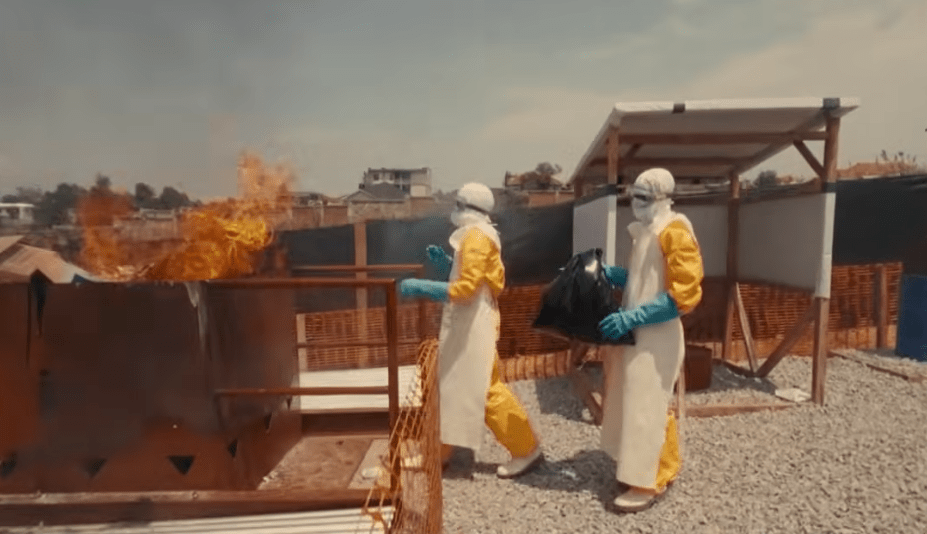
The Bundibugyo strain of Ebola, a relatively uncommon strain that has only caused two known outbreaks in recorded history—both of which were swiftly contained—is the virus responsible for all of this. It’s different this time. Health officials now think that the outbreak was spreading through communities as early as February 2026, but because it resembles typhoid and malaria in its early stages—fever, headache, and exhaustion—it kept being sent home under pretenses. It had accumulated months of momentum by the time it was formally declared an outbreak on May 15, making it impossible for any response team to simply retreat.
Tedros Adhanom Ghebreyesus, the director-general of the World Health Organization, stated in public this week that the outbreak is “on track to eclipse” the worst Ebola outbreak in history, which killed over 11,000 people in West Africa between 2014 and 2016. We’re not making that comparison lightly. The current death toll was reached almost three times faster than it was during the disaster in West Africa, starting with the first confirmed case. It took roughly nine weeks for the first 1,000 deaths. It only took three weeks to complete the second 1,000. There is no slowdown in the acceleration.
The director of WHO Africa, Dr. Mohamed Janabi, made a statement that is difficult to ignore. He declared from Bunia, “We are chasing the virus — the virus is ahead of us.” Public health officials seldom make such a direct admission. It’s worth considering because it indicates that containment and contact tracing are failing, and the outbreak is expanding into new areas more quickly than responders can establish footholds. The most recent fatality in the recently impacted province of Bas-Uele was a motorcycle taxi driver who reportedly visited multiple medical facilities before passing away, possibly exposing dozens of people in the process. This virus specifically targets that type of movement.
The fact that eastern Congo was already experiencing a crisis before the arrival of Ebola contributes to its particular difficulty. Roads have become hazardous or impassable due to rebel conflict. Health worker stoppages have been brought on by payment disputes. Ituri’s and the neighboring provinces’ infrastructure was already precarious. As a result, only about 30% of Ebola cases are currently being treated by medical professionals, meaning that about 70% of infected individuals are never properly identified, isolated, or treated. It is a tragedy and a risk of transmission that over 63% of deaths occur in homes and communities rather than in treatment facilities. A virus that you cannot detect is uncontrollable.
Bundibugyo has no approved vaccine. More attention should be paid to that fact than is usually the case. Targeting a completely different strain, the Ervebo vaccine was successful during the 2018–2020 Congo outbreak. The first human trials for a Bundibugyo-specific vaccine being developed at the University of Oxford, utilizing the same platform as the Oxford-AstraZeneca Covid vaccine, have been approved by the UK’s medicines regulator. Candidates are being worked on by three additional groups. Something might come to light quickly because, as the WHO pointed out this week, science can advance quickly under the correct circumstances. However, this outbreak is spreading more quickly than trials, which take time.
Observing this from the outside is unsettling because some of these failures seem so familiar. The main factors that contributed to 2014’s catastrophic outcome were the misdiagnosis issue, the remote location, and the community transmission occurring well beyond clinical reach. The world claimed to have learned from West Africa. The architecture of international health was reconstructed. The response systems were reinforced. However, a virus that has killed 2,000 people in just a few months has spread to its sixth province this week, and less than one-third of those infected have been reached by medical professionals. Maybe the lesson is that geography, political stability, and good fortune are more important than preparation. Or maybe this would be even worse without the systems, which are better than they appear. It’s really difficult to say.
According to the WHO, it aims to stop transmission in three months. Reversing the outbreak is the first step; it is not the same as stopping it. One of the more unsettling unanswered questions in global health at the moment is what will happen in an area where the virus began spreading before anyone even knew it was there.
FAQs
Q1: What strain of Ebola is causing the 2026 Congo outbreak?
The Bundibugyo strain, previously responsible for only two outbreaks, is driving it.
Q2: When did the outbreak actually begin?
Genetic sequencing confirmed it started in February 2026, months before official declaration.
Q3: How many people have died so far?
Over 2,061 confirmed deaths have been recorded since the outbreak began.
Q4: Is there a vaccine available for this strain?
No approved vaccine exists; human trials only recently received regulatory permission.
Q5: Why is the outbreak so difficult to control?
Rebel conflict, bad roads, and health worker shortages severely limit response reach.
Q6: How does the 2026 outbreak compare to the worst ever recorded?
It’s spreading three times faster than the deadly 2014–2016 West Africa outbreak.
