

There are influencers who discuss weight loss in abstract terms, such as gym selfies, clean morning routines, and nebulous “lifestyle changes.” Natalie Angel, on the other hand, has always struggled to keep things simple. The content creator from Queensland did not make a formal brand announcement when she disclosed that she had been taking a prescription medication for weight loss, which is commonly known as Ozempic or an equivalent of semaglutide. It was revealed because she eventually responded to inquiries from people on the internet.
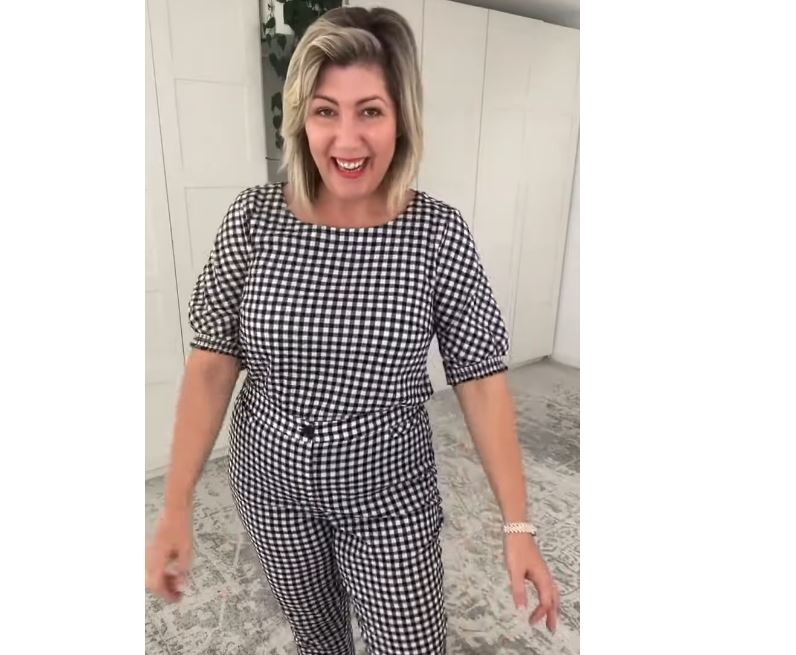
For better or worse, she has always been known for her honesty. Her Instagram account, @letmetrybeforeyoubuy, amassed more than 239,000 followers through frank product reviews and an almost awkward willingness to reveal the truth. She didn’t stop talking when she began to lose weight noticeably, and her followers began making comments about her body, some of which were encouraging and some of which were critical. In a video, she directly addressed the “negativity” and verified the medication. As expected, there were opinions on the internet.
The fact that this isn’t really a story that starts with Ozempic gets lost in the din of that argument. It starts much earlier and is more difficult to discuss: an unplanned emergency C-section, a difficult breastfeeding experience, and an early motherhood that, according to her, hit her like a wall she never anticipated. She was a successful, self-assured woman who assumed she would handle pregnancy the same way she handled most things. She didn’t. Furthermore, the emotional, mental, and physical burden she carried afterward was more than just a scale’s numbers.
She discussed this years prior to the introduction of any medication. In a 2021 article, she talked about not recognizing herself when she looked in the mirror after giving birth, purchasing clothing in her pre-pregnancy size even after losing a lot of weight, and just not being able to see what other people were telling her they saw. She became aware that body dysmorphia had been subtly affecting her for a while. Even after losing a significant amount of weight and hiring a cruel personal trainer, she was still unable to accept it. There is a specific type of suffering that is unaffected by calorie deficiencies.
The Ozempic conversation frequently condenses everything into one question, so it’s worth pondering that for a bit: Did she choose the simple path? In the general public discourse, there is a perception that GLP-1 drugs are a shortcut of some sort, a moral failing masquerading as a prescription. However, “easy” seems like the wrong word for someone who has been struggling with their relationship to their body since before the majority of her followers discovered her.
A peculiar double standard at the core of influencer culture is reflected in the backlash she encountered—followers “turning on her,” as some headlines put it. Until authenticity involves something they find objectionable, audiences want authenticity. Exercise-induced weight loss is celebrated. Medication-assisted weight loss is questioned. It doesn’t matter that the drug in question is regulated, clinically prescribed, and, for many, truly transformative after years of unsuccessful attempts using traditional methods.
Regarding Natalie’s health journey and the way her platform will develop around it, it’s still unclear exactly where she will go from here. She has spent years creating a community that relies on her advice on everything from kitchen appliances to skincare products. Depending on where you look on the internet, it seems to vary greatly whether or not you can trust her to make decisions about her body.
Observing this, it’s clear that she’s not practicing wellness. In reality, she has never been. The medication, the weight loss, and the body dysmorphia she concealed for years all suggest that she has had a difficult relationship with her own body for a very long time. One part of that tale is Ozempic. It’s most likely not the first, and it’s certainly not the last.
FAQs
Q1. What weight loss medication did Nat Angel confirm she was using?
She confirmed using a prescription weight loss medication, widely understood to be Ozempic.
Q2. Why did Nat Angel face backlash from her followers?
Followers criticised her for using medication rather than traditional exercise-based weight loss.
Q3. Did Nat Angel experience body dysmorphia before using Ozempic?
Yes, she openly discussed body dysmorphia years before any medication was involved.
Q4. What triggered Nat Angel’s difficult relationship with her body?
An unplanned emergency C-section and a painful early motherhood experience triggered it.
Q5. How many followers does Nat Angel have on Instagram?
She has over 239,000 followers on Instagram under @letmetrybeforeyoubuy.
