

About the third time you’ve scrubbed a colander at eleven o’clock at night, you start to question whether pasta was always this much trouble or if you simply never asked. Boiling water in one pot, cooking sauce in another, and draining into a third vessel without burning yourself is the norm for most home cooks. It’s the unstated cost of a Tuesday supper. This is likely why people took notice when a single skillet recipe quietly amassed 50 million views without the support of a famous chef or a significant network.
The recipe is surprisingly easy. The raw pasta is immediately added to a large, deep skillet along with a spoonful of tomato paste, olive oil, warm broth, minced garlic, and halved cherry tomatoes. No draining or pre-boiling. As everything cooks together, the starch releases straight into the liquid, causing the sauce to naturally thicken as the pasta softens. Near the end, a handful of spinach that wilts in less than two minutes is added, followed by a splash of heavy cream. Next, the Parmesan. Dinner comes next.
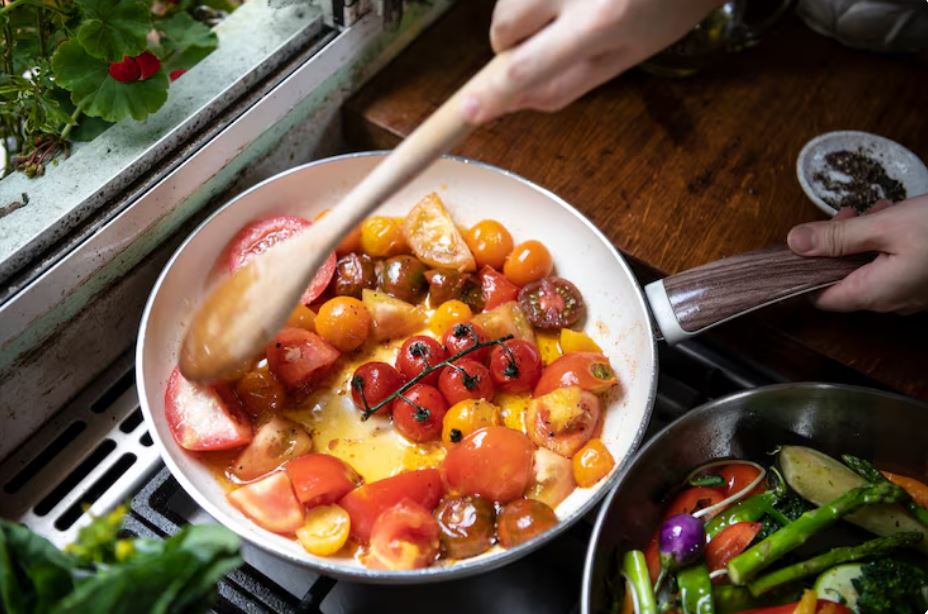
It’s possible that the recipe itself isn’t as appealing as what it stands for, which is the tacit approval to stop overcomplicating things. Anyone who grew up witnessing their parents run a busy stovetop on a Wednesday night can relate to the unique tiredness that results from it. There aren’t many requirements for this dish. Thirty minutes at most, one pan, one cleanup. It still tastes like something you would get at a local trattoria if they were wise enough not to charge you eighteen dollars for it.
The way the video went viral is intriguing. Neither a major media outlet nor a food brand promoted it. One repost, then another, then someone’s cousin in Leeds making it for her roommates and filming the outcome, was how it spread through Instagram and TikTok. People seemed to be sharing more than just a recipe. They shared a sense of relief. Comments like “I’ve been afraid of cooking pasta wrong my whole life” and “Why didn’t anyone tell me sooner?” read more like confessionals than food forums.
The method itself is not wholly novel. For years, food writers have noted that pasta can cook in its own sauce. A version was published by Martha Stewart. The science was examined by Serious Eats. However, this time, something about the timing, the video’s conciseness, and the visual evidence of a glossy sauce forming in real time made it land differently. The pasta had a nice appearance. Really good. Unlike a compromise.
The strategy is accommodating for anyone who wishes to attend tonight. You can use either vegetable or chicken broth. If dairy is off the table, coconut cream makes a clean substitute. Chickpeas, shrimp, or leftover rotisserie chicken can be added without hesitation. Perhaps the most straightforward explanation for why 50 million people stopped scrolling and started cooking is that this type of recipe incorporates whatever the refrigerator has to offer.
FAQs
Q1: Why did this one-pan pasta recipe go viral with 50 million views?
It offered exhausted home cooks a genuinely simpler way to make pasta.
Q2: Do you really skip boiling the pasta separately?
Yes — raw pasta cooks directly in the broth and sauce together.
Q3: Can the recipe be made vegan or dairy-free?
Swap heavy cream for coconut cream and skip the Parmesan.
Q4: How long does the whole dish take to make?
Under 30 minutes, including prep and cook time.
Q5: What makes the sauce thick and creamy without extra steps?
Pasta starch releases into the liquid naturally, thickening it on its own.
