

When you take a Bakewell tart out of the oven, wait patiently for the necessary cooling time, and then cut into it only to find the center soft, wet, and slightly undone, there’s a certain kind of disappointment. From the outside, it appears correct. The golden almonds are on top. The pastry’s edges are colored. However, the center, which is damp and, in the worst situations, nearly gelatinous, reveals everything. It’s more widespread than most bakers acknowledge, and it typically stems from a few choices made earlier in the process.
A surprising amount of moisture is contained in the dense mixture of butter, sugar, eggs, and ground almonds that makes up the frangipane filling. As it sets during baking, steam is released. The moisture has nowhere to go but straight into the base if the pastry underneath hasn’t been properly precooked, effectively rewetting the dough from underneath. As a result, the pastry has an oddly cooked-but-not-cooked texture, tasting clammy but feeling done. The same idea applies to fruit tarts and quiches: raw pastry and liquid filling seldom work well together.
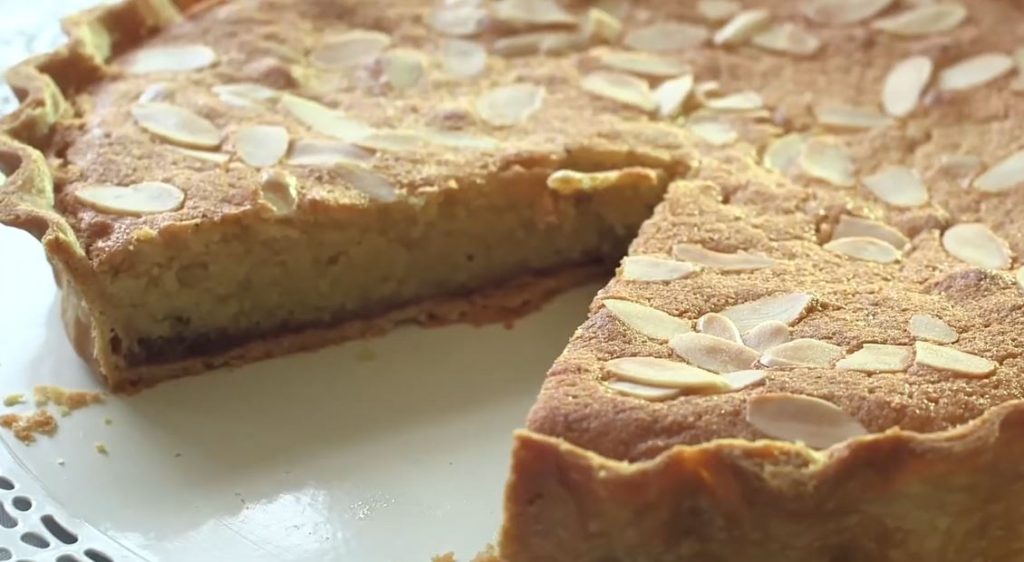
The obvious solution is blind baking, which is effective—but only when done correctly. The base is prepared by lining the chilled pastry shell with baking parchment, filling it with ceramic baking beans or even dried rice, and baking at about 180°C for about twenty minutes. Removing those beans and putting the shell back in the oven for an additional five minutes or so is the step that most people overlook, and it is more important than it may seem. The base is dried out in that second brief bake. Without it, the bottom appears somewhat soft and pale, indicating that it is already susceptible before the frangipane even enters.
The jam layer is another issue. Before the frangipane, a generous amount of raspberry jam is spread over the base to add flavor and the distinctive tartness that counterbalances the richness of the almond filling. However, jam has water in it. Because it spreads more evenly and has a slightly tighter texture, seedless jam works better in this situation. However, if the jam is applied too thickly or the pastry base is still warm, it will start to soften the crust before baking even starts again. This thin layer of fruit underneath the frangipane may be the overlooked culprit in many soggy-tart situations.
More consideration should be given to oven placement than is typically found in home baking guides. In fan ovens, where heat circulates differently than in conventional ovens, a tart positioned in the center of the oven may appear correct but struggle to cook the base all the way through. The tart is less likely to underbake the bottom while the top browns normally if it is placed on the lowest shelf or directly on a baking tray that has been preheated. Blind baking can occasionally be completely avoided by professional bakers who use deck ovens, where intense heat radiates from below. The pre-bake step is crucial because most home kitchens don’t achieve that level of bottom heat.
A sunken, nearly wet center that hasn’t fully set is the result of underbaking the frangipane itself, which is a different but related problem. When frangipane is taken out of the oven too soon, before the proteins in the eggs have had a chance to properly structure the filling, it sinks. When gently pressed in the middle, it should feel firm rather than liquid or springy like an undercooked sponge. For the last ten minutes, cover the tart with a loose piece of foil if the top is browning before the center sets. This usually fixes the issue without affecting the bake.
Because the ingredients are so well-known and the process appears simple on paper, there’s a feeling that Bakewell tarts are undervalued as a technical challenge. However, to achieve the proper layers—crisp pastry, set jam, and fully baked frangipane—temperature and timing must cooperate at every stage. Bad recipes don’t cause most failures. They result from pulling the tart a few minutes too early, rushing the blind bake, or omitting the drying step. Once you know what you’re really looking for, none of these errors are hard to fix.
FAQs
Q1: Why does my Bakewell tart turn out soggy in the middle?
Frangipane releases moisture during baking, which seeps directly into an unprepared pastry base.
Q2: Does blind baking really prevent a soggy Bakewell tart?
Yes, but only when you include the final five-minute base-drying step.
Q3: Can the jam layer cause a soggy bottom?
Thick or warm jam softens the pastry before the frangipane baking even begins.
Q4: Where should I position my tart in the oven?
The lowest shelf delivers more direct base heat, reducing underbaking significantly.
Q5: How do I know when the frangipane is fully baked?
Press the centre gently — it should feel firm, not springy or liquid.
