

Not even when it shows up in a Michelin-starred kitchen, nor when the trendy pizzeria in Shoreditch starts pouring it over their margherita. When it appears on a Walkers crisp packet, that’s the moment. At that point, hot honey—amber-colored, chilli-infused, and surprisingly straightforward—announced to Britain that it was here to stay.
The statistics supporting this sticky obsession are truly startling. In the past two years, hot honey searches have increased by more than 200 percent in the UK. Nearly 500 million people have viewed the #hothoney hashtag on TikTok. Additionally, the market has surpassed £100 million thanks to a combination of supermarket opportunism, restaurant adoption, and a seemingly insatiable appetite for sweet heat. This kind of expansion causes seasoned professionals in the food industry to reevaluate their preconceived notions about trend cycles.
Even though the origin story has been told a lot, it is still worthwhile, in part because it clarifies why the product travels so well. Brazil is the origin of chilli-infused honey, which has been used for centuries in traditional medicine and cooking. However, a Brooklyn college student named Mike Kurtz is responsible for the modern version’s notoriety. Kurtz discovered the combination while traveling to Bahia in 2003, returned home, and spent years discreetly perfecting his recipe before beginning to sell bottles off the bar at Paulie Gee’s pizza restaurant in Williamsburg in 2010. From there, it spread through word-of-mouth, farmers’ markets, restaurants, and eventually everywhere else at once, just like the best food ideas do.
Unbeknownst to most, Britain received its own version earlier. In 2014, London eco-chef Dan Shearman tried it on a New York pizza and saw its potential right away. From the hatch of a food truck, he began selling his own blend, WilderBee Hot Honey, which is made with bee-friendly honey and chillies from ethically run farms in Rwanda. The WilderKitchen brand generated £1 million in revenue by 2025, and its stockists included the Co-op, Whole Foods, and Harrods. It’s on the cocktail menu at Tom Kerridge’s Michelin-starred Hand & Flowers. It is “floral and fruity, with a chilli kick that’s just the right level of ferocious,” according to food critic Tom Parker-Bowles.” For something that began on a street food truck, that is quite the journey.
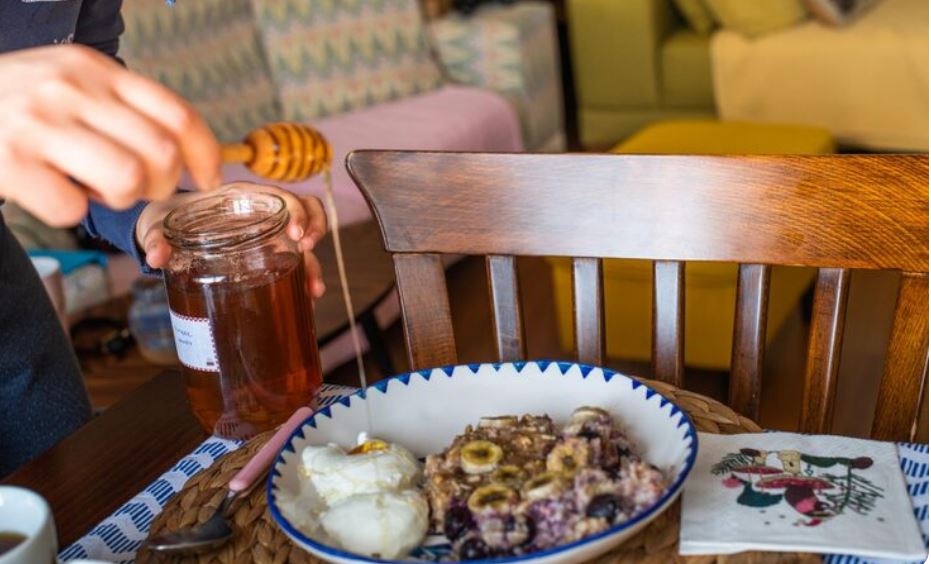
It’s difficult to ignore how much of Hot Honey’s popularity stems from its unique adaptability. The majority of condiments have a lane. Hot honey won’t stay in one. Naturally, it works on pizza and fried chicken, but it also works on breakfast pancakes with crispy bacon, drizzled over a brie brûlée at M&S, mixed into cocktails, incorporated into baking recipes, and glazed over a salmon fillet. After launching a hot honey halloumi dish, Everyman Cinema, which isn’t exactly a name you’d associate with culinary innovation, reportedly saw a 59 percent increase in food and drink revenues, helping the movie chain turn a profit during a challenging period for the entertainment sector. That’s a startling statistic that most likely sent a message to every boardroom connected to a British hospitality company.
When the giants move in, the producers who created this market from the ground up are now anxious. Laurence Edwards of Black Mountain Honey acknowledged that Walkers crisps and McVitie’s Jaffa Cakes bearing the name “hot honey” are somewhat flattering, describing it as “a bit of an accolade.” Ben Lippett, a chef and co-founder of Dr. Sting’s hot honey, is less at ease about it. He worries that mass-market versions made with cheaper inputs and thinner margins will dilute the true meaning of hot honey and possibly alienate consumers from the entire category. It is difficult to defend his own 280g bottle, which costs £8.99, when a supermarket’s own-brand is available next to it for a much lower price. All of this is made more unsettling by the European Commission’s 2023 findings on honey adulteration, which found large amounts of product bulked out with sugar syrup. Unlike pure honey, flavored honey is exempt from laws requiring producers to disclose the contents of the bottle.
The question that no one in the industry really wants to address directly is whether Britain’s hot honey moment has a clear endpoint. The term “peak hot honey” has begun to be used cautiously and half-seriously by food trend consultants. The Walkers crisp moment might be the cultural pinnacle, the moment when a truly intriguing flavor concept is reduced to a mass-market commodity. It’s also possible that, like salted caramel and sriracha before it, hot honey just becomes a staple of British cuisine, no longer a fad but a reality. There’s a sense that the more astute brands are already aware of the direction this is going and are covertly getting ready for both possibilities.
FAQ
Q1: What exactly is hot honey?
It’s simply honey infused with chilli peppers — sweet, spicy, and drizzleable over almost anything.
Q2: Where did hot honey originally come from?
Brazil, where chilli-infused honey has been used in cooking and medicine for centuries.
Q3: Why is hot honey so expensive in craft versions?
Real honey is a high-cost ingredient — cutting corners usually means sugar syrup, not actual honey.
Q4: Is hot honey just a passing trend?
It’s already moved beyond trend into staple territory — Walkers, McVitie’s, and M&S don’t back fads.
Q5: Can I make hot honey at home?
Yes — simmer honey with dried chilli flakes over low heat for a few minutes, cool, and it’s done.
