

On a Thursday morning, the news was released. When employees at the Marston’s Brewery on Shobnall Road in Burton upon Trent were called in, the message was not good. The Danish-British beverage company Carlsberg Britvic, which currently owns the facility outright, has stated that it intends to shut down the brewery and its main logistics business by the summer of 2027. Approximately 310 jobs are directly impacted.
When something foundational announces its departure, a certain kind of silence descends upon an old industrial town. Since the eleventh century, Burton upon Trent has been associated with beer; Benedictine monks found that the town’s mineral-rich water was exceptionally suitable for brewing. At its height, this area was home to over thirty breweries. For decades, that number has been steadily declining. It soon dropped once more.
After starting his brewery in Burton in 1834, John Marston moved it to the present location on Shobnall Road in 1898. Brewing continuously for almost two centuries. Shutting that down is a big deal. And yet here we are, witnessing it in real time.
Paul Davies, CEO of Carlsberg Britvic, cited statistics that are difficult to dispute: UK cask ale volumes have more than halved in less than ten years, and there is no indication that the trend will reverse. Davies presented the closure as a structural business decision, which it most likely is, at least partially. However, there is another version of this story in which Carlsberg has simply decided that it no longer wants to compete in ale. According to an anonymous industry source who spoke with The Drinks Business, “They are a soft drinks company first in the UK, lager brewery second, and ale a distant third.”
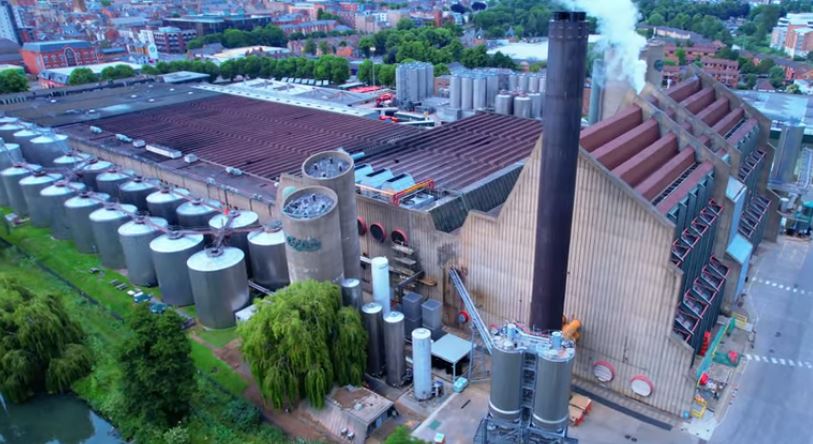
That hierarchy did not appear out of thin air. Carlsberg transformed itself into what it now refers to as an integrated multi-beverage company in 2024 after completing a £3.3 billion acquisition of British soft drink manufacturer Britvic. Ale has obviously slid into that new architecture. Carlsberg had previously invested £6 million in the Marston’s location, with plans to improve the cask ale line and expand craft capabilities, which makes the closure more difficult to accept. That investment now reads more like a failed hedge than a commitment.
A few brands will endure the change. Although the company hasn’t stated where they will be brewed following the closure, Hobgoblin, McEwan’s, and Brooklyn are anticipated to remain in Carlsberg Britvic’s portfolio. Davies stated that the company would do “everything we can to ensure they thrive under more specialist or local ownership.” Smaller regional cask ale brands might be sold to independent or specialized brewers. It is still genuinely unclear whether any suitable buyer will come forward and under what conditions. These objects don’t always end up where they should.
Burton native Ash Corbett-Collins, chairman of CAMRA, did not hold back. He described the announcement as “an absolute disgrace” and claimed that Carlsberg’s remarks regarding the brewery’s significance were made “far too little too late.” He did concede one point, though: independent brewers, who might genuinely care about what ends up in the glass, might be the ideal candidates to assume custodianship of Carlsberg’s cask brands.
The subtle irony there is difficult to ignore. A brewery that influenced British ale culture for almost 200 years is being transferred to smaller businesses that might ultimately use it more than a multinational would. That is not guaranteed. However, there is at least a chance.
Burton has no sentimental attachment to beer. Geologically, historically, and economically, it is deeply ingrained in the community and doesn’t just move when a business reorganizes. Something shifts when you begin to remove those threads. Not right away. However, you eventually become aware of it.
