

There is something almost jarring about walking into a McDonald’s and ordering a Red Bull. The Golden Arches have meant many things to many people over the decades — a Happy Meal on a road trip, a late-night quarter pounder, a McFlurry as consolation after a bad day — but an energy drink layered with freeze-dried dragon fruit was never really part of that mental image. And yet, starting August 17, fans can fuel up with the Red Bull Dragonberry Energizer, marking McDonald’s entry into the energy drink category for the first time in its history.
The drink combines Red Bull’s signature flavor with blue raspberry syrup and freeze-dried dragonfruit inclusions, presented as a bold, fruit-forward sip available with Red Bull Zero as a lower-sugar base. It sounds, on paper, like something a teenager would invent in their kitchen.
But the early reviews suggest there’s more going on here. According to tasting notes from Tasting Table, the drink presents in shades of purple and blue and tastes of blue raspberry with a faint bubblegum note, though it runs noticeably flatter than a standard Red Bull can. That last detail is worth noting — the carbonation behaves differently when mixed, which changes the whole drinking experience in ways that are hard to predict until you’re actually holding one.
McDonald’s Red Bull Drinks Are Here
| Category | Details |
|---|---|
| Product Name | Red Bull Dragonberry Energizer |
| Launch Date (USA) | August 17, 2026 |
| Available At | Participating McDonald’s restaurants nationwide |
| Key Ingredients | Red Bull, blue raspberry syrup, freeze-dried dragon fruit, ice |
| Sugar-Free Option | Red Bull Zero substitution available |
| Caffeine Content | 80 mg per serving (roughly equivalent to one instant coffee) |
| Standalone Can Option | 8.4 oz Red Bull cans sold individually at participating locations |
| First Tested | Australia, February 2026 |
| Presentation | Purple and blue hues; freeze-dried dragon fruit pieces on top |
| Price | Not officially confirmed; varies by location |
| McDonald’s CMO | Alyssa Buetikofer, Chief Marketing & Customer Experience Officer |
| U.S. Restaurants | Approximately 13,500 locations, 95% franchisee-owned |
| Part of Broader Launch | Also includes Vanilla Swirl, Orange Dream with Fanta, reduced-sugar crafted sodas |
The tasting reception has been interesting. A reviewer at Delish described the first sip as immediately tart, the blue raspberry flavor hitting hard and sharp before giving way to a sweetness that lingers longer than expected.
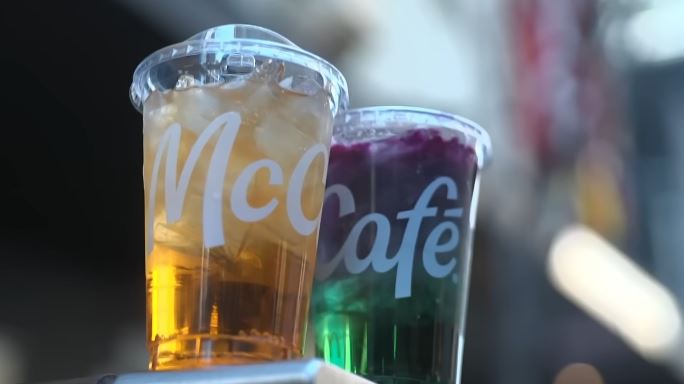
The freeze-dried dragon fruit sitting on top is less about flavor and more about visual texture — little crimson pieces that make the drink look more crafted, more considered, than a standard energy drink poured over ice. It’s hard not to notice that McDonald’s seems to be trying very deliberately to look like something other than a fast food chain right now. Multiple tasters noted that the drink reminded them less of an afternoon caffeine fix and more of a cocktail base waiting for a splash of vodka.
The drink was first introduced in Australia in February 2026 before making its way stateside, which suggests McDonald’s spent time watching how customers responded internationally before committing to a U.S. rollout.
That’s a more cautious approach than it might appear. Energy drinks are a crowded, competitive space — Red Bull itself competes against Monster, Prime, Celsius, and dozens of smaller brands all chasing the same caffeine-hungry demographic. Entering that world through McDonald’s drive-throughs rather than convenience store refrigerators is an unconventional move for Red Bull, but it makes a certain kind of sense given where fast food beverage culture is heading.
The additions arrive as McDonald’s continues to build out a beverage platform that extends well past its traditional soft drinks and coffee offerings. The chain shuttered its CosMc’s concept — a beverage-focused spinoff that never quite found its footing — but rather than abandoning the specialty drink ambitions, it folded them back into the main restaurants. Dirty sodas, fruit refreshers, cold foam, popping boba — these were all CosMc’s ideas that have quietly migrated into the standard McDonald’s menu. The Red Bull partnership feels like the next logical step in that evolution, and possibly the most commercially significant one.
McDonald’s notes that the Red Bull Dragonberry Energizer contains 80 mg of caffeine, roughly equivalent to a teaspoon of instant coffee, which positions it as approachable rather than extreme — not the kind of jolt associated with a pre-workout can, but enough to do the job on a slow afternoon. That’s probably intentional. It opens the drink to a wider audience: people who want a little lift but don’t consider themselves energy drink people, customers who might otherwise just order an iced coffee. McDonald’s has noted that beverages represent a $100 billion worldwide opportunity, and it’s possible that the Red Bull collaboration is less about any single drink and more about signaling that McDonald’s is serious about owning a bigger piece of that market.
Whether that ambition translates into lasting menu presence is still unclear. Specialty drinks at fast food chains have a complicated track record — beloved for a season, then quietly discontinued when the novelty fades. But there’s a feeling, watching McDonald’s systematically build out this beverage lineup, that something more deliberate is happening here. The Dragonberry Energizer isn’t just a drink. It’s an argument that the world’s biggest fast food chain can compete in a category it has never touched before. August 17 is when that argument officially goes public.
