

The deliciousness of pasta made with just five ingredients is almost embarrassing. Somehow, what ends up on the plate feels like a proper meal as you stand at the stove stirring a pan with hardly anything in it, like a fistful of spaghetti that has just been pulled from boiling water or some garlic that is hissing in olive oil. Not a concession. “I didn’t have time to cook” is not an acceptable excuse. A real dinner that’s worth eating.
The concept is not novel. For generations, Italian grandmothers have prepared aglio e olio, which consists of garlic, oil, pasta, parsley, and a hint of chili. At the time, no one referred to it as minimalist. It was only Tuesday. What has changed is that the rest of the culinary community has gradually come around. When Jamie Oliver released his book 5 Ingredients, he practically made it fashionable by dissecting recipes and challenging readers to believe that simplicity could be fulfilling. In kitchens that had never heard of him before, his simple sausage carbonara and super green spaghetti became weeknight mainstays.
It’s not a trick that makes these recipes work. It’s those five carefully selected ingredients that leave no room for concealment. Each component must pull its weight. The Budget Bytes butter tomato sauce is made with a knob of butter that melts into crushed whole tomatoes, a thread of olive oil, and a pinch of black pepper. It takes fifty minutes to make, but it tastes like it simmered all afternoon. At the pan’s edges, the tomatoes start to caramelize a little. The butter completes the picture. Nothing else exists. It’s not necessary.
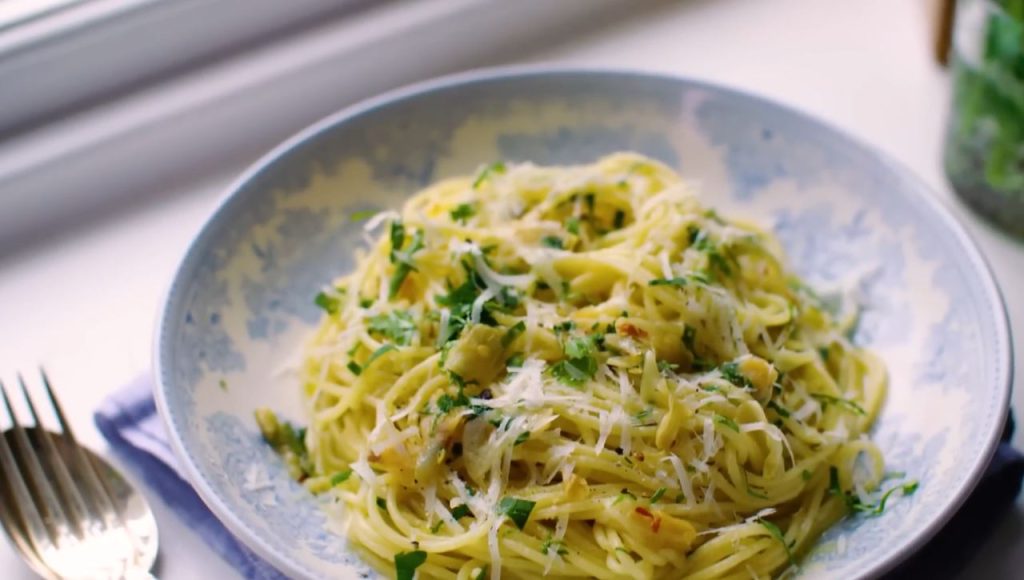
It’s still unclear if people undervalue these recipes because they appear too easy, or if it’s precisely the simplicity that they consistently overlook. Technique is more important than ingredient count in recipes like the Allrecipes aglio e olio, which calls for spaghetti, garlic, extra-virgin olive oil, parsley, and reserved pasta water. The oil is being emulsified into something nearly creamy by that starchy pasta water. If you omit it, your noodles will be greasy. When you use it correctly, you’ll see why this dish has survived empires.
Almost every type of weeknight has a version. Italian sausage, mascarpone, and cheese tortellini make up Taste of Home’s Tortellini with Sausage and Mascarpone, which takes less than twenty minutes to prepare. The mascarpone melts into a sauce that feels decadent in a way that is difficult to describe with just five ingredients. Despite having fewer than 200 calories per serving, penne with kale and onion is the antithesis of decadent. One recipe developer acknowledged that her husband, who despises pasta, requested seconds.
There is a noteworthy psychological impact of the five-ingredient frame. There is a temptation to measure twice, second-guess, or substitute when a recipe calls for twenty ingredients. Five is a commitment. You taste along the way. By adjusting the salt, adding a squeeze of lemon, and grating a little more Parmesan, you are actually cooking instead of merely following directions. Perhaps this is the true gift of these recipes: they give home cooks confidence again.
Not all of them are revelations. Some rely too much on processed shortcuts, such as pre-made sausage or a jar of sauce, which are technically effective but lose their flavor. Ingredients that change in the pan are the foundation of the best ones, the ones that are worth coming back to. Garlic is turning golden. Butter is slightly browned. Pasta water is thick with starch and hazy. Simple things, doing extraordinary work in silence.
FAQs
1. Why do 5-ingredient pasta recipes taste so good despite having so few components?
Every ingredient must pull full weight, leaving no room for filler.
2. What is the secret behind aglio e olio’s creamy texture?
Starchy pasta water emulsifies the oil into something almost creamy.
3. How long do most 5-ingredient pasta recipes take to make?
Most come together in 15 to 50 minutes, depending on the recipe.
4. Who helped popularize 5-ingredient pasta recipes in modern home cooking?
Jamie Oliver’s 5 Ingredients book made minimalist pasta fashionable worldwide.
5. What unexpected benefit do 5-ingredient recipes offer beyond saving time?
They hand confidence back to the cook by encouraging instinct over instruction.
