

No one could have predicted that Yuri Gagarin’s unglamorous act of squeezing a tube of beef and liver paste into his mouth somewhere above the Earth in 1961 would eventually inspire a café aesthetic in Chelsea. And yet here we are. Enter any of the more recent grab-and-go restaurants that are currently opening throughout London, and you’ll find something that feels strangely familiar in terms of its accuracy, portability, and almost clinical focus on protein and function. It appears more like a mission briefing than a bistro.
No one at Atis or Blank Street will give you a silver tube and tell you to squeeze it, and the connection isn’t always clear. However, the idea behind London’s fastest-growing café trend is unmistakably based on the same reasoning that shaped astronauts’ diets while they were in orbit: food that works, food that is engineered, food that lets you know exactly what it’s doing to your body. Atis, which raised about £8 million in 2025 and expanded significantly throughout the city, centers its entire identity around this concept.
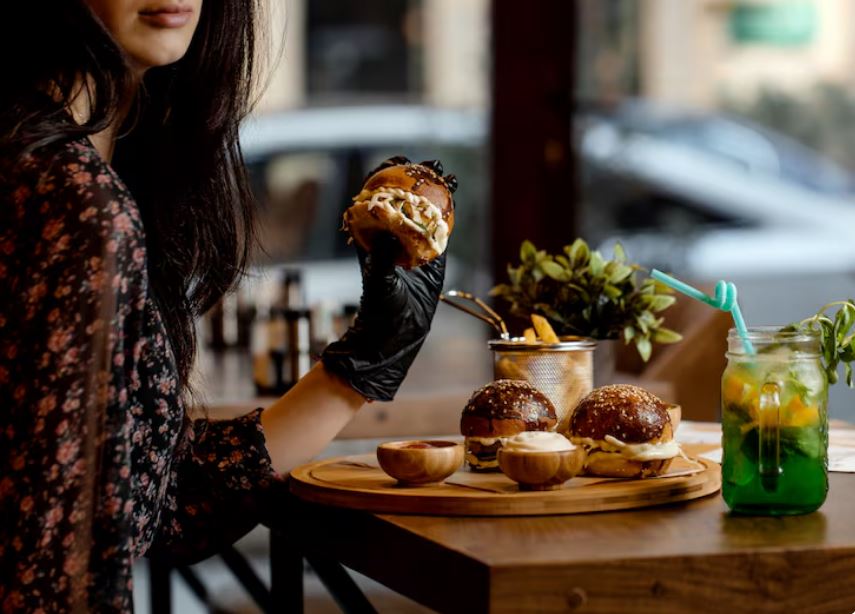
The precise number of calories and protein grams in each bowl is listed. At the end of the counter, there’s a special “crunch station” where patrons add textures like puffed chickpeas, smoked almonds, and sourdough croutons with the kind of careful attention to detail that makes it feel more like assembling equipment than eating lunch.
Standing in one of these lines on a Tuesday afternoon makes it difficult to ignore how effortlessly Londoners have come to terms with this arrangement. Receiving a personalized nutrition briefing with their bowl of hot honey fish and miso slaw doesn’t seem to bother anyone. There’s a feeling that the city has subtly arrived somewhere that diners from earlier generations might have found a little unsettling: a place where function and pleasure have blended together to the point where it’s difficult to distinguish between the two.
Of course, space food arrived first. The scientists who created astronaut rations in the 1960s were addressing issues that are, oddly, very popular today: how to get rid of waste. How can nutrition be maximized in the least amount of space? How can something be made to function consistently under erratic circumstances? The solutions—pouches, pastes, precisely calibrated macros, no crumbs—feel less like history and more like a product brief that is currently sitting somewhere in Shoreditch.
London’s café scene has taken a similar course when it comes to drinks. The Chinese company HeyTea, which essentially created the contemporary engineered tea drink, opened its first location in London in 2023 and currently operates five locations. It’s cheese tea, which is cold tea with a layer of cream cheese foam on top, salted, and perfectly balanced, is as close to space food logic as a beverage can get without actually entering orbit. It is not poured; it is designed. Blueberry matcha from Blank Street functions in the same register: it’s a practical ingredient dressed up in something aspirational, designed for both performance and photography.
Interestingly, when you’re actually in these spaces, none of this feels clinical or chilly. The exact opposite. Behind the counters, there is a genuine conviction and a warmth to the curation. Perhaps the reason the format has taken off so quickly is that the proprietors of Atis and the more recent matcha bars seem to genuinely care about what they’re serving. London has always been adept at taking the pragmatic and making it seem appealing. This is probably what will maintain stability in this specific orbit, at least temporarily.
