

Years later, researchers are still troubled by a detail from the NASA Twins Study. After spending 340 days on the International Space Station, Scott Kelly returned looking, for the most part, older. His microbiome appeared different, his telomeres had moved, and his gene expression had altered. Then, back on Earth, it mostly reversed over several months. It turned out that the body possessed some sort of memory. That was both fascinating and subtly unsettling to scientists.
In ways that feel genuinely significant, what has transpired since then builds on that unease. Human blood stem cells were sent into space on SpaceX resupply missions, and researchers at UC San Diego’s Sanford Stem Cell Institute observed the cells’ aging in real time. Not in a symbolic sense. These hematopoietic stem and progenitor cells, which are in charge of producing healthy blood and maintaining the immune system, depleted their reserves, accumulated DNA damage, experienced telomere shortening, and began exhibiting symptoms of inflammation within their mitochondria. What decades on Earth might accomplish more slowly was accomplished in 32 to 45 days in orbit. It’s possible that no laboratory on the ground could have generated this data as quickly or cleanly.
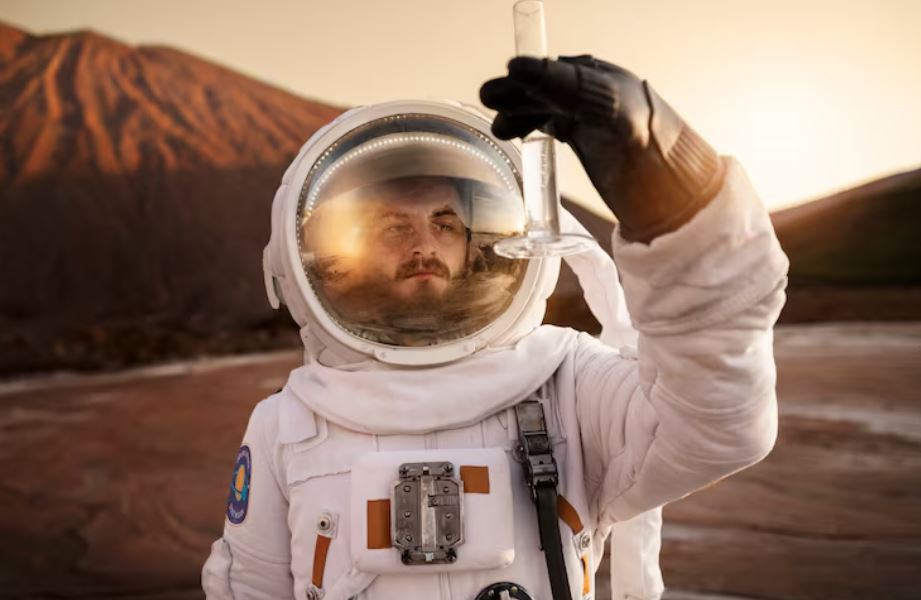
It’s worth stopping to consider the underlying technology. Together with Space Tango, the team created miniature nanobioreactor platforms, which are essentially tiny biosensing systems that can cultivate stem cells in microgravity while AI imaging tools monitor changes in real time. When applied to something as delicate and intricate as stem cell behavior, that level of accuracy amounts to years of engineering in a tiny package. From the outside, it appears that space is acting more like an instrument than a destination, accelerating biological time in ways that allow scientists to see what typically takes a lifetime.
Professor Michal Masternak’s team at UCF was investigating a different but related topic: the liver. After subjecting animal models to galactic cosmic radiation and simulated microgravity, they discovered that within a day of radiation exposure, liver tissue underwent genetic changes that closely resembled aging. Senescence of cells increased. Then came inflammation. Fibrosis started to appear. Organ decline results from those pathways if they are left unchecked. Masternak is straightforward about the consequences: a trip to Mars could cause significantly more harm over months if those changes occur in a day under simulated conditions.
What transpired next is what makes both studies intriguing and deserving of serious consideration. Some of the damage started to heal when the space-aged stem cells were put in a younger, healthier biological environment by UC San Diego researchers. The cells began to heal. This discovery opens the door to treatments that may slow or even partially reverse age-related cellular decline, but it also implies that the damage may not be irreversible. Masternak’s group discovered molecules known as antagomirs that interact with the body’s microRNA system and seem to reduce some of the inflammatory and aging processes brought on by space travel. Although the work is still in its early stages, the molecular targets are becoming more apparent.
Beneath all of this, a larger argument is subtly emerging. By definition, aging research on Earth proceeds slowly; monitoring decades of biological change in human subjects is costly, morally challenging, and, well, takes decades. That timeline is drastically compressed by space. Data that might otherwise require years of longitudinal study can be obtained in a few weeks on board the International Space Station. Although it’s still unclear whether every discovery made in microgravity will directly translate to Earth-based aging mechanisms, scientists are keeping a close eye on the striking overlap between astronaut blood data and these lab results thus far.
There is cause for both measured optimism and patience here for anyone who has watched the science of aging slowly advance over the years, with promising discoveries emerging and then subtly fading. The information is accurate. Its underlying technology is truly innovative. Furthermore, medicine has been circling the question of what causes the cascading failure of biological systems that we refer to as aging for a very long time without coming to a clear conclusion. Surprisingly, the most obvious answers may ultimately come from space.
