

This past year, a certain image has been all over the place: someone emerging from an ice tub, gasping, flushed, and clutching the edges as if they had survived something. Typically, the caption uses terms like “discipline” or “reset.” For a while, it served as a sort of visual acronym for wellness aspirations. It felt urgent, almost heroic, to plunge cold. Then something changed, softly.
In 2026, what the Global Wellness Institute referred to as an “ice bath backlash” in 2025—a shift away from harsh, one-modality cold plunges toward softer, more approachable forms of cooling—grew into a more comprehensive reevaluation of wellness, fitness, and hospitality. Thermal bathing is an older, warmer, and possibly more sensible destination for that recalibration. Hot springs. Soaks in minerals. Hydrothermal circuits. Whatever you want to call it, the wellness industry is heating up.
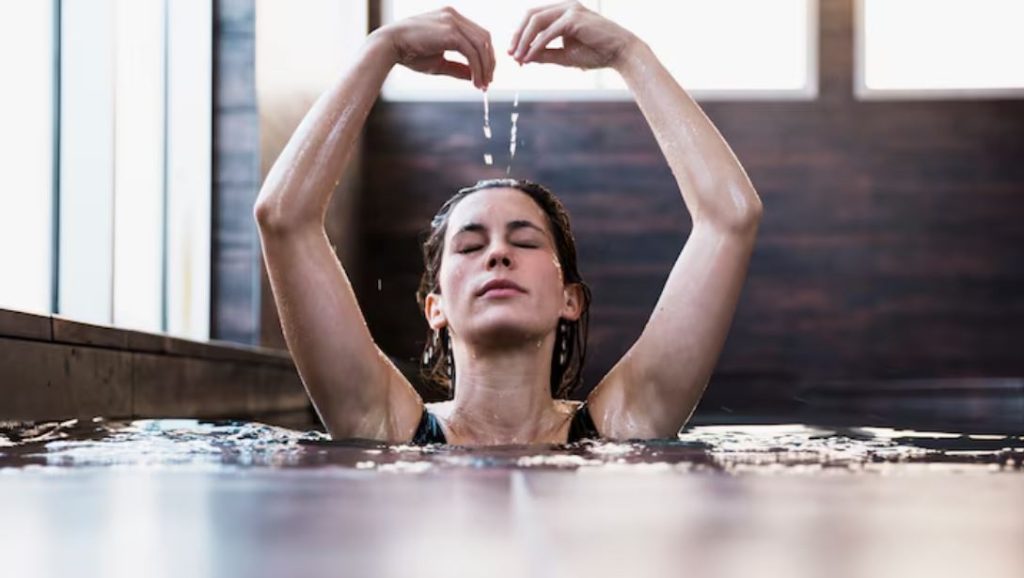
Perhaps cold plunging was never so much science as it was social media. The trend turned into a lucrative business model that was marketed as a combination of therapy, discipline, and recovery. However, the risks are real, especially for those with little experience, and the benefits have remained dubious. In susceptible people, sudden exposure to cold can result in thermal shock, an increase in blood pressure, and cardiovascular problems. At a Sydney ice bath location, one researcher even had to provide first aid after a young man passed out after a ten-minute session. Wellness memberships aren’t sold by stories like that for very long.
Sustainable, repeatable cooling techniques can provide comparable or even greater benefits than ultra-cold immersion while being safer and much more widely tolerated, as operators, clinicians, and consumers are realizing more and more. Here, the word “sustainable” is important. Something that truly feels good can serve as the foundation for a long-term practice. A habit based on shock and pain is more difficult to maintain.
Two millennia ago, the Romans understood what was occupying that space. Thermal bathing has a long history that dates back to ancient Rome, when soaking pools were seen as essential for both health and community. The concept never truly disappeared in countries like Hungary, Iceland, and Japan; it was just not popular on TikTok. Hot springs are used by people for everything from peace and relaxation to relief from joint pain, arthritis, skin disorders, stress, anxiety, and sleeplessness.
Compared to most wellness trends, that’s a wider reach. The minerals are also beneficial. Lithium, a known mood stabilizer, is naturally present in some thermal waters; silica enhances joint health and collagen production; iron increases circulation; and sodium bicarbonate soothes itchy skin and reduces inflammation.
Urban bathhouses, which also serve as social hubs, have been popping up all over the nation. Examples include Watershed in Minneapolis, Alchemy Springs and Onsen in San Francisco, and Othership in New York City. Your grandmother is not having a spa day right now. They are multi-hour experiences that are fully programmed. Marc Coluccio, the founder of Portland’s underground thermal springs spa Cascada, attributes the popularity of bathhouses to macro-demographic trends, such as younger generations consuming less alcohol and becoming weary of social media. There is a component to that. It appears that people are congregating around a pool instead of a bar.
Complete thermal environments that incorporate heat, cold, water, rest, and guided ritual are becoming more and more common in urban wellness venues. Guests are participating in multi-hour thermal journeys that combine various temperatures, sensory experiences, and rest periods in place of a brief sauna session. Although it’s not the focal point, cold still has a place in this image. It’s a part of something bigger. That seems like the appropriate ratio.
Regular heat bathing is associated with better heart health, fewer sick days, and happier moods, according to studies from sauna-loving nations. The University of Eastern Finland in Finland found links between regular sauna use and a decreased risk of cardiovascular disease. This may be more convincing because the science is more established, older, and significantly less dramatic than claims about cold plunges. People seem weary of wellness as an endurance sport, based on what I’ve seen in this area over the past year. They are looking for something that truly makes them feel better. It turns out that’s what warm water has been doing all along.
FAQs
1. Why are cold plunges losing popularity?
Safety concerns and limited scientific evidence have pushed wellness seekers toward gentler alternatives.
2. What is replacing cold plunges as the dominant wellness trend?
Thermal bathing — mineral-rich hot springs and hydrothermal circuits — is now leading the space.
3. What health benefits does warm water therapy offer?
It reduces joint pain, lowers inflammation, stabilises mood, and improves sleep quality.
4. Are cold plunges completely out of the picture?
Cold remains useful, but as one element within a broader thermal wellness circuit.
5. Where can people experience thermal bathing today?
Urban bathhouses, hot spring resorts, and community wellness venues now offer full hydrothermal experiences.
