

At practically every backyard get-together in the summer, a certain moment occurs: someone reaches into the cooler, takes out a slim can with that recognizable yellow and green label, and declares, “I’m going light tonight.” That beverage is now Twisted Tea Light. Quietly consistent, but not the most spectacular or dramatic decision. However, the majority of people who crack one open are essentially unaware of what’s inside.
Twisted Tea Light has between 109 and 115 calories per 12-ounce can, which is significantly less than the original Twisted Tea’s 194 calories. For some types of drinkers, such as the person watching carbs at a party or the person who only needs three cans without going completely insane, that difference is important. Additionally, the amount of sugar decreases dramatically, from the original 23 grams to about 6 grams. That’s a significant distinction, and it’s likely what keeps this version on the market.
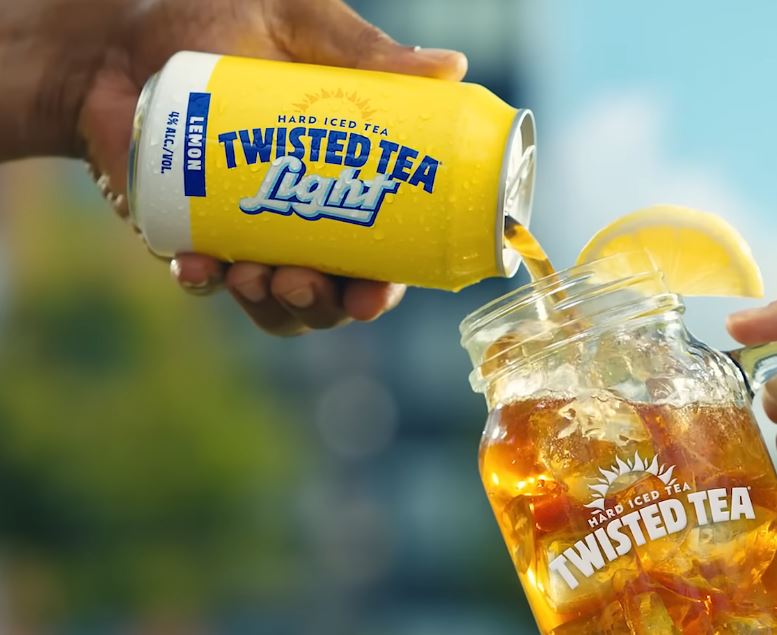
The caffeine, however, is what surprises people. A 12-ounce can of Twisted Tea Light still contains about 30 mg of caffeine. It’s not much—a typical cup of coffee is closer to 100 mg, and the majority of energy drinks easily surpass 80 mg—but it’s also nothing. The brewed black tea leaves used in production—the same source as the original—are the source of that caffeine. The tea was not eliminated by lightening the beverage. Some consumers may believe a “lighter” product is decaffeinated, but this isn’t the case.
The Light version does have a slightly lower alcohol content than the original, with an ABV of 4% as opposed to 5%. It’s a slight decrease, but when combined with the calorie reduction, it suggests that the drink was designed for longer sessions rather than shorter ones. The Boston Beer Company seems to have created this especially for those who would prefer to stay at the event rather than leave early.
As is typical for beverages in this category, there is zero fat and zero protein overall. Alcohol and leftover carbs account for the entire calorie load. Water, malt base, sugar, brewed tea, natural flavors, citric acid, and caramel color for that iced tea look make up the ingredient list, which is fairly simple and contains very little sodium.
The interaction between alcohol and caffeine in the same can is one thing to consider. Alcohol is a depressant, and caffeine is a stimulant. Although 30 mg won’t cover up severe intoxication the way high-caffeine alcoholic drinks famously did before some products were taken off the shelves, it’s still a combination to be mindful of, especially across multiple cans. Whether casual drinkers give this much thought is still unknown. Most likely don’t.
Twisted Tea Light does not pretend to be a health drink, nor is it attempting to be one. It’s a social beverage with a healthier nutritional profile than its older sibling; it’s actually lower in calories and sugar and contains a trace amount of caffeine that most people won’t notice. It’s difficult to ignore how frequently “light” becomes the route of least guilt rather than the outcome of any serious examination when you watch this product settle into regular coolers and convenience store refrigerators. That’s okay sometimes. Just be mindful of what you’re consuming.
