

Stovetop crust, butter basting, and cast iron pans are all helpful but not exactly what you asked for. Real cooks frequently encounter this real gap, especially those who live in tiny apartments with a single exhaust fan and a smoke detector right above the stove. The oven-only approach is effective, which is good news. All you need to do is be truthful about what to anticipate.
Cooking Times at 400°F — No Searing
For a 1-inch thick steak on a wire rack at 400°F: 10–12 minutes for rare, 12–14 minutes for medium-rare, 14–16 minutes for medium, 16–18 minutes for medium-well. Add 2–3 minutes for steaks coming straight from the fridge. Always pull the steak 5°F before your target temperature — residual heat does the rest.
How to Do It
To begin, remove the steak from the refrigerator at least 20 to 30 minutes before baking. More than anything else, this one step makes the cooking process predictable. The unfair reputation of the oven-only method stems from the tendency of a cold steak placed in a 400°F oven to dry out at the edges before the center catches up.
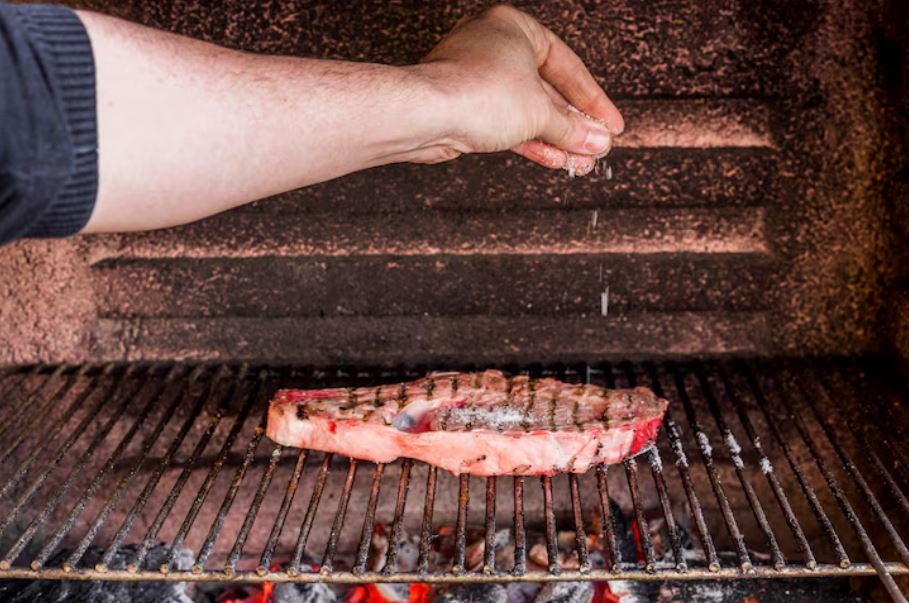
While the steak is resting on the counter, preheat the oven to 400°F. Put a wire rack on top of a baking sheet that has been lined with foil. To prevent the steak from sticking, lightly oil the rack. The wire rack is more important than it may seem because it allows heat to circulate beneath the meat instead of steaming it against a flat pan surface, which results in a more uniform, correctly textured outcome throughout.
Using a paper towel, pat the steak dry. This eliminates surface moisture that would otherwise cause the outside cooking to slow down. After rubbing oil on both sides, liberally season with salt and pepper. Add the dried herbs or garlic powder now.
Slide the steak into the center of the oven after placing it on the wire rack. Using a meat thermometer inserted into the thickest part of the steak, begin checking the internal temperature around the lower end of your time range. The ideal oven temperatures are 120°F for rare, 130°F for medium-rare, 140°F for medium, and 150°F for medium-well. After it is removed, the steak will continue to cook by a few degrees.
Before slicing, move it to a cutting board and cover it loosely for five minutes. The most frequent error with this approach is to skip the rest. The steak will be noticeably drier than it should be if it is cut too soon because the juices that have accumulated in the center will run out. It doesn’t actually need to sit under foil for fifteen minutes; five minutes is sufficient.
The crust is a fair trade-off for omitting the sear. The deep, caramelized exterior that a scorching-hot cast iron pan creates won’t be present. The surface won’t be crusty, but it will be cooked and lightly colored. That trade-off is more than acceptable for anyone who finds the smoke, splatter, and general chaos of high-heat stovetop cooking to be more problematic than worthwhile on a weeknight. Even with a small pat of melted butter on top right before serving, the interior can still be tender, cooked to temperature, and truly satisfying.
It won’t be a replica of a steakhouse steak. However, this approach deserves a spot for a Tuesday night with no commotion, no smoke alarm, and a satisfying outcome.
