

At the farmers market, Swiss chard sits quietly and is typically overlooked in favor of spinach or kale. The stems are bright orange, pale yellow, and deep red, making it one of the more eye-catching vegetables in the pile. However, the majority of people ignore it. They are turned off by the bitterness, and it’s difficult to forget the experience of biting into an overcooked, underseasoned bunch.
The good news is that you can avoid the bitterness. It’s primarily a technique issue, and once you know what’s really going on in the pan, it’s pretty simple to solve.
Beets and Swiss chard are members of the same family. Oxalates, which are naturally occurring substances found in their leaves, give them a sharp, earthy bite. Many of them are also found in the stems. A substantial amount of those compounds can be extracted by boiling the leaves in well-salted water for one to three minutes, then draining and discarding the water. Shocking the leaves in ice water immediately after improves the color’s retention. When you want the chard to serve as a foundation for something else, such as pasta or eggs, where a clean flavor is important, this technique—blanching—works well.
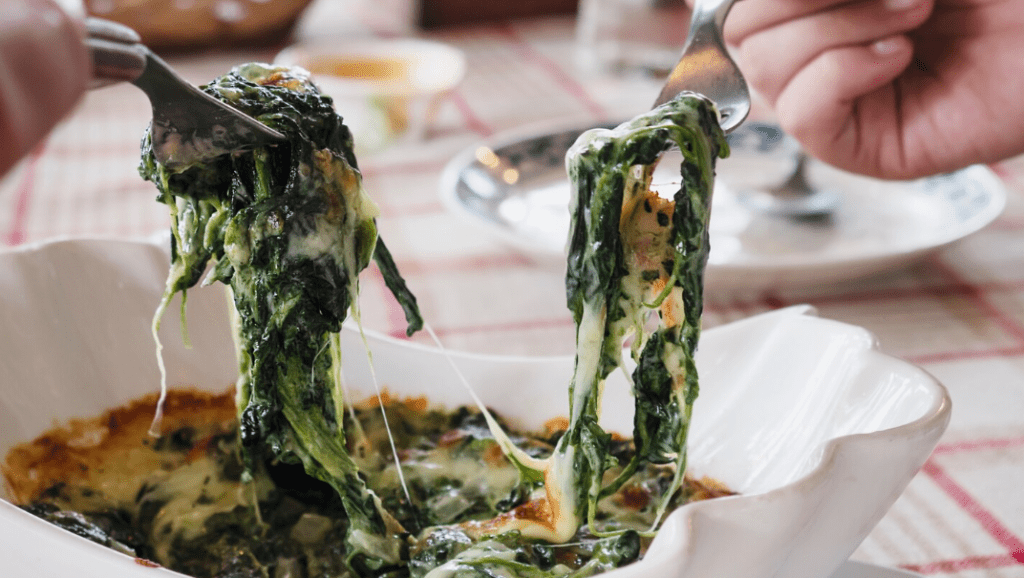
However, there are other options besides blanching. When done correctly, sautéing is quicker and addresses bitterness in a different way by layering flavors rather than eliminating the compounds. Since the stems and leaves are essentially two different ingredients, it is important to treat them as such. It takes longer for the fibrous stems to soften. Before the leaves get close to the pan, cut them into small pieces and cook them in olive oil over medium heat for a few minutes. They become slightly sweeter due to the mild heat. The stems are halfway there by the time you add the leaves.
Here, both the amount of fat and the garlic are important. Many home cooks use too little olive oil when cooking leafy greens, which makes the food taste bland and harsh. In a way that is difficult to describe but simple to taste, the fat completes the bitterness. Let everything wilt together for a few minutes after adding the garlic along with the leaves (don’t add it before or it will burn).
Acid is what completes the dish. A final addition of a splash of red wine vinegar or a squeeze of lemon juice has an instantaneous and noticeable effect. Though it doesn’t completely go away, the bitterness lessens. The flavor becomes brighter, more well-balanced, and more like something you would want to eat again. Additionally effective, balsamic vinegar balances the acidity with a hint of sweetness. Some cooks use shallots or a tiny bit of honey to balance the edge without completely obscuring the character of the chard.
The age of the leaves is also worth mentioning. When available, baby chard can even survive in raw salads when the leaves are massaged with dressing to soften them. Younger chard is actually less bitter than mature bunches. Technique becomes crucial because most grocery store chard is on the larger side.
The combination of acid, fat, and aromatics is more of a mindset than a formula. One vegetable that reacts to attention is Swiss chard. It tastes bad when thrown carelessly into a dry pan. It’s truly delicious when cooked with even a little attention to detail, such as starting with the stems, timing the garlic, and adding something acidic at the end. Worthwhile to repurchase.
It’s simple to believe that some vegetables are unhealthy for you. Many people have probably been persuaded of that by Swiss chard. It is not required to.
