

Cooking a sirloin steak in a cast iron skillet without the need for fancy equipment, managing charcoal, or standing outside in the November wind has a subtle, satisfying quality. A piece of beef, a heavy pan, and a little care. For good reason, this approach has been used for decades. When done properly, it yields a juicy interior that makes it difficult to argue against, and a crust that can compete with nearly anything that comes off a grill.
First, it’s important to understand that preparation is more important than most people realize. Before cooking, remove the steak from the fridge at least 20 to 30 minutes in advance. When a cold steak is placed in a hot pan, it will cook unevenly, with the center remaining stubbornly undercooked while the outside scorches. Using paper towels, pat it dry completely.
Surface moisture is the enemy of a good sear, despite this seemingly insignificant step. Here, Steam is not your friend. After it has dried, liberally season both sides with freshly cracked black pepper and coarse kosher salt. Don’t be afraid to do it. A proper crust, not merely a hint of flavor, must be created by the seasoning.
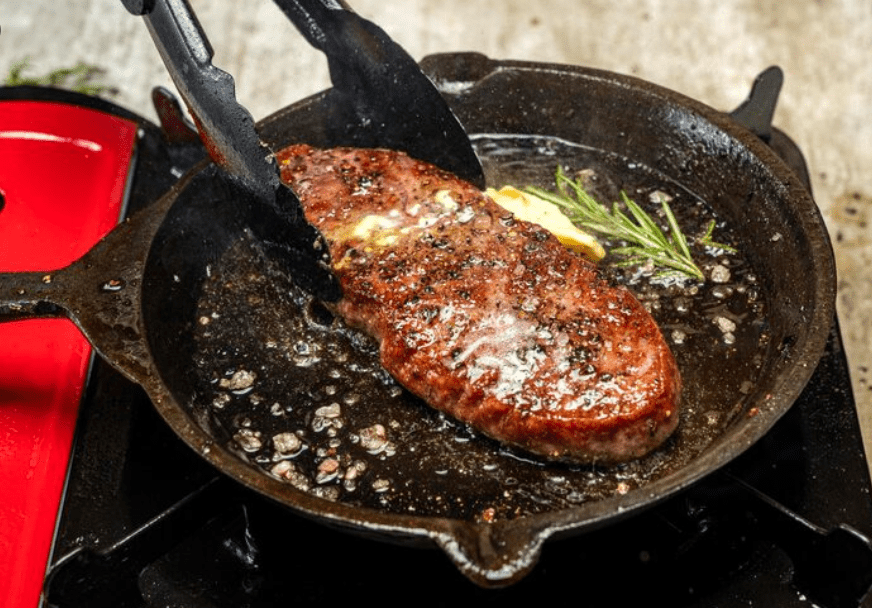
The pan itself requires a lot of heat. Your 12-inch cast iron skillet should be placed over medium-high heat and left for four to five minutes, or until it is actually smoking. The kitchen window should be open at this point. Add a tablespoon or so of oil with a high smoke point, such as canola or avocado. At this temperature, regular olive oil tends to degrade too quickly and may leave behind a slightly bitter taste. The steak should be carefully laid flat and left alone once the oil has begun to shimmer. This is more difficult than it seems. Every thirty seconds, try not to move it, press it, or look underneath. Give it three to four minutes to sit without moving. A proper dark crust develops in this manner.
Flip it once when the time comes. This is the point at which cast iron’s magic becomes apparent. The second side will sear as cleanly as the first because the pan has maintained its heat consistently. Flip the pan and immediately add two tablespoons of butter, two or three smashed garlic cloves, and a sprig of thyme or rosemary. Almost immediately, the butter will foam. For the rest of the cooking time, tilt the pan slightly in your direction and continuously baste the steak with a large spoon, spreading that garlicky, herb-infused butter over the surface. At this point, the scent is overpowering.
When the thickest part of the steak reaches 130°F on an instant-read thermometer, it is medium-rare and should be taken off the heat. The goal is that. If you want it closer to rare, pull it at 125°F. It is deliberate, not accidental, to remove the steak from the pan a few degrees early because it will continue to cook slightly after it is removed. After moving it to a chopping board, give it at least five minutes to rest. When a steak is cut too soon, all of the juices run out onto the board rather than remaining in the meat. It is not optional to take a break.
Sirloin works so well with this technique in part because it is a lean cut. When cooked to the proper temperature, it maintains its tenderness and has just enough beefy flavor to balance out the butter and herbs. The biggest danger is overcooking it; even well-done sirloin can quickly become tough. A trustworthy thermometer is the most helpful tool in the entire process—more helpful than the pan itself, if that’s a concern.
This is not a place to learn dramatic technique. For a standard-thickness cut, there is no need for an oven or reverse sear. All you need is a hot pan, some seasoning, a little perseverance, and butter doing what butter has always done.
