
If you ask someone in Manchester to get you a roll, they may give you a sidelong glance. You’ll fit right in if you ask for a barm. When you cross the Pennines into Nottinghamshire, all of a sudden you want a cob. Most people won’t think twice about calling it a bread roll if you go farther south, past the Midlands and into the Home Counties. Same thing. A completely different word. Furthermore, that distinction is more significant in Britain than it probably should be.
On paper, it’s easy to distinguish between a bap, a cob, and a barm. Originally popular in Scotland and Northern Ireland, a bap is a large, soft roll with a lightly floured top that is flatter and rounder than most. The preferred term in Leicestershire, Nottinghamshire, and Derbyshire is “cob,” which is smaller, firmer, and has a slightly crunchier crust. People there will tell you that anything else is just wrong. A barm, also known as a barmcake, is incredibly soft and flatter. Its name comes from the foam that is created during the brewing of beer, which was once used as a leavening agent by bakers in the Northwest. Manchester and Lancashire are the areas where the word is most prevalent.
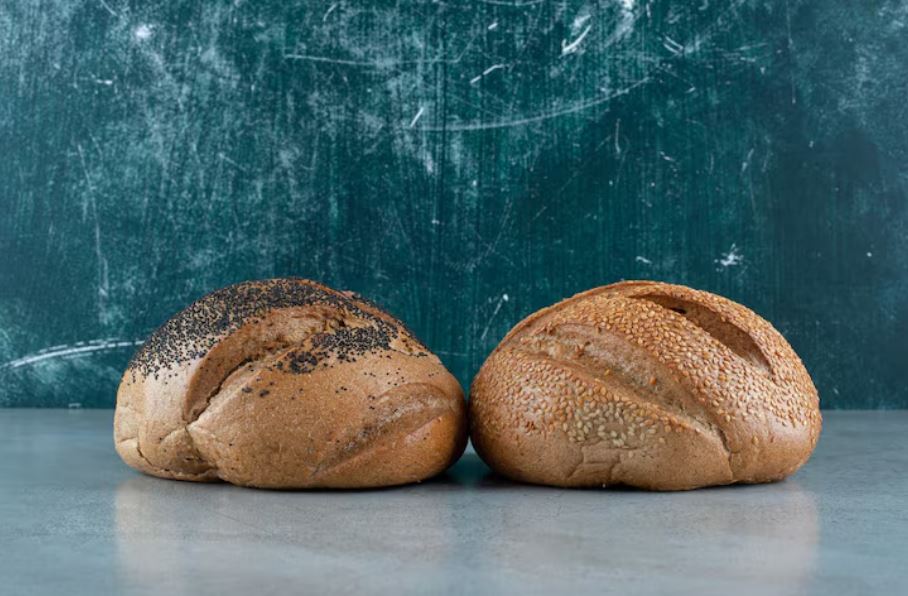
However, if you narrow it down to just those three, you’ve already excluded someone. In a survey of almost 25,000 English people, YouGov discovered that 52% just refer to it as a roll. Bun (10%), cob (8%), barm (6%), bap (6%), and a dispersed assortment of regional holdouts like batch, muffin, teacake, and breadcake quickly break up after that. Batch is used in Coventry. In some parts of Yorkshire, the term “teacake” refers to something entirely unsweetened and devoid of currants. Linguists are delighted, and tourists are perplexed by this type of linguistic landscape.
English has been spoken on this island for more than a millennium, arriving with Germanic settlers and evolving in relative isolation across regions, according to Jonnie Robinson, who oversees the spoken English curation at the British Library. In the era of national supermarket chains and standardized menus, the result is a patchwork of vocabulary that is still relevant today.
The term “barm” is derived from synecdoche; the bread that relied on barm was named after the yeast used in brewing. “Cob” evolved from a more general Old English word that denoted a rounded lump. “Roll” arrived later, thanks to the Norman invasion, via French. These decisions weren’t made at random. They were influenced by the resources available to people, the goods they traded, and the characteristics of their neighbors.
Neil Buttery, a food historian, points out that the name isn’t the only thing that changes. In areas where dairy farming is practiced, the bread may be enhanced with butter; near breweries, it may be leavened with barm; in areas where fuel is scarce, it may be baked in batches and torn apart. For example, the Belfast bap has a unique history. During the Irish Potato Famine, a baker by the name of Barney Hughes is credited with creating it using flour stretched with ground peas and beans to provide inexpensive food. Even though it’s still soft-topped and flour-dusted today, its history is anything but commonplace.
Once they leave home, people fiercely defend their local term, which is interesting and maybe a little telling. Coasters with the slogan “C is for Cob” are available at Nottingham souvenir shops. The person who requests a barm makes an instant impression in London offices. For years, linguist Laurel MacKenzie has shown University of Manchester students a picture of a plain bread roll and asked them what they would call it. The responses are still very different. According to Robinson, it turns into a badge of identity.
The bap versus cob versus barm debate has no official solution, which is probably why it keeps coming up. Every few months, a post appears online, someone claims their term is accurate, and hundreds of people from all over the nation show up to disagree. It’s always the same conversation. Beneath its subtle absurdity, however, lies something real: a very British attachment to place, conveyed through something as commonplace as the bread around your bacon sandwich.
