

It turns out that the answer has been sitting there for years if you walk through the produce section of any good grocery store. Not behind a prescription counter or in a supplement aisle, but rather in the peaceful stack of blueberries by the door or the bundled broccoli that someone is constantly shifting to get to the bagged salad behind it. After decades of researching the relationship between diet and illness, researchers and dietitians have discovered a pattern that is both comforting and somewhat annoying: the foods that seem to reduce cancer risk are almost aggressively common.
For a while now, the American Institute for Cancer Research has made this clear. Cancer risk cannot be eliminated by a single food. Before reading any list, it is worthwhile to sit through that section. However, the data consistently demonstrate that diets high in plant-based foods, consumed on a regular basis over time, are linked to significantly lower rates of a number of cancers. For example, anthocyanins and ellagic acid found in berries seem to prevent the growth of cancer cells in the digestive system. The pigments in blue and purple are not ornamental. They’re taking action.
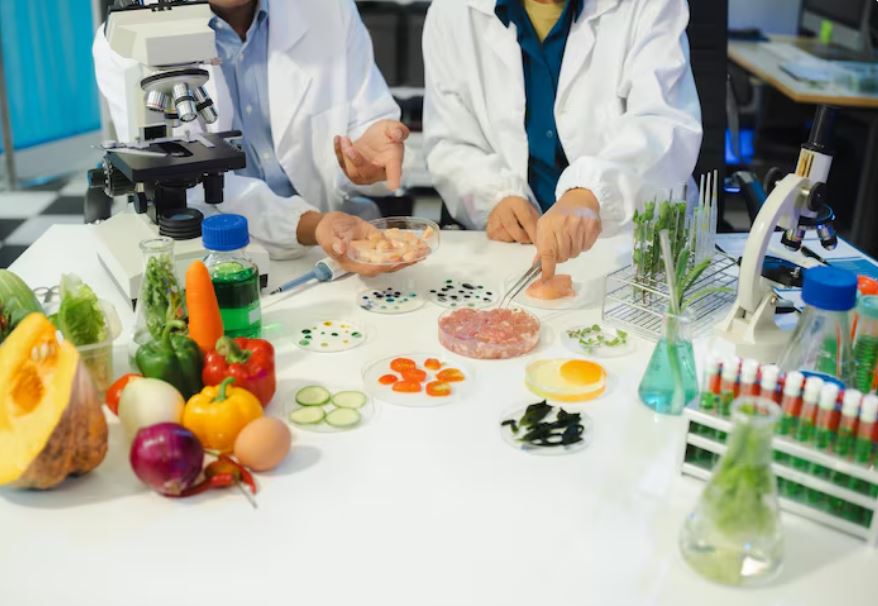
Cruciferous vegetables continue to show up in literature in ways that are difficult to ignore. The only foods that contain indole-3-carbinol, a substance that scientists believe inhibits the growth of cancer cells, are broccoli, cauliflower, Brussels sprouts, and kale. Regular consumption has been associated with a lower risk of several types of cancer. The research does not provide a precise prescription, and it is still unclear how much of these vegetables constitutes a meaningful dose. However, oncology dietitians have mostly stopped hedging on this one because the evidence’s direction has been consistent enough.
Another example that merits consideration is garlic. For centuries, people from all over the world have used it medicinally, frequently without fully understanding why it was effective. Researchers have discovered allicin, a sulfur compound that appears when garlic is chopped or crushed and that seems to slow the progression of cancer, especially colon cancer. One particular observation made by researchers is to hold off on applying heat for approximately fifteen minutes after chopping. The majority of home cooks completely disregard this, adding garlic straight to a hot pan. Although it’s a minor detail, it doesn’t seem to be unimportant.
Lentils, black beans, and chickpeas are examples of legumes that are often disregarded in discussions about cancer prevention, perhaps because they seem too affordable and useful to be considered therapeutic. They are regarded by the American Cancer Society as one of the most crucial food groups for cancer prevention. They are genuinely cheap and high in fiber, flavonoids, and plant protein. In most cities, a can of lentils costs less than $1. The disparity between the price of the foods that researchers consistently suggest and the expensive wellness products that consumers spend significantly more on is almost ironic.
No superfood contains all of the more than 4,000 phytochemicals found in plants, according to wellness dietitian Lindsey Wohlford of MD Anderson. This is arguably the most truthful way to frame the entire discussion. The obsession with single miracle foods, like resveratrol one year and turmeric the next, tends to overlook the true mechanism, which is variety. consuming food from different plant families, colors, and seasons.
The reason the Mediterranean diet keeps coming up in studies isn’t that it contains secret ingredients, but rather because it is designed with this kind of diversity in mind. It’s difficult to ignore the fact that the cuisines of the nations with the lowest cancer rates are typically centered around vegetables, legumes, and fish—not because they were created that way, but rather because that’s what was readily available and reasonably priced.
The most startling finding in the AICR research is the Standard American Diet statistic, which states that only 8% of the typical American diet is considered protective. After you’ve given it some thought, that number seems different. Genetics, pollution, and factors people believe they have no control over are the main topics of discussion when it comes to cancer. The majority of people touch their diet three times a day, but it hardly makes an impression on the general public. Every grocery store has the food. The study is not especially novel. Apparently, the conversation is still a gap.
FAQs
Q: Can eating specific foods actually prevent cancer?
No single food can prevent cancer, but consistently eating a variety of plant-based whole foods over time can meaningfully reduce your overall risk.
Q: Which foods have the strongest research backing for lowering cancer risk?
Berries, cruciferous vegetables, legumes, garlic, leafy greens, and whole grains have the most consistent evidence linking them to reduced cancer risk across multiple studies.
Q: Why does the Mediterranean diet keep appearing in cancer research?
Because it naturally emphasizes variety — vegetables, legumes, fish, and whole grains eaten together — which is precisely the dietary pattern researchers associate with lower cancer rates.
Q: Are supplements a reliable alternative to cancer-fighting foods?
Not according to current evidence; researchers consistently point to whole foods rather than isolated supplements, as nutrients appear to work more effectively in their natural combinations.
Q: What common foods actually increase cancer risk?
Processed meats, red meat consumed in excess, alcohol, and sugar-sweetened beverages are the foods most consistently linked to higher cancer risk in the research literature.
