

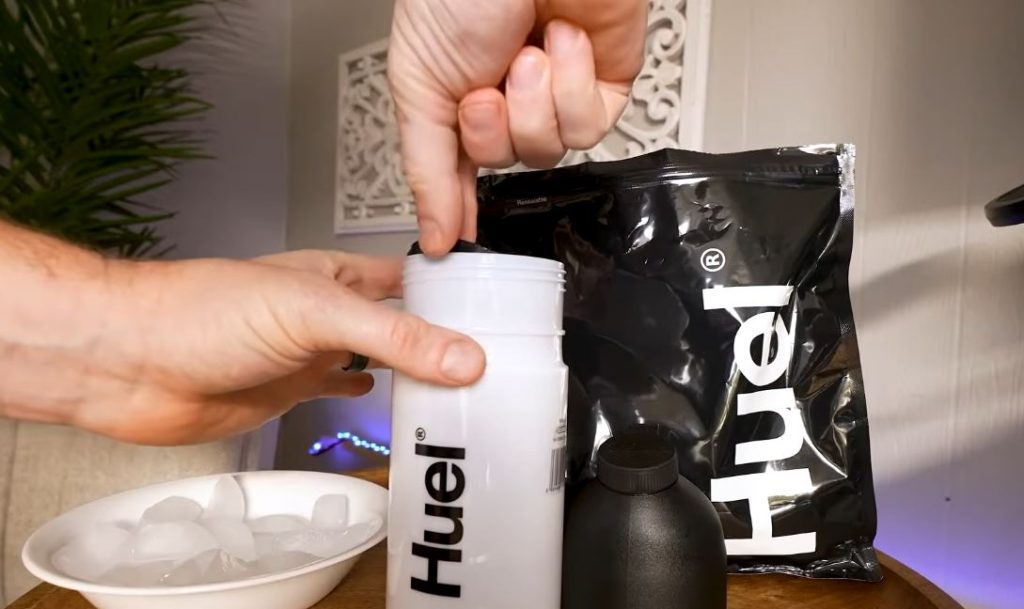
These days, you can find one in practically every gym locker room in Britain: a matte black pouch that resembles high-end coffee packaging and is tucked next to a shaker bottle. A certain type of person—busy, protein-conscious, and a little wary of sandwiches—has quietly made Huel Black Edition their go-to meal. What the label really says is the question worth asking.
Huel Black Edition — Nutrition Facts
| Fact | Detail |
|---|---|
| Product Type | Vegan, gluten-free powdered meal replacement |
| Serving Size | 90g (one scoop-measured meal) |
| Calories per Serving | 400 kcal |
| Macro Split | 17% carbs, 40% fat, 40% protein, 3% fibre |
| Protein | 40g (pea + brown rice protein blend) |
| Total Fat | 17g–18g (flaxseed, sunflower seeds, coconut MCTs) |
| Carbohydrates | 19g–25g (primarily tapioca starch) |
| Sugar | 1.6g–5g depending on flavour |
| Fibre | 8.4g (~27% of daily recommended intake) |
| Salt | 0.8g per serving |
| Vitamins & Minerals | All 26 essential micronutrients (27 listed in US version) |
| Omega-3 / Omega-6 | 4.0g / 4.2g per serving |
| MCTs | 1.1g (from coconut) |
| Caffeine | 68mg per serving (from matcha/green tea) |
| Sweeteners | Stevia + organic coconut sugar (no artificial sweeteners) |
| Extras | Choline (120mg), lutein, zeaxanthin, green tea extract |
| Probiotics | Bacillus coagulans (US formula) |
| Allergen Notes | May contain mustard (UK); contains coconut (US) |
| Not Suitable For | People with PKU; children under 4 |
| Pregnancy Advice | Limit to one serving per day |
| Certifications | Vegan, gluten-free, kosher, halal, non-GMO |
The headline figures are fairly simple. A typical 90g portion contains 400 calories and is based on a macro split that the company refers to as 17:40:40:3, which means that 17% of energy comes from carbohydrates, 40% from fat, 40% from protein, and a tiny portion from fiber. Practically speaking, that equates to about 40g of protein, 17–18g of fat, and, depending on the flavor, 19–25g of carbohydrates. Sugar content is low, ranging from 1.6 to 5 grams per serving. These numbers clearly favor the high-protein demographic for a product sold as a full meal.
The protein itself is derived from a combination of brown rice and peas, which was picked for a purpose. Pea protein is low in cysteine and methionine, while rice protein is low in lysine. When combined, they provide all nine essential amino acids, ensuring that the formula is entirely plant-based and free of the gaps that cause single-source vegan powders to falter. It’s a sensible bit of food engineering, the kind that is more important than flavor names but seldom appears in marketing copy.
The interesting part is in the fat profile. The majority comes from flaxseed and sunflower seeds, which provide approximately 4g of omega-3 and omega-6 fatty acids per serving. Additionally, there is a small amount of MCTs from coconut (about 1.1g), which is well-liked by those who follow a ketogenic diet but is rather limited. Stevia and coconut sugar provide sweetness in place of artificial sweeteners, while tapioca starch, which was selected in part for its smooth mouthfeel, manages the carbohydrates.
The micronutrient list, which is similar to a multivitamin label, comes next. Every one of the 26 essential vitamins and minerals is present, some of which are purposefully increased above recommended reference levels. To help with iron absorption, vitamin C is present at 75% of the daily reference per serving. This is a thoughtful counter to flaxseed’s phytic acid, which can bind minerals and decrease their availability.
Zinc is at 46% per serving, while iron is at 64%. Along with a probiotic strain in the US version, the formula also contains choline, lutein, zeaxanthin, and green tea extract. For those who drink in the evening, it is important to note that each serving contains approximately 68 mg of caffeine, or roughly two-thirds of a cup of coffee.
Fiber is also worth mentioning. A single shake of the UK formula, which contains 8.4g per serving, provides about 25% of the daily recommended intake, with the majority coming from the flaxseed. This is something that anyone who switches to Huel for multiple meals a day soon learns, and the company’s own recommendation to drink lots of water along with it seems more like a warning than a suggestion.
Reading the entire nutrition guide gives the impression that Huel Black was created for those who are good with numbers. Unlike most packaged foods, the label encourages examination. Inquisitive Reddit users have even audited the calorie calculations themselves, wondering why 438 kcal per 100g doesn’t exactly equal 400 kcal per 90g serving. Huel’s own nutrition team has confirmed that the simple rounding of the macronutrients is the solution.
In every way, it is a matter of taste as to whether a powder can truly take the place of a proper meal. Not everyone can use the vegan, gluten-free formula; pregnant women are advised to consume no more than one serving per day, and people with PKU are cautioned against using it. However, Huel Black has a better case than the majority of its shelf-mates when considering only the numbers. It appears that the black bag has earned at least some of its swagger.
