

A mango’s emergence as a public health issue seems almost paradoxical. It’s a fruit. It is placed in a bowl. People don’t hesitate to grab it. However, a recall notice issued by the U.S. Food and Drug Administration late last week should cause any Walmart customer in the northeastern United States to reconsider.
The importer responsible for the fruit recall, Panorama Produce, voluntarily removed 302 boxes of Martina-brand mangoes from a few Walmart locations in Pennsylvania, Connecticut, New Jersey, and New York. Mangoes that had already been sold and distributed between August 10 and August 21 of this year were included in the recall, which was started on August 28. It’s worth taking a closer look at what’s in your kitchen if you bought mangoes during that window at a Walmart in any of those states.
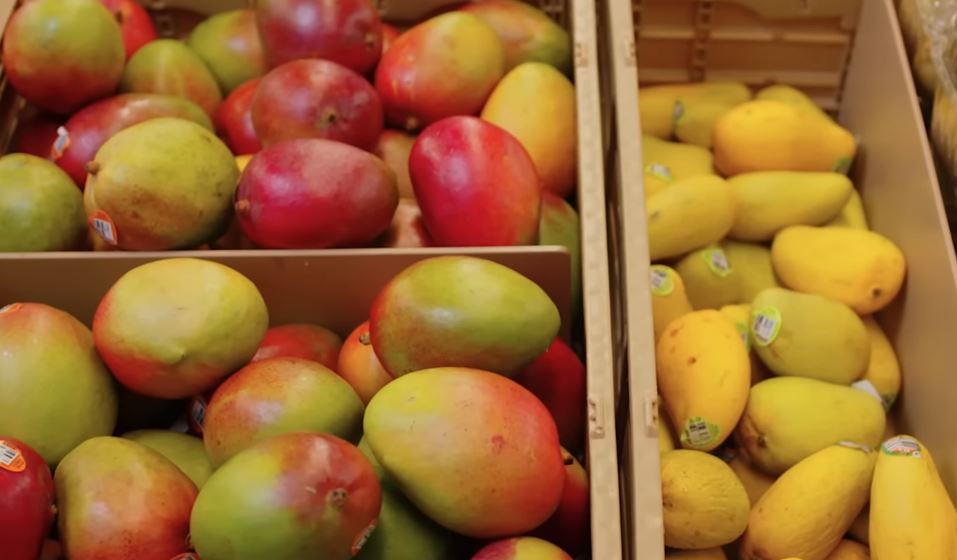
Salmonella is the issue here. Mangoes from the same Mexican farm that produced the recalled fruit were sampled by the FDA. The bacteria was detected in those mango samples. The mangoes that tested positive were never shipped into U.S. commerce, which is the crucial detail that makes this a little more complicated than a simple contamination story. Panorama Produce took action because what ended up on Walmart shelves came from the same source. Even though it’s impossible to determine with certainty whether the distributed fruit is contaminated, it’s a precautionary measure and most likely the right one.
Look for a light blue sticker on each mango that reads “Agrofepac, Produce of Mexico,” along with PLU number 4584 and UPC 07503061948050, to determine if you have the recalled product. Large, size-9 fruit is packaged nine to a box in an outer case bearing the Martina Mangos brand. No illnesses have been linked to this recall as of this writing, which is encouraging but does not necessarily justify keeping the fruit.
Salmonellosis, the medical term for Salmonella infections, usually manifests six hours to six days after exposure. Diarrhea, fever, cramping in the stomach, nausea, and vomiting are among the symptoms. The illness usually goes away on its own in a week for the majority of healthy adults. However, the risks increase significantly for young children, the elderly, and anyone with a weakened immune system. Rarely, Salmonella can get into the bloodstream and cause more serious issues. Even though the numbers—302 boxes, four states—feel relatively contained, that is the part that warrants caution.
The FDA’s advice is straightforward: either discard the mangoes or return them to the retailer for a refund. Get in touch with a medical professional if you’ve already consumed some and feel ill. Panorama Produce can be reached by email at information@panoramaproduce.com, Monday through Saturday between 9 a.m. and 7 p.m. ET. It’s important to note how this recall was put together.
The FDA didn’t wait for a patient to become ill. Before a confirmed outbreak could occur, routine sampling identified a possible issue upstream, at the farm level. That means the system is functioning essentially as planned. Given that some of these mangoes had been on store shelves for almost three weeks prior to the recall announcement, it is more difficult to determine whether every link in that chain ran quickly enough.
Major retailers’ food recalls have become commonplace news, and this familiarity may lead to apathy. However, salmonella is a serious problem, and a ripe, sweet, and uncooked mango provides the bacteria with no barrier between farm and fork. Produce safety requires attention at every stage of the supply chain, not just at the factory or processing facility, as the FDA recall of Martina mangoes at Walmart reminds us.
You’re probably safe if the fruit has already been consumed and you’re feeling well. It’s time to check that sticker if it’s still in your kitchen.
