

It occurs at the most inconvenient time. The garlic is softening in the pan, the pasta is already boiling, and when you open the refrigerator, you discover that the double cream is either outdated, missing, or never arrived at the store. This is not an infrequent emergency, but rather a weekly reality for many home cooks in the UK.
The good news is that double cream is not entirely indispensable, even though it is truly great in pasta sauces. Several substitutes are resistant to heat, and some of them actually yield outcomes that are more difficult to distinguish than you might anticipate.
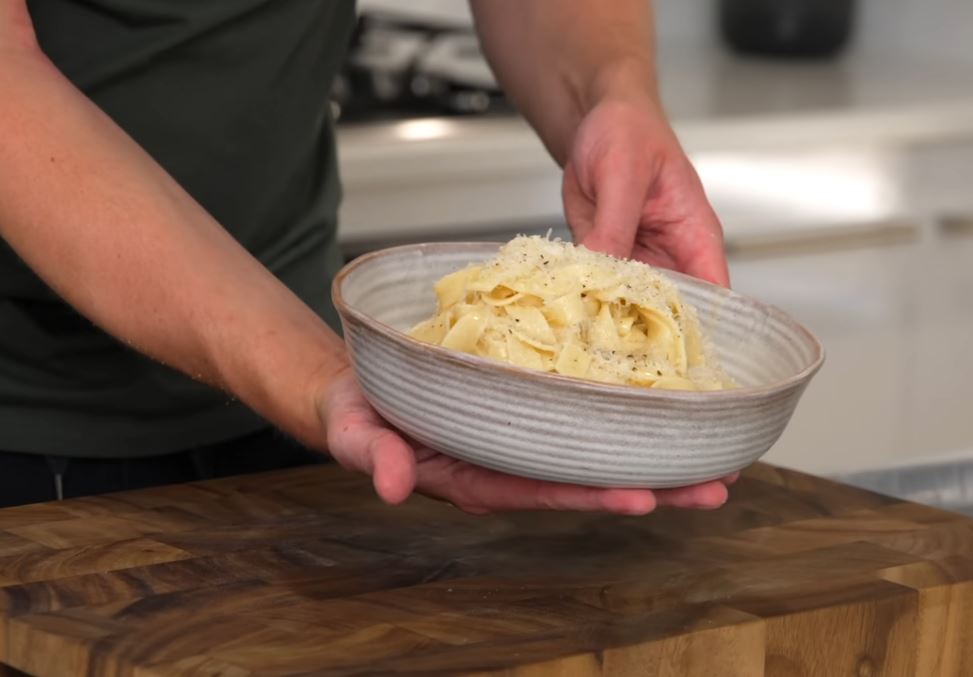
Crème fraîche is the most dependable swap, and it truly deserves that title. Its fat content ranges from 30 to 40 percent, which is close enough to double cream to behave similarly in a hot pan. It coats the pasta, doesn’t split easily, and adds a subtle tang that works especially well in sauces made with mushrooms or smoked salmon. There is no guesswork in the middle of cooking because you use it in precisely the same amount.
The alternative that usually impresses those who try it is mascarpone. Because it is significantly thicker and richer than double cream, stirring in a little pasta water helps it become a proper sauce. In a dish like a straightforward lemon and herb pasta, where the texture truly shines, the outcome is almost opulently smooth—possibly superior to double cream.
The milk and butter combination is a good, straightforward option for people who prefer something lighter. The ratio is simple: for every 100ml of double cream, 75ml of full-fat milk with 25g of melted butter is used. Here, it’s important to whisk them together before adding to the pan. When done correctly, the fat from the butter emulsifies with the milk, bringing you closer to the richness of cream than you would anticipate from two such commonplace ingredients.
Cream cheese, which is available in UK supermarkets under brands like Philadelphia, also works well, especially in thicker sauces. Before it blends smoothly, it must be loosened with a little milk or pasta water, but once it does, it gives the sauce a satisfying body without the splitting risk associated with thinner alternatives.
Opinions tend to differ when it comes to Greek yoghurt. It functions, but only in specific circumstances. A tiny pinch of cornflour added in advance greatly lessens the possibility of the yoghurt curdling, and the heat must remain low. It is genuinely delicious when used sparingly in something like a light garlic and herb sauce; it is much lower in fat, slightly more protein-forward, and tangier than double cream. Although it is not a particularly practical choice when pressed for time, it is still worthwhile to be aware of.
Soy milk combined with neutral or olive oil creates a plant-based emulsion that holds together fairly well in a sauce for those who completely avoid dairy. Most cooks seem to settle on a ratio of two parts soy milk to one part oil. Another option is coconut cream, but there is a clear warning that the finished dish will have a coconut note; this works well in some sauces but not so well in others.
All of these options have one thing in common: none of them necessitate visiting a specialized store. All of these items are readily available or found in the majority of UK kitchens. In most cases, there is a viable alternative, and there are several that could subtly turn into a preference, regardless of the issue—dairy intolerance, calories, or just an empty shelf in the refrigerator.
