
In a busy restaurant, requesting a table for one carries a certain amount of awkwardness. The host occasionally pauses briefly before grabbing a single menu item after looking up and glancing behind you. It’s not long. Most people are likely unaware of it. However, if you’ve ever eaten by yourself in public, you are aware that there is a pause.
It’s interesting how many people are passing it in silence. OpenTable reservations for lone dining have increased by 64% since 2019. Millions of people have watched TikTok videos with the hashtag #SoloDate because they appear to be genuinely happy—not acting content, but actually relaxed, eating slowly, and taking in the scenery. People’s perceptions of eating alone have changed, and it feels more like a correction than a trend.
Eating by yourself was socially awkward for a very long time. It has been associated with stress and depression in psychological research. A depressing desk lunch or cold leftovers consumed while standing over a kitchen sink were the images ingrained in the collective consciousness.
And there’s a truth hidden in that image: eating with people we like actually makes us feel better than eating alone, and loneliness and isolation are serious issues. No one is disputing this.
However, there is a significant distinction between choosing to eat alone and being left alone with your food. One noteworthy finding from a few recent studies on people’s experiences with solitary time is that the negative effects mostly vanished when participants consciously set aside time for a solo activity rather than just happening to do so. Some even said they slept better and felt less stressed afterward. It turns out that intention significantly alters the experience. The actual meal remains unchanged. Your relationship with it does.
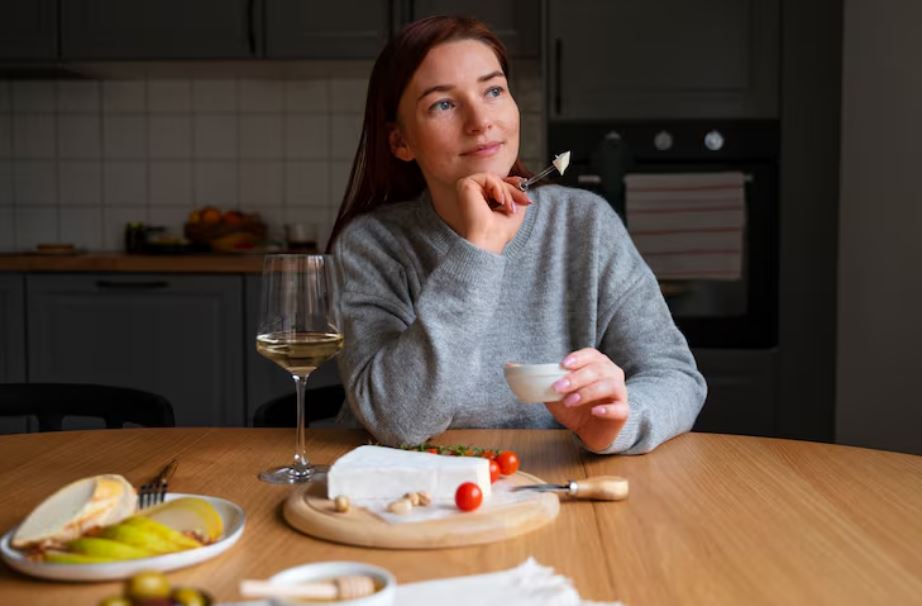
This has a useful aspect that is often overlooked. You usually eat when you’re by yourself. Don’t order something you didn’t really want because it seemed easier, don’t rush through the meal to match someone else’s pace, and don’t eat while managing a conversation. You take note of the food. The temperature, the texture of properly cooked food, and the true flavor of a dish when you’re not preoccupied. It sounds insignificant. Over time, it becomes surprisingly important.
Sitting by yourself at home is much more lonely than sitting in a crowded restaurant, according to Philadelphia restaurateur Jill Weber, who has been dining alone for more than thirty years. The tiny theater of a kitchen is in motion, with other voices and lives taking place close by. Although you’re alone, you’re not alone. Most people don’t realize how important the distinction is until they try it.
Even though it sounds a little self-serving when expressed directly, the confidence angle is also real. There is a real difference between entering a room with a group and entering it alone, without a companion to ease the social tension. To sit with it, you must feel sufficiently at ease in your own company. That’s a big deal. And the more you do it, the less it seems like a small act of bravery and more like just something you do, like going to the movies or getting a haircut by yourself, which no one cares about anymore.
With more people living alone in 2026 than at any other time in recent memory and social schedules becoming more dispersed, choosing to eat alone on purpose—not as a last resort but as a small pleasure—begins to resemble agency rather than solitude. What, where, and when are all up to you. Don’t bargain. The restaurant won’t compromise. A dish you didn’t want half of shouldn’t be divided.
There’s a reason why people who frequently eat by themselves tend to frequent the establishments they enjoy. They’re listening. To the meal, to the space, to the unique fulfillment of an hour all their own.
It is worthwhile to give it a proper try, even just once. Not on your desk. not bent over your phone. Somewhere you truly want to eat, at a table of your own choosing.
