

It’s difficult to ignore the fact that no one is carrying a baguette when waiting in line at Farmer J in Marylebone on a Tuesday shortly before noon. That would have been unimaginable a few years ago. In Britain, eating sandwiches is guaranteed by the constitution. However, the line moves swiftly, and each person departing carries the same cardboard bowl filled with roasted veggies, layered grains, and protein. A blazer-clad woman straightens her bag, glances at her bowl, and walks straight to the door. It seems that you can now pack a lunch and eat it at your desk in less than ten minutes.
The country’s perception of a typical midday meal has been subtly altered by the protein bowl trend, which originated in London’s financial corridors before expanding. It began, predictably, in areas like Canary Wharf, where lunch breaks are something that happens to other people and time is money. A bowl of grain, greens, chargrilled salmon, and pickled cucumber proved to be quicker than a sit-down meal, more satisfying than a grocery store sandwich, and—most importantly—photographable, according to finance staff. It probably shouldn’t matter as much as it does.
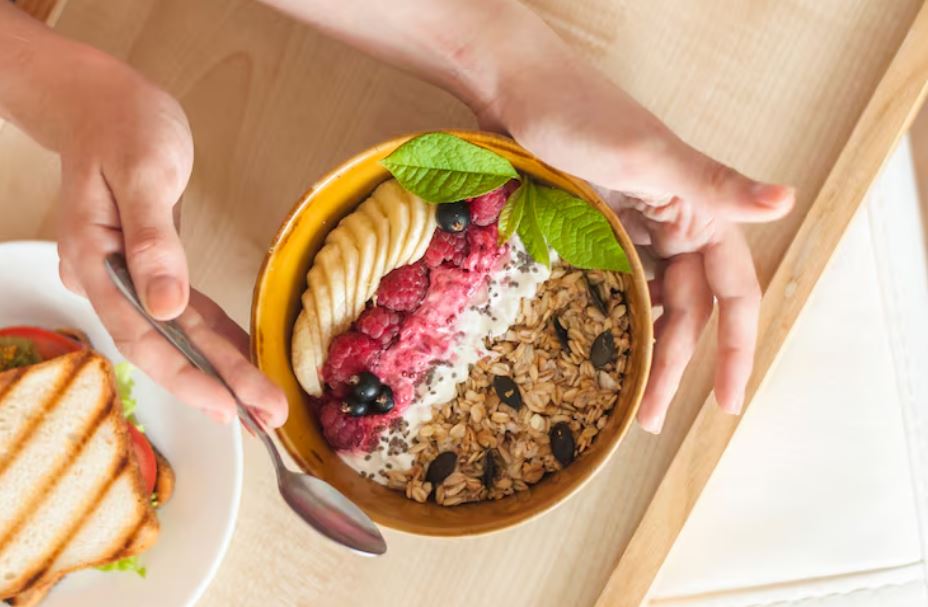
A base, a protein, one or two vegetables, something crunchy, something pickled, and a dressing make up what is now referred to as the “slop bowl”—a nearly ridiculous simplicity. Maple walnuts and roast sweet potatoes are two options that, according to employees at The Salad Project, are frequently among their most popular. Chains like The Salad Project and Atis have transformed this formula into a small empire. Until you eat one, it seems unremarkable. The structure then begins to make odd sense; each bite has contrast, texture, and a hint of acid from the pickled cucumber that cuts through the grain’s warmth.
This particular food trend is intriguing because of how fast it descended in price. The protein bowl essentially ceased to be a luxury and became a grocery staple when Ocado introduced M&S nutrient-dense grain bowls in January 2026 at £5.95. That’s a big change. The majority of food trends that originate in affluent London postcodes take years to make their way into weekly grocery stores.
This one did it more quickly than most. The desire to cut back on ultra-processed food, the growing interest in plant-forward eating, and—perhaps most importantly—the sheer lack of time most working people have to actually cook are all factors, according to Alex Ruani, a researcher at UCL who studies health and diet trends. She said, “I don’t have time to rinse and cook beans,” which is a pretty accurate description of contemporary British working life.
The trend seems to be riding a larger cultural wave related to protein. People are much more aware of whether their lunch is truly beneficial to them due to the obsession with protein intake, which is largely caused by fitness culture seeping into daily life through social media. A cheese and pickle sandwich, no matter how popular, just doesn’t feel as purposeful as a bowl with 40 grams of protein and a visible grain base. It is another matter entirely whether that framing is always nutritionally justified. However, perception influences behavior, and this perception is evident at the moment.
How long this specific format will remain in use is still unknown. Food trends often reach their zenith just as everyone is declaring them to be enduring. However, the protein bowl has an advantage over many trends: it’s actually helpful. It fills quickly, travels reasonably well, and is infinitely customizable based on your budget. The format has expanded to accommodate nearly every budget, from a £25 bowl at a Marylebone chain to a £5.95 M&S version. Flexibility like that usually lasts. The sandwich endured for many years. The protein bowl appears to have some longevity, at least for the time being.
FAQs
1. Where did the protein bowl trend originate?
It started in London, particularly in financial districts like Canary Wharf.
2. How much does a protein bowl typically cost in the UK?
Prices range from £5.95 at supermarkets to £25 at upscale chains.
3. What are the main components of a protein bowl?
Typically, a grain base, protein, vegetables, something pickled, and a dressing.
4. Which supermarket brought protein bowls to the mainstream market?
Ocado launched M&S nutrient-dense bowls in January 2026 for £5.95.
5. What is driving the popularity of protein bowls across Britain?
Growing interest in high-protein, plant-forward eating among time-pressed working people.
