

Every home cook eventually encounters this moment. Halfway through a recipe, such as a simple pan sauce or scrambled eggs, you come across those four words: add a knob of butter. You gaze at the block that is resting on your counter. You turn back to the page. You were unaware of the true cost of a knob.
The short answer is in the range of 15 to 30 grams. The more thorough explanation is that the term was never intended to be measured.
The origins of a knob of butter can be found in French and British cooking customs, where recipes were transmitted more by feel than by formula. Apprentices were taught by chefs to cook intuitively, making adjustments based on taste, experience, and eye. A knob was always supposed to be a small, rounded piece that would be noticeable without drowning the dish. When you scoop butter directly from the block, it resembles a small, rounded lump, which is what the word itself refers to.
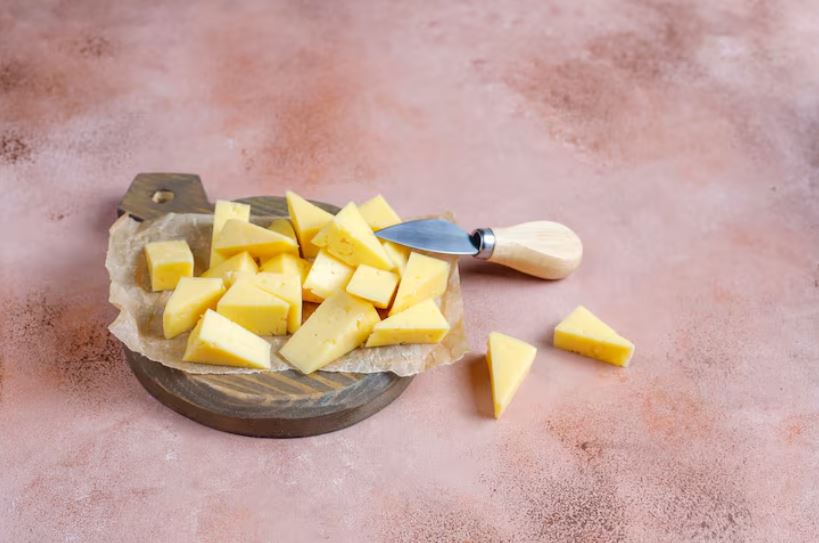
When you try to pin it down across different countries, the confusion starts. The standard interpretation in the US is approximately 14 to 15 grams, or one tablespoon. A knob is typically more generous in the UK and most of Europe, weighing about 25 or 30 grams, which is closer to two tablespoons or roughly the size of a shelled walnut. In his popular scrambled eggs video, Gordon Ramsay uses what appears to be a full two tablespoons without hesitation. This indicates that there is a significant transatlantic gap.
| Measurement Term | Weight (Grams) | Volume Equivalent | Regional Standard | Best Used For |
|---|---|---|---|---|
| Knob of Butter (Small) | 14–15g | 1 tablespoon | United States | Eggs, light sautéing |
| Knob of Butter (Standard) | 20–25g | 1.5 tablespoons | United Kingdom | Pan sauces, vegetables |
| Knob of Butter (Generous) | 25–30g | 2 tablespoons | Europe / Traditional British | Finishing sauces, rich dishes |
| Pinch of Butter | 5–8g | Less than 1 teaspoon | Informal / No fixed region | Toast, flavouring |
| Pat of Butter | 5g | ⅓ tablespoon | United States (formal) | Table serving, light cooking |
| Tablespoon of Butter | 14g | 1 tablespoon | Universal | Baking, measured cooking |
| Walnut-Sized Piece | 25–30g | ~2 tablespoons | UK / European visual guide | Stovetop cooking, scrambled eggs |
| Slice from Block | 10–50g | Varies | Cook’s discretion | General cooking |
There are some helpful visual shortcuts if you don’t have a kitchen scale, which many skilled cooks do not. The most frequently used reference is a walnut, which functions fairly well for the European interpretation. You can also get in the right ballpark with a piece about the size of your thumb down to the first knuckle. It is described by some as the quantity needed to liberally butter one piece of bread. The majority of British recipe writers probably want it to fall between 20 and 30 grams, which is where all of these fall.
However, it’s important to understand when the term truly matters. Almost all savory cooking uses a knob of butter, such as melting fat in a pan before scrambling eggs, finishing a sauce, or sautéing onions until they become tender. A few grams in either direction actually has no significant effect on the result in those situations. The dish either slightly increases or decreases in richness. That is all there is to it. A proper baking recipe, where butter ratios impact structure, texture, and rise, would never use the term. Grams on a scale are required there, not nebulous allusions to walnuts.
Looking at how cooks actually talk about this online, it’s interesting to see how much the ambiguity annoys some people and how little it bothers others. There is an equally vocal group of home cooks who find the inexactitude liberating, and a whole thread of home cooks who find it annoying. There is merit to the second camp. Cooking that relies on your judgment has its merits. It is not necessary to optimize every instruction to the last decimal place.
Practically speaking, if a British recipe calls for a knob of butter, use about 25 grams. One tablespoon, or roughly 14 grams, is most likely what the author intended if the recipe seems to be American in origin. Additionally, cut off a piece that appears to be helpful if you are finishing a pan sauce at 7 p.m. on a Tuesday and have no time to weigh anything. The idea was always that.
