

Pulling a bread and butter pudding out of the oven, lifting the foil with the cautious optimism that comes only from baking, and discovering a dish that wobbles like it hasn’t quite decided what it wants to be is a subtly devastating experience. Not the golden, custardy thing you had in mind; not set, not firm. Just damp. Sadly, annoyingly damp.
It occurs more frequently than most people realize, and once you start dissecting the issue, the causes are almost always clear. Fresh bread is the most frequent offender, which surprises people. Not outdated or stale bread, but bread that was taken straight from the shelf that morning and placed in the dish. It makes sense. The texture of fresh bread is absorbent and soft. However, that tenderness actually works against you. A slightly dried-out slice of bread attracts custard better than fresh bread, which is still full of moisture. That trapped moisture can only end up in the bottom of your dish when it bakes. The end product is a pudding that sits in a tiny pool of liquid that was never allowed to be fully absorbed.
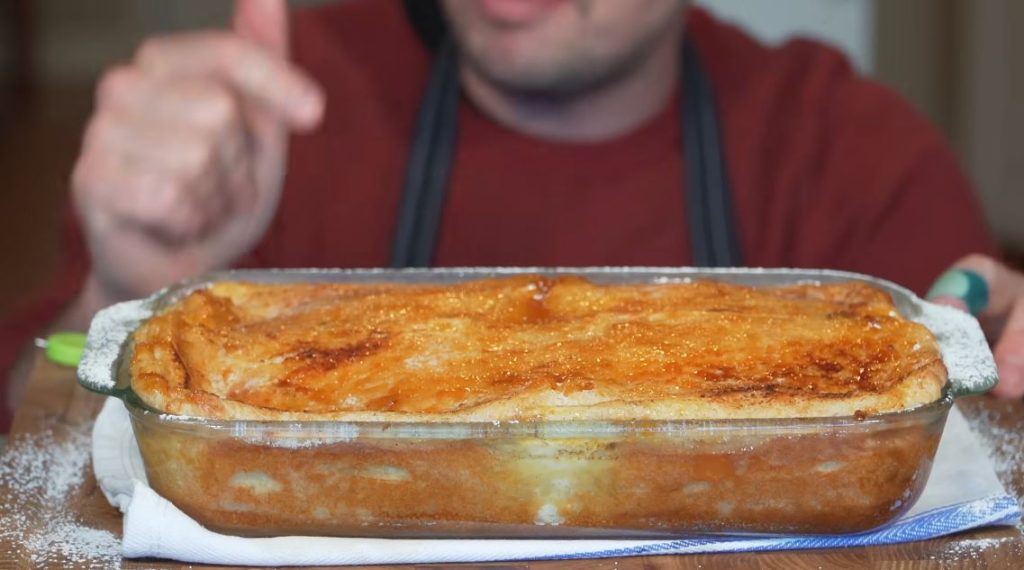
Experts in baking who frequently work with this dish tend to agree on this point. One- to four-day-old bread strikes the ideal balance: it has sufficiently dried out to be genuinely craving custard, but it hasn’t gone so stale that it starts to taste bad or have an unpleasant texture. Unwilling to prepare ahead of time, some cooks expedite the process by chopping their bread into cubes and toasting them with a little butter in a low oven for ten to fifteen minutes. It functions fairly well. Though not the same as bread that has been naturally staled, it is close enough to noticeably alter the finished product.
Another element that frequently goes unnoticed is cold milk. The absorption process slows down significantly when cold custard is poured over bread, even properly staled bread. By the time the dish is placed in the oven, the custard is already working rather than remaining stubbornly on the surface because warm milk blends with the eggs more easily and soaks into the bread more easily. There is a noticeable difference when the assembled pudding is allowed to rest for at least twenty minutes before baking. This allows the bread to absorb the custard from top to bottom instead of leaving pockets of liquid underneath.
Most home cooks are unaware of how important temperature is when baking. Since eggs are the foundation of any custard, they are actually heat-sensitive. Baking too hot causes the egg proteins to contract sharply, squeezing out liquid in the same way that pressing a sponge releases water. This process is known as syneresis, but you don’t need to know the name to understand the outcome. The custard can set gently and uniformly in a low, steady oven set between 160 and 170 degrees Celsius. Yes, it’s slower, but the final texture makes the patience worthwhile.
Perhaps the most underutilized method for achieving the proper consistency is the foil trick. By covering the dish during the first half of baking, steam is trapped and the interior cooks through without the top browning too quickly. When the second half is uncovered, the surface dries out, crisps slightly, and develops the slightly caramelized top that distinguishes this pudding. If you completely omit the foil and bake without it, the top will set before the center has a chance to solidify, and you will lift the dish out believing it is done when, in reality, it is not.
Egg ratios, which differ greatly amongst recipes, also have merit. If there aren’t enough eggs, the custard won’t have the necessary protein structure to stay together. If there are too many, it becomes dense and rubbery, which leads to additional issues. For most recipes, a starting point of two to three eggs per three hundred milliliters of liquid is appropriate; however, the precise ratio will vary depending on the bread’s richness and the amount of butter used.
After going through all of this, it’s difficult to ignore the fact that the recipe itself is nearly always to blame for a watery bread and butter pudding. Because the bread was fresher, the milk was colder, or the oven was slightly hotter than the dial indicated, the same recipe can result in a beautifully set dish one week and a soggy disappointment the next. The recipe has more variables than it first seems, and mastering it consistently requires knowing what each of those variables actually does rather than just following the instructions and crossing your fingers.
