

Every British or Australian home baker who relocates to an American city and tries to recreate something familiar, like a simple scone for a Sunday morning that feels like home or a Victoria sponge for a housewarming, experiences a certain kind of confusion. They enter the closest supermarket, look through the baking section, and end up standing in front of bags labeled “all-purpose,” “bread flour,” and “whole wheat,” looking for the one item that isn’t there. or, at the very least, not by any name they are familiar with.
In the US, self-raising flour is referred to by a slightly different name than it is in the UK, Ireland, and Australia. The spelling changes, a hyphen is added, and the word “raising” subtly becomes “rising.” Americans refer to it as self-rising flour. Until you’ve baked a particularly salty sponge cake and spent an afternoon trying to figure out what went wrong, most people don’t realize how important the slightly more complicated difference in the product itself is.
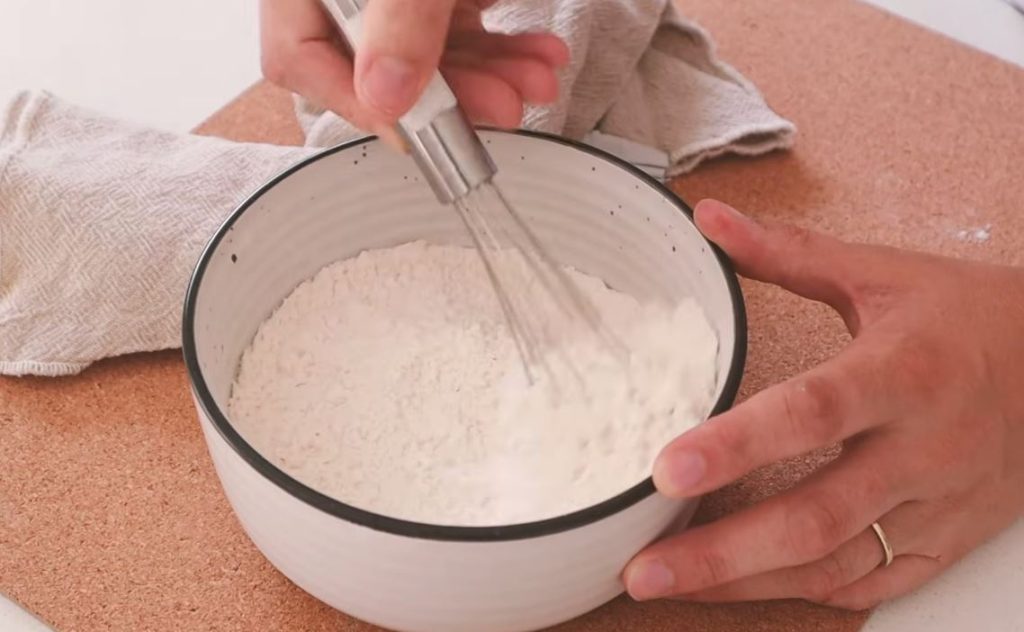
On both sides of the Atlantic, the fundamental concept is the same. Self-rising flour eliminates the need for bakers to measure out baking powder by blending a leavening agent into wheat flour. It is as commonplace in American supermarkets as vegetable oil, especially in Southern states like Georgia, Tennessee, and the Carolinas. There are whole shelf sections devoted to it when you walk into an Atlanta grocery store. You might find a single dusty bag or nothing at all if you try the same in a supermarket in Portland, Oregon, or a suburban area of New Jersey.
Soft wheat farming and a biscuit-baking culture that emerged long before standardized recipes are linked to the history of why self-rising flour became a Southern institution. Launched in 1883, White Lily is a Tennessee brand that has become something of a regional heirloom. It is still one of the few American manufacturers that only mills soft winter wheat. Bags of it were packed into luggage by families. For chicken and dumplings, grandmothers vouched for it. The flour evolved into a sort of regional abbreviation rather than an ingredient.
However, it’s not just the spelling that distinguishes the US and UK versions. In contrast to British self-raising flour, American self-rising flour usually has half a teaspoon of added salt per cup. Many cakes made by foreigners who thought the products were interchangeable have been subtly ruined by this distinction. The salt content is the reason they aren’t. Self-raising flour is already calibrated for a salt-free base in a British recipe. If you add the American version without making any adjustments, the result may taste strangely salty in a way that is difficult to identify if you don’t know what to look for.
Protein content is another issue that receives less attention than it merits. Soft wheat flour, which White Lily and King Arthur Baking use to make their self-rising products, has about 8 to 8.5 percent protein, while all-purpose flour usually has 11 to 12 percent. The gluten that gives bread its chew is made from protein. That chew is precisely what you don’t want for a scone or biscuit. Lower-protein flour achieves the desired tenderness—a crumb that separates easily—in a way that all-purpose flour with baking powder added can theoretically mimic but falls short. Even though both bags have the same label, a biscuit made with White Lily may taste noticeably lighter than one made with regular supermarket self-rising flour because of this protein difference.
The workaround is fairly simple for anyone converting a British recipe and unable to locate self-raising flour under any name. A UK recipe calls for one cup of plain all-purpose flour and one teaspoon of baking powder, with no salt added at all. Although it won’t exactly mimic a low-protein soft wheat flour, it’s close enough to make a tasty dish.
While perusing American baking websites and social media, it’s difficult to ignore the fact that self-rising flour is having a quiet moment. Recipes for two-ingredient drop biscuits, which only require heavy cream and self-rising flour, are popular and draw comments from people who seem genuinely shocked that something so basic can taste so delicious. It remains to be seen if that translates into more shelf space at supermarkets outside of the South. For the time being, the flour that Australia and Britain take for granted is still a regional secret in much of America, going by a slightly different name.
