

Lisa Snowdon has mentioned a picture several times, and it’s the kind of detail that sticks with you. April of 2017. Japan. Steam rising around natural springs in a gorgeous outdoor onsen, with her partner George holding the camera. She threw her arms wide, arched her back, and sucked in her stomach, believing they were creating something lovely. She didn’t recognize herself when she saw the results. Less water nymph, more England Rugby Union player, in her words, not mine.
The way she says it is hilarious. Beneath the humor, though, there’s something genuinely unvarnished about that scene: a woman standing in one of the most exquisite settings imaginable, totally cut off from the person staring at her through a phone screen.
Lisa Snowdon’s perimenopausal weight gain, which ultimately totaled about three pounds, wasn’t exactly a quiet, personal battle. After all, she is a woman whose career was developed in front of cameras. Longtime Capital FM host and former fashion model, she was once infamously associated with George Clooney. In one way or another, her body has always been present in public. Because of this, the candor of her most recent memoir, Just Getting Started: Lessons In Life, Love and Menopause, feels truly courageous rather than merely marketing.
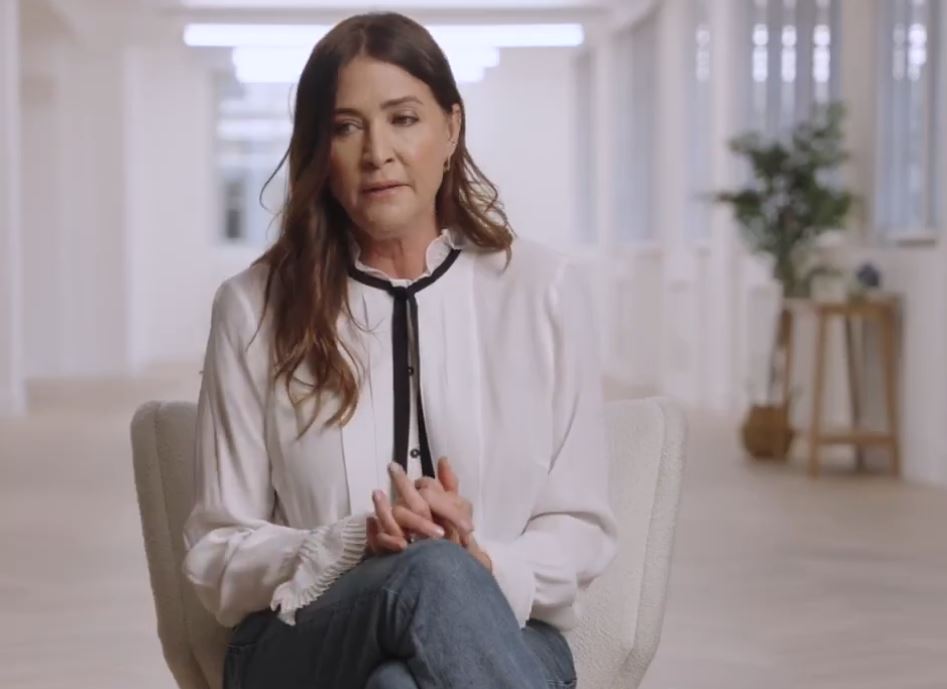
Even if they have never stood in a Japanese hot spring, millions of women will instantly recognize what she describes. The weight didn’t make a statement. While she was distracted, it came slowly and silently. She laughs self-consciously and insists that she didn’t think her eating habits had changed, but she quickly acknowledges that’s probably not entirely accurate. In retrospect, she was consuming more food, drinking more, and relying too heavily on refined carbohydrates, sugar, and protein. Her body, which had previously absorbed everything she threw at it, just stopped responding in the same manner.
That is the aspect of perimenopause that is not sufficiently discussed openly. Hot flashes and mood swings aren’t always the dramatic Hollywood version. Additionally, Lisa experienced unexpected anxiety, vertigo, palpitations, and panic attacks that she was initially unable to describe. For a while, she received a false diagnosis of depression. Her hair was thinning, and her confidence was subtly declining along with her waistline, making the weight gain just one aspect of a much more disorienting change.
The messiness of her story may be what makes it so compelling. Her before-and-after arc is not entirely clear. She acknowledges that she was disappointed in herself and that feeling larger made her feel disoriented and, in a way, less present in her own life. A headline number on a bathroom scale is easier to fake than that kind of emotional specificity.
Eventually, it wasn’t a drastic intervention or a crash diet that made a difference, but rather structure and honest reckoning. She started working with Zone Six performance coach Paul Webb, and their method was purposefully unsexy: compound strength exercises, deadlifts, squats, rows, and presses, along with cardio and core training. Nothing groundbreaking. According to Webb, the real superpower is consistency. And it feels subtly significant to see someone like Lisa, who worked for decades in a field that values quick changes, accept that slower reality.
She reportedly looked stronger than she had in years after completing a 50-kilometer trek through the Sahara Desert in early 2026 to raise money for Meningitis Now. She is currently 54 years old. She claims that she is in a position of power and that she now asks herself, “What do I need, what do I want?” instead of “How do I look?”
This reframing seems to go beyond personal branding. It feels well-deserved. The woman who used to humiliate herself over a vacation picture now travels through the desert and writes honestly about issues like infertility, domestic abuse, and the unique humiliation of seeing your favorite jeans go out of style. That is a specific type of travel distance. It’s difficult not to think that’s important.
FAQs
Q1. How much weight did Lisa Snowdon gain during perimenopause?
She gained approximately three stone, equivalent to around 19 kilograms.
Q2. What caused Lisa Snowdon’s sudden weight gain?
Hormonal changes during perimenopause, combined with poor dietary choices, triggered the gain.
Q3. How did Lisa Snowdon lose her perimenopause weight?
Through consistent strength training, compound exercises, and honest lifestyle changes with a coach.
Q4. What other menopause symptoms did Lisa Snowdon experience besides weight gain?
She also suffered anxiety, vertigo, heart palpitations, panic attacks, and significant hair loss.
Q5. What is Lisa Snowdon doing now at 54?
She completed a 50km Sahara Desert trek and advocates openly for menopause awareness.
