

The Scotch egg has a subtly ridiculous quality. It is a boiled egg that has been completely encased in sausage meat, covered with breadcrumbs, and deep-fried until golden. It’s fairly easy. However, if you ask ten food historians where it originated, you’ll get at least four different answers, two contentious arguments, and one person who maintains that it’s more complicated than it seems. Most likely, they are correct.
Fortnum & Mason, the opulent department store on Piccadilly in London that has been selling upscale food since 1707, is the most commonly acknowledged origin story. Food historians claim that the store started selling Scotch eggs in 1738, a year after Yorkshire pudding first made an appearance in print. It is difficult to determine whether the timing is coincidental or reveals more about Georgian Britain’s desire for innovation. Fortnum & Mason was serving affluent travelers and aristocrats at the time who required something portable, satisfying, and attractive enough to eat in a carriage. All those criteria were met by a hard-boiled egg wrapped in seasoned meat.
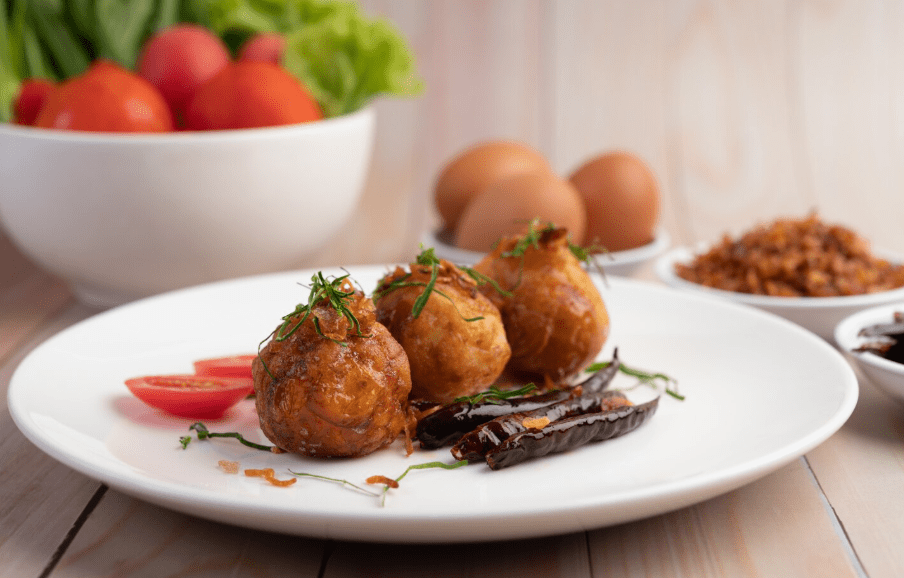
For reasons that are still genuinely unknown, it had nothing to do with Scotland. For decades, food writers have been perplexed by the name. Some claim it comes from the old British culinary term “scotch,” which means to score or mince meat. Others speculate that it may have developed from the last name Scott, alluding to an early recipe or a specific cook whose name has since been forgotten. Although the connection is tenuous at best, there is even a theory linking it to “scotched” eggs, a preparation technique mentioned in an 18th-century cookbook. No one has come up with a conclusive response, and it’s possible that no one ever will.
It is somewhat clearer what transpired after 1738. Over the course of about a century, the Scotch egg gradually moved from the tables of the wealthy into the hands of the working class, making it one of the most democratic foods in Britain. By the Victorian era, it was showing up at fairs, markets, and the kind of roadside stands that provided food for travelers and laborers who couldn’t afford a sit-down meal. The opulent carriage snack had evolved into a working man’s lunch, and Britain appeared perfectly content with this change.
The version that most people are familiar with today, which can be purchased in a plastic shell from a supermarket refrigerator or a motorway service station, is relatively new. Additionally, many would contend that it tastes much worse than a properly prepared Scotch egg. There is a version where the breadcrumb coating is actually crisp rather than slightly damp, the sausage meat is seasoned with mustard and herbs, and the yolk is soft and slightly runny in the center. There is such a version. It just needs to be made correctly, which requires more work than most people are willing to put into a snack.
Around the beginning of the new millennium, gastropubs in Britain rediscovered the Scotch egg by adding their own varieties to their menus and charging significantly higher prices. It was covered by food critics with the kind of fervor typically associated with something truly novel. Of course, it wasn’t new. For almost three centuries, it had lain dormant in British cuisine culture, waiting to be given serious consideration once more.
One noteworthy aspect of that cycle is how a food can become so out of style that its resurgence feels like a revelation. The Scotch egg remained unchanged. Those who consumed it did. These days, an artisan version of free-range eggs and rare breed pork, presented in wax paper and priced appropriately, can be found on any given weekend at a British farmers’ market. To their credit, Fortnum & Mason continues to sell them as well. Certain things come full circle without anyone’s intention.
