

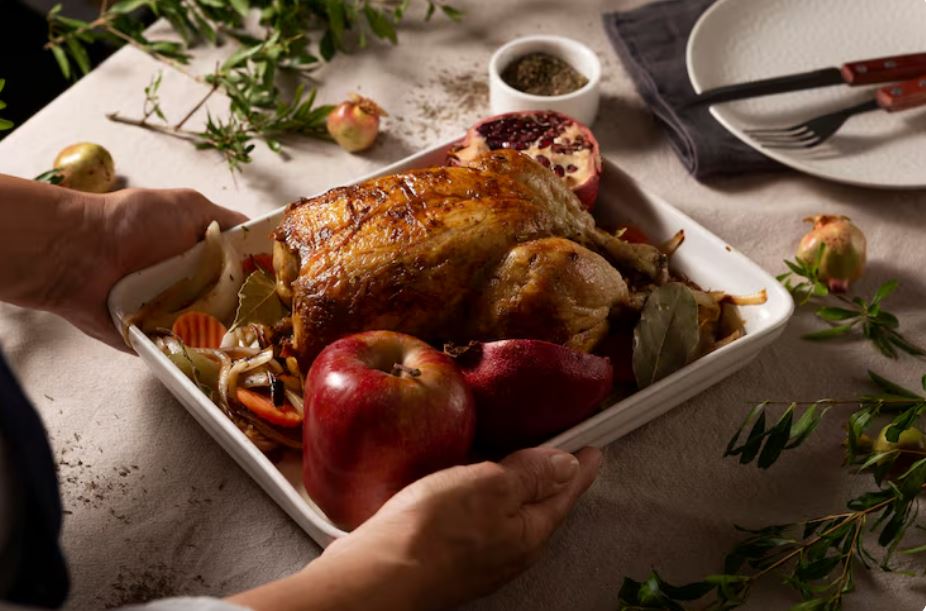
A British Sunday is marked by a certain aroma: roasting meat, something caramelizing in a hot oven, and the subtle sweetness of parsnips starting to burn at the edges. For the majority of the nation’s history, that scent was associated with lunch, family, and a weekly reset that was almost religious in its regularity. On a Sunday in, say, 2015, you could enter a village pub and see the same routine in action: Yorkshire puddings that had reached unbelievable heights, crisp roast potatoes, and carved beef. It was reliable. It was England.
There is still that smell. However, other flavors are beginning to emerge alongside it, such as the earthiness of roasted beetroot, the richness of a Wellington with mushrooms, and the unexpected weight of a skillfully prepared cauliflower crown. Sunday roasts are still popular in British restaurants. They are discreetly reimagining it, and they are doing so more quickly than most people have realized.
Since 2012, domestic meat consumption in the UK has decreased by 14%, with carcass meat—the beef, lamb, and pork that make up a typical roast—falling by more than 25% during that time. What environmentalism and health anxiety had already begun was accelerated by the cost-of-living crisis. Many households now consider a good cut of lamb to be a true luxury item, and this economic reality has influenced restaurants’ decisions about what to serve and to whom. Once basing their Sunday menus on the quality of their supplier’s sirloin, chefs are now considering margins, demographics, and a dining public that is actually changing.
The death of meat in this tale could be exaggerated. Veganism has not been adopted in Britain. It has grown more intricate than that. The flexitarian, the eco-aware omnivore, and the person who just had a delicious mushroom dish last week and wants to have it again are among the increasing number of diners who are influencing what restaurants believe they should serve. Nowadays, vegan options are more of a commercial reality than a moral statement, and that distinction is important. The discourse surrounding something shifts when it ceases to feel countercultural and begins to feel normal.
Perhaps the best illustration of where this is going is London’s Plates restaurant, which was awarded a Michelin star in late 2025. Its co-founder purposefully stays away from the term “vegan,” preferring to let the food’s flavor speak for itself. The phrase “judge the dish, not the ideology” is gradually making its way to less well-known kitchens around the nation. A Shropshire pub won’t strive for a Michelin star. However, it might take note of the fact that its roasted celeriac sold out three consecutive Sundays while the beef brisket remained unfinished until two o’clock, and make the necessary adjustments. These are the small choices that add up to change a food culture.
There’s a feeling that the debate over veganism in Britain has been going in the wrong direction for far too long, with too much emphasis on product launches, celebrity endorsements, and whether or not oat milk lattes are a personality type. The more intriguing development is more subtle: regular Sunday lunches, regular menus, and regular restaurants are gradually incorporating plant-based cooking. Not a revolution. Something more robust and probably slower than that.
It’s still genuinely unclear if the classic Sunday roast will endure this change largely unaltered or if it will eventually become one choice among many rather than the standard. The fact that British eateries no longer wait for patrons to inquire is less ambiguous. The menu is already being altered.
FAQs
Q: Is the traditional British Sunday roast disappearing?
Not disappearing — evolving, with plant-based alternatives increasingly sharing space on menus alongside classic meat dishes.
Q: Why are British restaurants adding vegan options to their Sunday menus?
A combination of falling meat consumption, rising food costs, and shifting diner preferences is pushing restaurants to rethink what they serve each week.
Q: Are vegan Sunday roast options actually popular with non-vegans?
Increasingly, yes — flexitarians and environmentally conscious omnivores are ordering plant-based dishes simply because they taste good, not out of ideology.
Q: Has UK meat consumption really declined significantly?
Yes — home meat consumption has dropped 14% since 2012, with traditional roast cuts like beef and lamb falling by more than a quarter over the same period.
Q: Will plant-based Sunday roasts ever fully replace the traditional version?
Unlikely in the near term — but the gap between the two is narrowing faster than most people expected just five years ago.
