

On a quiet Tuesday morning in Bakewell’s main street, you’ll see tourists leaning against the window of a small shop and staring at a basket of flat, golden pastries that, let’s be honest, don’t look very impressive. No sugar. Not a cherry. Not a clear appeal. Still, the line inside goes all the way to the door. These are Bakewell puddings, the older and, some might say, less clear of Derbyshire’s two famous baked goods. They have been a source of mild disagreement for more than two hundred years.
A lot of British people think they know what a Bakewell is. They picture a cute little tart with white fondant icing, a single glacé cherry in the middle, and a bright layer of raspberry jam on top of an almond sponge. People all over the country can’t get enough of that picture, which is sold in every grocery store from Inverness to Penzance. A lot of people enjoy this snack in the afternoon, but it’s not really the original that was created in Bakewell. The real story is a lot messier and older.
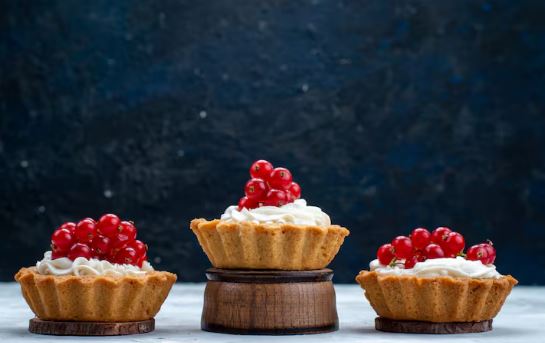
There is a light, flaky pastry on the outside of the pudding, and inside is a mixture of eggs and almonds that makes a sort of almond custard. It’s more like a wobbly egg tart than the version you can buy at the store. The Bakewell pudding tastes like eggs and is more like a buttermilk pie. When served warm with cream or real custard, it’s rich and slightly sweet in a way that surprises people who were expecting something more cake-like. You might feel like the iced tart you’ve been eating for years is just a simple cousin after trying this one.
Been Going On for Centuries
| Feature | Bakewell Pudding | Bakewell Tart |
|---|---|---|
| Origin | 19th century, Bakewell, Derbyshire | 20th century, adapted from the pudding |
| Pastry Base | Buttery, flaky puff pastry | Sweet shortcrust pastry shell |
| Filling | Soft-set egg, sugar and almond custard (no flour) | Firm frangipane sponge — ground almonds, butter, eggs, sugar |
| Jam Layer | Seedless strawberry jam | Seedless strawberry jam |
| Texture | Wobbly, custardy, rich | Cake-like, fluffy, firmer |
| Topping | Sliced or flaked almonds; served warm with cream or custard | White fondant icing and glacé cherry, or toasted flaked almonds |
| Appearance | Plain, unadorned, modest-looking | Visually decorative, more polished |
| Where to Try the Original | The Old Original Bakewell Pudding Shop, Bakewell | Widely available — cake shops and supermarkets across the UK |
| Sweetness | Sweeter than the tart | Less sweet, more nutty and cake-like |
| Best Served | Warm, with cream or custard | Room temperature, as a standalone slice |
A happy accident plays a big role in the origin story. According to a story, it was made by accident in the middle of the 1800s by the cook of an inn in Derbyshire. She read the recipe for a jam tart wrong and spread the egg and almond mixture over the jam instead of mixing it into the pastry. What’s important is not whether that’s certainly true.
Eliza Acton’s cookbook from 1845 is the first place where a Bakewell pudding is mentioned by name. Historians have found evidence of similar recipes from a lot further back, which suggests that the story about the inn may not be based on facts but on charming stories. People still like this version, and Bakewell has done a good job of keeping it alive.
It was after the tart. In the 1900s, the Bakewell tart was made to bring the pudding into the modern era. In the pudding, the base is made of puff pastry, and the filling is a loose, custardy almond mixture. The tart’s base is made of sweet shortcrust pastry, strawberry jam without seeds, and a frangipane sponge filling made of eggs, almonds, and sugar. The baked frangipane is firm and doesn’t wobble at all. This makes the tart much more stable, easier to cut into neat slices, and better suited to being sold by the million in plastic bags. The bake is useful, and there’s nothing wrong with that.
The difference in how they look is big enough to settle most arguments just by looking at them. Most of the time, the Bakewell pudding is sweeter than the tart, and it looks almost purposely plain, with no frills or decorations. The tart, on the other hand, usually comes looking fancy, with white frosting, that cherry on top, and sometimes flaked almonds on top. A food writer in the area once said that the pudding has been compared to a cowpat, which was not a nice thing to say. It looks like Paul Hollywood agreed. It’s not a fair comparison, but it’s also not hard to understand. The pudding doesn’t try too hard at first glance. The whole point of it is to eat.
It’s possible for people who don’t know the difference between the terms to use Bakewell pudding and Bakewell tart to refer to the same thing. There are people in Bakewell who think calling the pudding a tart is almost rude. Some bakers in town, like The Old Original Bakewell Pudding Shop and Bloomers of Bakewell, are said to be the only ones who know the recipe for the pudding. Both of them claim to have some control over the real thing.
As for which recipe is truly “original,” the pudding’s history before Victorian times is still not clear. But that argument isn’t really important. In real life, it only matters which one you want to eat. The pudding is warmer, creamier, and more traditional. It’s a dessert that needs a spoon and a proper place to sit down. The tart can be taken with you, looks good in pictures, and tastes like something you’ve had before. You should try both. And if you’re ever waiting on Bridge Street in Bakewell, you should try them both next to each other before deciding which one is worth the longer line.
