

Cardiologists hardly ever ask their patients one particular question. Not diet-related. Not about working out. Not even regarding ancestry. How often do you actually spend time with people who care about you? This is a simpler, but in some ways more unsettling, question.
Loneliness has long been viewed as an emotional annoyance that you either overcome or don’t. However, a growing body of research, including a significant study that was published in the Journal of the American Heart Association in April 2026, is making it harder and harder to ignore what the data consistently demonstrates. Feelings of loneliness do not remain in your mind. It enters your chest.
The 2026 study used data from approximately 463,000 adults who had been tracked for almost 14 years in the UK Biobank. Degenerative valvular heart disease, a disorder in which the heart’s valves progressively stiffen or start to leak, making blood flow more difficult to control, was the focus of the research. The results were remarkable enough to merit further investigation.
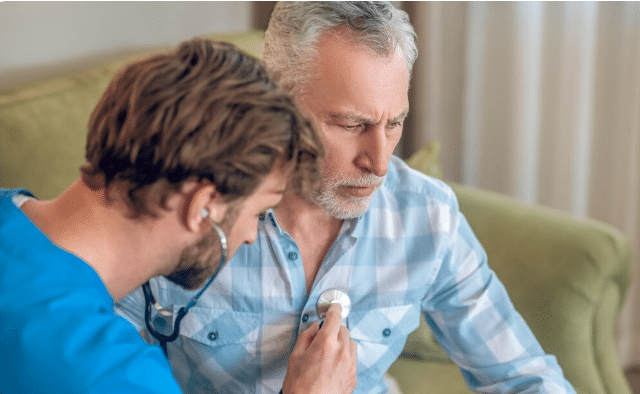
Those who reported feeling the most alone were 19% more likely to develop valve disease, 21% more likely to develop aortic valve stenosis, and 23% more likely to develop mitral valve regurgitation than those who reported little loneliness. Crucially, these figures persisted even after taking lifestyle, genetics, and conventional risk factors like smoking and obesity into consideration.
The final section is more important than it may seem. Although there is a correlation between loneliness and poorer health outcomes, researchers weren’t just confirming that. They were discovering a biological component that underlies behavior, based on the way that long-term emotional distress alters the body’s internal structure.
The 2026 study did not appear out of thin air. Poor social relationships were already associated with a 29% higher risk of coronary heart disease and a 32% higher risk of stroke, according to a 2016 meta-analysis published in the journal Heart that combined 23 studies conducted over time. At about the same time, researchers under the direction of Julianne Holt-Lunstad discovered that social isolation was linked to a 29% higher chance of dying young, which is uncomfortably close to the risks associated with smoking.
The American Heart Association took this seriously enough that, in 2022, it published a formal scientific statement identifying loneliness and social isolation as real cardiovascular risk factors, along with high blood pressure, high cholesterol, and a sedentary lifestyle. That was a big step. These statements are not made lightly by the AHA.
Some of this may still sound abstract. This is the actual appearance of the biology. The nervous system perceives persistent feelings of loneliness as a threat. Cortisol and adrenaline, two stress hormones, remain elevated for longer than they should. Sleep becomes fractured and lighter. C-reactive protein and fibrinogen are examples of inflammatory markers that rise. Prolonged stress causes blood vessels to react poorly.
This doesn’t only worsen someone’s mood over time. It deteriorates the heart’s physical structure. The 2026 valve disease study even found that the association between loneliness and heart damage was partially explained by unhealthy lifestyle behaviors, such as sleep deprivation, decreased mobility, and increased alcohol consumption. This suggests that isolation and its effects form a kind of slow cascade rather than a single trigger.
The discrepancy between what medicine measures and what it misses is difficult to ignore. Your resting heart rate, ejection fraction, and LDL can all be determined by a cardiologist. It takes twelve minutes to visit. Asking someone if they drive home alone every night to an empty apartment or if they haven’t had a meaningful conversation with a friend in weeks is practically out of the question. The system is based on what it can measure and treat, so it’s not exactly a criticism of physicians. However, the evidence points to a silent gap in the system that could have serious repercussions.
Dr. Zhaowei Zhu of Central South University in China, the lead author of the 2026 study, cautiously stated that loneliness might be “an independent and potentially modifiable risk factor” for valve disease. The phrase “modifiable” has some weight. It indicates that this is not resolved. People don’t either possess or lack social connection as a personality trait. It is something that can be prioritized, rebuilt, and cared for. A stroll with a companion.
A regular dinner every week. Joining a group that provides structure to social interactions, such as a volunteer crew, a class, or a religious community. In the context of pharmaceutical research and clinical trials, these seem almost embarrassingly straightforward. However, the data consistently point in the same direction.
In medicine, there is a belief that anything worth treating needs to be quantifiable, preferably through a test result. A typical panel does not depict loneliness. It leaves no obvious biomarker, no number that a doctor can mark with a pen and declare to be the issue. Instead, it leaves behind the gradual accumulation of evidence—study after study, decade after decade—that the human heart was not intended to function in isolation in its most literal and physical form.
FAQs
Q1: Can loneliness actually damage your heart physically?
Yes — it triggers chronic stress responses that gradually harm blood vessels and heart valves.
Q2: How much does loneliness raise the risk of heart disease?
Studies link it to a 29% higher coronary heart disease risk and 32% higher stroke risk.
Q3: Did doctors officially recognize loneliness as a heart risk factor?
The American Heart Association formally named it a cardiovascular risk factor in 2022.
Q4: Is social isolation the same as loneliness in terms of heart risk?
No — loneliness (the feeling) and social isolation (the reality) carry distinct but overlapping risks.
Q5: Can reducing loneliness actually improve heart health outcomes?
Research suggests it’s a modifiable risk factor, meaning targeted connection can genuinely help.
