
Close Menu
Friar Street KitchenFriar Street Kitchen
    Facebook X (Twitter) Instagram
    Facebook X (Twitter) Instagram
    Friar Street KitchenFriar Street Kitchen
    Subscribe
    • Home
    • Food
    • Menu
    • Health
    • Restaurants
    • Lifestyle
    • Privacy Policy
    • Contact Us
    • Terms of Service
    • Disclaimer
    • About Us
    Friar Street KitchenFriar Street Kitchen
    Home » Will AI Replace Your Doctor by 2030? Inside the New Health Apps Already Diagnosing Patients
    Trending

    Will AI Replace Your Doctor by 2030? Inside the New Health Apps Already Diagnosing Patients

    Jawdah Hannad BasaraBy Jawdah Hannad BasaraJuly 4, 2026No Comments4 Mins Read
    Facebook Twitter Pinterest LinkedIn Tumblr Email
    Share
    Facebook Twitter LinkedIn Pinterest Email

    There’s a waiting room in most people’s minds when they think about artificial intelligence and medicine — the image of a robot in a white coat, clipboard in hand, asking you to say “ahh.” It’s a nice picture. Additionally, it is nearly completely inaccurate about the current state of affairs.

    Instead, something stranger is taking place that can be either more comforting or unsettling, depending on your point of view. In emergency rooms, algorithms are already analyzing brain scans and identifying possible strokes before a specialist has even logged in. AI tools built by companies like Aidoc and Viz.ai are quietly sitting inside hospital imaging systems, cutting the time between a critical CT result and a physician’s eyes on it by up to 40 percent. It’s not science fiction. In 2026, that would be a Tuesday morning in a radiology department.
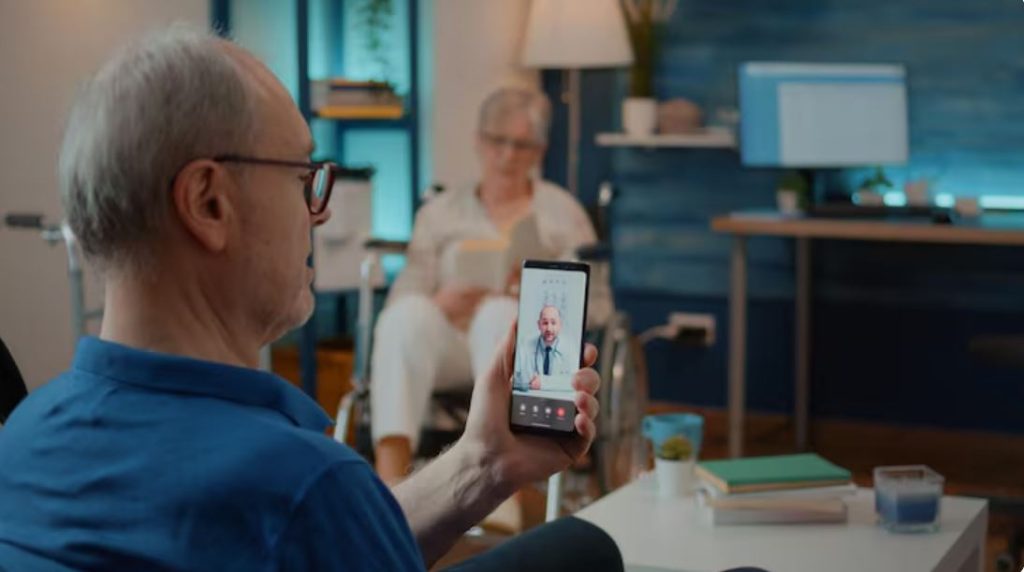
    Will AI Replace Your Doctor by 2030? Inside the New Health Apps Already Diagnosing Patients
    Will AI Replace Your Doctor by 2030? Inside the New Health Apps Already Diagnosing Patients

    Over the past few years, the question of whether AI will replace doctors by 2030 has been discussed more intensely, frequently producing more controversy than clarity. Obuchowicz and colleagues’ 2026 peer-reviewed study, which was published in PMC, explains the situation quite precisely: When it comes to specific, well-defined tasks, such as triage, lesion measurement, and image interpretation, AI excels; however, when clinical complexity is introduced, it encounters obstacles.

    A physical examination cannot be carried out by any algorithm. Nobody can control what transpires in that room while sitting across from a patient who has just been given a terminal diagnosis. The paper’s conclusion, blunt and worth quoting indirectly, is that augmentation is the trajectory, not replacement — at least within any realistic timeframe.

    It’s still unclear whether the public fully understands the distinction. It makes sense that when someone hears that “AI can diagnose breast cancer better than a radiologist,” they tend to assume that the radiologist is therefore unnecessary. Mammography screening tools like Transpara and Lunit INSIGHT MMG have shown performance comparable to or superior to human readers in detecting cancers — that part is real. But the radiologist reviewing the AI’s color-coded heatmap, applying clinical context, and signing the final report is still very much in the picture. The algorithm flags. The doctor makes the decision.

    What AI is doing to the administrative layer of medicine is the more immediate story, the one that doesn’t quite make the dramatic headlines. Prior authorizations, patient messaging, insurance coding, documentation—these are the unglamorous hours that drain doctors and subtly undermine the human aspects of their work. For the clinicians who are actually dealing with it, AI tools that lessen that burden seem less contentious and, to be honest, more welcome. According to the American Medical Association, over 80% of American doctors said they used AI on a professional basis in 2026. Five years ago, that figure would have seemed unrealistic.

    Another aspect that is often overlooked in the discussion is the global perspective. In many parts of the world, the question isn’t “will AI replace doctors?” with 4.5 billion people currently lacking access to basic healthcare and an anticipated shortage of 11 million health workers by 2030. The question is, “Can AI serve populations where there simply aren’t enough doctors to go around?” That framing shifts things considerably. The appearance of an AI triage tool used at a well-staffed urban medical facility differs from that of the same tool used in a rural clinic where the closest hospital is four hours away.

    As this develops, it’s difficult to ignore the fact that the real opportunity might be located somewhere else, while the anxiety tends to concentrate in wealthy systems with an abundance of doctors. Though most likely not in the way the dramatic headlines imply, medicine is evolving. The physician is staying put. The job, though, is quietly becoming something different.

    AI Doctor Health Apps
    Share. Facebook Twitter Pinterest LinkedIn Tumblr Email
    Jawdah Hannad Basara
    • Website

    Jawdah Hannad Basara is a food and lifestyle writer who covers the narratives, trends, and discussions influencing our eating habits. She writes with the kind of curiosity that transforms a straightforward meal into a larger narrative, covering everything from restaurant culture and viral kitchen experiments to the health science behind common ingredients at Friar Street Kitchen. Her work encompasses dining, wellness, recipes, and the cultural influences that shape what is served to us. Jawdah contributes astute observation and a readable voice to the whole range of food journalism, whether she's dissecting a TikTok culinary trend, exploring what your comfort food says about you, or wondering why the Sunday roast might be in danger.

    Related Posts

    Blue Bell Homemade in the Shade Is Back — And It Won’t Last Long

    August 18, 2026

    Why the McDonald’s Hello Kitty Godzilla Collaboration Makes Absolutely No Sense

    August 18, 2026

    Rebel Creamery Chapter 11 Filing: How a $23.8 Million Packaging Lawsuit Sank a Keto Ice Cream Brand

    August 18, 2026
    Leave A Reply Cancel Reply

    You must be logged in to post a comment.

    Health

    Expert View: Weight Gain After Stopping Mounjaro Is Almost Inevitable

    By Jawdah Hannad BasaraAugust 19, 20260

    Mounjaro, or tirzepatide if you want to be more specific, has been called the most…

    Why So Many People Gain Weight After Gallbladder Removal — And What Nobody Tells You First

    August 19, 2026

    Weight Gain After Stopping GLP-1 Is Faster Than Anyone Expected — Here’s the Real Timeline

    August 19, 2026

    Sayers Bakery Store Closures Leave 100 Workers Facing Redundancy as 19 Shops Shut This Month

    August 18, 2026

    Marketside Tomato Bisque Soup Recall: What Every Walmart Shopper Needs to Know Right Now

    August 18, 2026

    Blue Bell Homemade in the Shade Is Back — And It Won’t Last Long

    August 18, 2026

    Why the McDonald’s Hello Kitty Godzilla Collaboration Makes Absolutely No Sense

    August 18, 2026

    What Is the Difference Between a Cornish Pasty and a Regular Pasty — And Why Does It Matter So Much?

    August 18, 2026

    Outshine Bar Recalls: Five Flavors Pulled From Shelves Over Possible Glass Contamination

    August 18, 2026

    HEB NatureBest Jalapeño Product Recall: Over 50 Items Pulled From Texas and Louisiana Shelves

    August 18, 2026
    Use Full Links:
    • About Us
    • Contact Us
    • Disclaimer
    • Home
    • Privacy Policy
    • Terms of Service
    Search Interesting Content Here:
    Recent Posts
    • Expert View: Weight Gain After Stopping Mounjaro Is Almost Inevitable
    • Why So Many People Gain Weight After Gallbladder Removal — And What Nobody Tells You First
    • Weight Gain After Stopping GLP-1 Is Faster Than Anyone Expected — Here’s the Real Timeline
    • Sayers Bakery Store Closures Leave 100 Workers Facing Redundancy as 19 Shops Shut This Month
    Facebook X (Twitter) Instagram Pinterest
    © 2026 ThemeSphere. Designed by ThemeSphere.

    Type above and press Enter to search. Press Esc to cancel.