
Opening your freezer and wondering if the bag of organic berries you purchased two weeks ago has been quietly sitting there, contaminated, is a bit unsettling. Millions of Americans are currently in that predicament following the FDA’s announcement of yet another extension of a frozen berry recall, which has now grown to become one of the more persistent food safety stories of 2026.
The Chilean supplier Frutas y Hortalizas del Sur S.A. has had to expand the net three times since July. Every expansion has the same justification—possible E. Coli O145 contamination—and each one penetrates American homes and grocery stores a bit further. More lots of Walmart’s Great Value Organic Triple Berry Blend, Great Value Organic Blueberries, and, for the first time, Trader Joe’s Organic Mixed Berry Blend were brought in by the October 2 expansion. When taken as a whole, these goods ended up on store shelves in over thirty states.
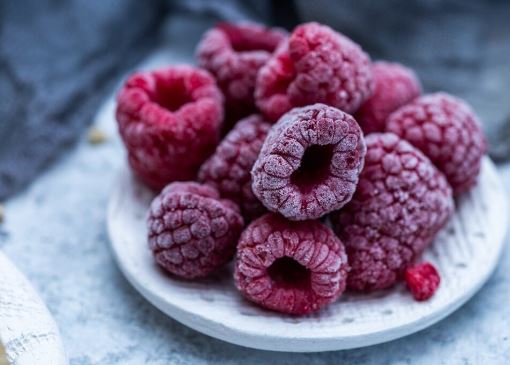
Six hospital admissions and 17 illnesses have been reported as a result of the wider outbreak. Even though those figures are small when compared to significant food recalls, they are still significant. E. Coli O145 is not a stomach ailment that goes away quickly. The infection can worsen into something much more serious in susceptible groups like young children and elderly adults, and symptoms like cramps, diarrhea, and vomiting can last up to a week. The precise number of people who may have eaten contaminated products without ever linking a bag of frozen berries to their illness is still unknown.
The pattern behind this recall is what distinguishes it from a standard product pull. One recall in July could be dismissed as a singular occurrence. In September, a second expansion begins to raise concerns. A third expansion in October, encompassing more lots, retailers, and states, raises the possibility of a more systemic issue. This could be related to the cold chain between Chile and U.S. distribution centers, quality control at the source, or the speed at which investigators were able to track contamination back through the supply chain. It’s difficult not to wonder how many stages of that process could have detected this sooner as you watch this develop.
Lot codes and best-by dates are printed on the packaging of the impacted products, which is how customers are supposed to recognize recalled goods. The codes 6 031 01 and 6 041 01 for the Great Value Triple Berry Blend lots have best-by dates that extend into early 2028. There are three different lot codes on the blueberries.
The Trader Joe’s product is a little simpler to verify because there is only one impacted lot, 6 051 01. Noting that no illnesses connected to its particular product have been reported and that no further expansion of its recall is anticipated, Trader Joe’s moved rather swiftly to disassociate itself from additional exposure. Although it doesn’t alter the fundamental advice—check the bag, check the codes, and throw it out when in doubt—that might provide some comfort.
The fact that these products are organic has a subtle irony. Because they think organic berries are safer, cleaner, and handled more carefully, consumers pay more for them. That distinction is of no interest to E. Coli contamination. The conditions during harvesting, washing, freezing, and handling are more important to the bacteria than certification labels. Investigators haven’t fully disclosed to the public whether this outbreak indicates a particular failure at any of those stages.
For the time being, anyone who recently bought frozen organic berry products from Trader Joe’s or Great Value should check the lot numbers and UPCs before eating anything. According to the FDA announcement, Walmart and Trader Joe’s are both providing complete refunds without requiring a receipt. Before the next smoothie morning, it’s worth taking two minutes to check the agency’s recall page, which contains the full list of impacted products and lot codes.
Food recalls are never pleasant news, but this one is different in that it is slow and growing rather than dramatic or abrupt, with each new announcement subtly changing the scope of the issue. The situation’s ultimate scope may still be being mapped out. Checking the freezer is currently the safest course of action.
FAQs
Q1. Which stores are affected by the frozen berry recall?
Walmart, Trader Joe’s, and Publix have all sold recalled frozen berry products.
Q2. What bacteria is causing the frozen berry recall?
The berries may be contaminated with E. coli O145, a harmful strain.
Q3. How many people have gotten sick from the recalled berries?
Seventeen people have fallen ill, with six requiring hospitalization so far.
Q4. What should I do if I have recalled berries at home?
Discard the product or return it to the store for a full refund.
Q5. How do I know if my frozen berries are part of the recall?
Check the lot code and UPC number printed on your package against the FDA list.
